How to Play Ace-King Suited (AKs)
Ace-king suited is a premium drawing hand, not a made one. Learn how to 3-bet, 4-bet, and c-bet AKs so you win big pots and avoid stacking off blind.
On this page · 7 sections
Ace-king suited (AKs) — “big slick” — is one of the most powerful hands in Hold’em, but it is a drawing hand, not a made hand. Preflop it is a coin flip against pocket pairs like QQ, and after the flop it misses (makes no pair) roughly two-thirds of the time. What makes AKs so profitable is not raw equity — it is dominance and playability. It crushes weaker aces and kings, flops the nut-flush draw, and takes initiative in the biggest pots. Play it aggressively and you extract value; play it passively and you leave money on the table.
Raise, 3-bet, and 4-bet aggressively
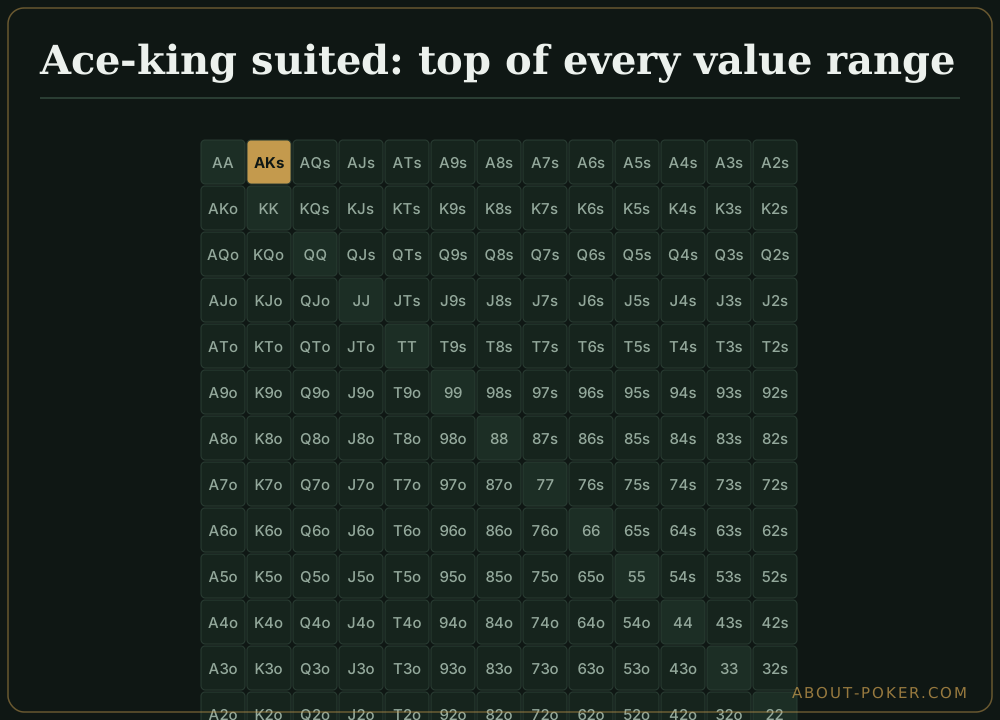
AKs belongs at the very top of your value range in every position. When you open, it is a standard raise from your preflop opening ranges. Facing a raise, it is a core part of any 3-bet range — you want to build the pot while you have position and dominance. Facing a 3-bet, AKs is a comfortable 4-bet: it is one of the strongest hands in a 4-betting strategy, and it plays well even when called.
Why so aggressive with a hand that is only a flip against pairs? Because a huge share of opponents’ calling and 3-betting ranges is made up of weaker aces (AQ, AJ, AT) and weaker kings (KQ, KJ) that AKs dominates. When you hit top pair, your kicker plays for stacks. Getting the money in preflop against those hands, not against QQ+, is where the profit lives.
A worked example
You open A♣K♣ from the button to 2.5bb. The big blind 3-bets to 10bb. You 4-bet to 24bb, and they call.
The flop comes K♥7♦2♠. You have top pair, top kicker, on a dry board. Fire a continuation bet — you are ahead of every worse king, every pocket pair below kings, and all the ace-high bluffs in their range. You can size around 33–50% pot and get called by dominated hands. If they had QQ or JJ and 3-bet you, you are now getting maximum value from a hand that thought it was ahead. This is exactly why AKs wants big pots: when it hits, it hits the top.
Playing AKs when you miss
Two-thirds of flops give you ace-high with no pair. That is fine — AKs is built to keep the pressure on:
- Dry, low boards (8-4-2 rainbow): A single c-bet takes it down often. You have two overcards and the range advantage.
- Coordinated boards you whiff: Slow down. Your ace-high has little equity against a range that connected, and floating is expensive.
- Suited flush draws: When you flop the nut-flush draw, you have a strong semi-bluff — barrel and apply maximum pressure, since you can win now or make the nuts.
The key discipline is not turning ace-high into a hero call. If you miss, you fire when you have a good story and fold when the board and action are against you.
AKs vs AKo — the suited difference matters
Suited moves AK from very strong to premium. The flush draw adds equity, improves playability in 3-bet and 4-bet pots, and lets you continue on more boards. That extra few percent of equity, combined with better postflop options, is why AKs is often 4-bet where AKo might just call. The core plan is the same — raise, re-raise, apply pressure — but AKs does it with a wider safety net beneath it.
How stack depth and opponent type change the plan
The blanket “3-bet and 4-bet it” advice is correct at typical 100bb cash-game depth, but the details shift with stack size and who you are facing.
At short stacks (under 30bb), AKs simplifies. If you open and face a 3-bet, you are often just jamming — a 20bb stack getting 3-bet has no room for a small 4-bet, so you shove and realize your full equity against a range you flip with at worst and dominate at best. There is no awkward postflop to navigate, which is a good thing for a hand that misses two-thirds of flops.
At deep stacks (200bb+), AKs gains value because implied odds on the nut-flush draw grow, but you must be more careful stacking off with just top pair. On a K-high board 200bb deep, a raise-and-jam war usually means you are up against two pair, sets, or KK — top pair top kicker is a strong hand, not the nuts, and deep money exaggerates that gap.
Opponent type matters just as much:
- Tight, straightforward players: value-bet thinner and fold more when they raise you. Their 3-bets are QQ+, AK, and when they check-raise a K-high flop, believe them.
- Loose, aggressive players: widen your 4-bets and your c-bet frequency. Their calling and 3-betting ranges are stuffed with the dominated AQ, AJ, KQ that make AKs print money.
Multiway pots play differently
Almost all of the “barrel relentlessly” logic assumes a heads-up pot. In a multiway pot — say you called a raise and two others came along — ace-high loses a lot of value because someone is far more likely to have connected. C-betting a total miss into three opponents is usually a mistake. Tighten up: bet for value when you actually pair the ace or king, semi-bet your nut-flush draws, and give up your air more often. The nut-flush draw is still excellent multiway because when you make it, it is genuinely the nuts and gets paid by weaker flushes.
Quick decision checklist
- Preflop, unopened: raise from every seat.
- Facing a raise: 3-bet as your default; flat only in specific spots like the big blind versus a wide button.
- Facing a 3-bet: 4-bet at standard depth; jam when short.
- Flop, you pair top: bet for value, size up on wet boards, believe raises from tight players.
- Flop, you miss heads-up: c-bet dry boards, fire flush draws, give up coordinated boards you whiffed.
- Flop, you miss multiway: mostly check and fold air; keep barreling only real draws.
Play AKs like the premium drawing hand it is: get money in preflop against the weaker aces and kings you dominate, c-bet relentlessly when the board and range favor you, and never fall in love with ace-high when the story says you are beaten.
Frequently asked
Is ace-king suited better than pocket queens?
It depends on the situation. All-in preflop, QQ is a slight favorite over AKs (about 54% to 46%). But AKs plays better in 3-bet and 4-bet pots because it dominates AQ and AJ and flops top pair top kicker often, giving it more equity when it does connect.
Should you always 3-bet ace-king suited?
Almost always. AKs is a premium hand that wants to build the pot and take initiative. Flatting occasionally is fine in specific spots — like in the big blind against a wide button open — but 3-betting is the standard, higher-EV line in most positions.
What do you do with AKs when you miss the flop?
Usually keep betting. AKs has two overcards, backdoor draws, and often the nut-flush draw, so a continuation bet applies pressure and picks up the pot when opponents miss. On dry boards a single c-bet takes it down a large share of the time.