How to Play Ace-Nine Offsuit (A9o)
Ace-nine offsuit is a late-position steal and a blind-defense hand, not a hand for big pots. Learn where A9o opens, when to fold it, and how to avoid domination.
On this page · 8 sections
Ace-nine offsuit (A9o) is a useful late-position hand that gets a lot of players into trouble because it looks stronger than it is. That ace on the front is tempting, but with a nine kicker and no flush potential, A9o is a hand that is frequently dominated — outkicked by better aces and behind most of the hands that call a raise. Played from the right seats it steals blinds and wins small pots; played from the wrong seats or for stacks, it bleeds chips into hands like AT, AJ, and AQ. The whole game with A9o is knowing where it belongs.
Where A9o belongs
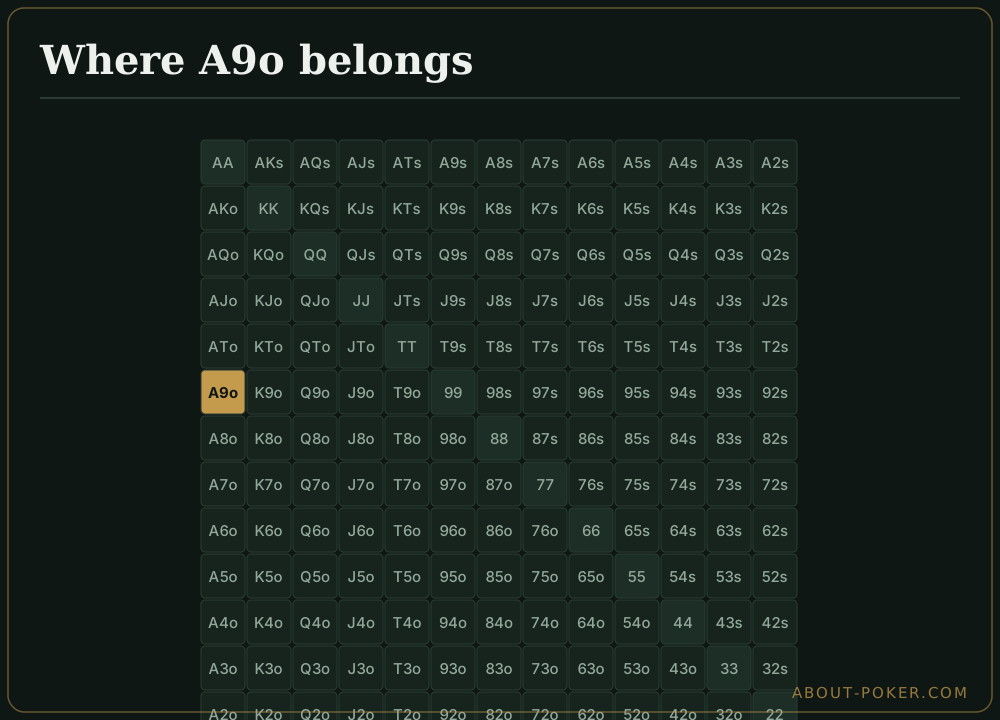
A9o is a late-position hand. Open it from the cutoff, button, and small blind, where it steals effectively and dominates the weaker aces and kings the blinds defend with. It is comfortably inside your preflop opening ranges from those seats.
From early and most middle positions at a full-ring or 6-max table, fold it. The players left to act continue with ranges full of better aces and pairs, and A9o’s raw strength is not enough to overcome being out of position against them. This seat-by-seat difference is the core of poker ranges by position: the same two cards are a clear open from the button and a clear fold from under the gun.
The domination problem
The single most important idea with A9o is kicker domination. When money goes in on an ace-high flop, ask who is putting it in against you. The answer is usually a better ace — AT, AJ, AQ, AK — which has your nine outkicked and leaves you drawing to three outs. A9o makes top pair easily, but top pair with a mediocre kicker is exactly the hand that loses big pots.
So play A9o for small pots, not stacks. It is a fine hand to open and take down preflop, and a fine top pair to bet once or twice for thin value. It is a bad hand to build a huge pot with against a raising, re-raising opponent. And it is only a marginal 3-bet — occasionally a blocker bluff, rarely for value — because when it gets called it is behind. This is also why it is a weaker candidate than a suited ace: without the flush, A9o cannot fall back on a draw when its kicker is beaten.
Defending the blinds with A9o
A9o is a solid blind-defense hand against late-position steals. When a button or cutoff raises and you are in the big blind, A9o is inside your defending range — it dominates the ace-rag and king-rag hands in a wide steal and has enough high-card strength to flop top pair and win. This is standard blind defense: you continue with hands that beat the bottom of a wide opening range.
Be more cautious against tight, early-position opens. There, A9o is dominated by the exact ace-strong range that opens up front, and defending it invites the kicker trouble above.
A worked example
You open A9o (Ac-9d) on the button. The big blind calls. The flop comes A-7-2 rainbow. You have top pair, nine kicker. Bet a small-to-medium continuation bet for thin value and protection — many worse aces, sevens, and pairs will call. If the big blind check-raises and then keeps firing, slow down: a raising line here is loaded with better aces and two pair, and your nine kicker is exactly what you fear. Call one street to keep their bluffs in if you like, but do not stack off. Top pair with a weak kicker in a raised-and-reraised pot is usually beaten.
A second example: the blind-defense flop
You defend A9o in the big blind against a button open and see a flop of 9-6-3 rainbow. You have top pair, top kicker for the board texture — but read the situation before committing. Against a wide button steal, most of the pairs, draws, and ace-highs your opponent holds are behind your pair of nines, so a check-call or a small lead is fine and you are usually good. The moment the board pairs a higher card, or an overcard peels off and your opponent keeps betting into you, downgrade: your nine is now a bluff-catcher, not a value hand. The contrast with the earlier ace-high example is the whole lesson — A9o wants small pots where its pair is genuinely ahead, and shrinks the instant a stronger range shows aggression.
Common mistakes with A9o
- Opening it from early or middle position. The classic A9o leak. It looks like “an ace,” but from up front it is dominated by the exact ace-strong range that plays back at you. Late position only.
- Stacking off with top pair. When money piles in on an ace-high board, better aces (AT, AJ, AQ, AK) have your nine outkicked and you are drawing thin. Bet once or twice for value, but do not build a huge pot with it.
- 3-betting it for value. A9o rarely 3-bets for value because it is behind the range that calls or 4-bets. Use it as a call or an occasional blocker bluff, not a value 3-bet.
- Defending it against tight early opens. A9o is a blind-defense hand against wide steals, not against a UTG raiser whose range dominates it. See defending the big blind vs a UTG open.
How stack depth affects A9o
Because A9o’s danger is kicker domination in big pots, it actually plays better short than deep. At 100bb+, the times you make top pair and get stacks in against a better ace are expensive; the deeper you go, the more that domination costs. Shorter — say a 20-40bb tournament stack — A9o becomes a clean steal-or-shove hand from late position: you take the blinds often, and when called you have live overcards without the burden of a deep-stacked, dominated postflop pot. Deep-stacked cash, by contrast, is where you should be most disciplined about keeping A9o pots small.
Bottom line on A9o
Open A9o from late position, defend it in the blinds against wide steals, and fold it from early seats. Treat it as a small-pot, top-pair hand — great for stealing and thin value, dangerous for stacks. Respect kicker domination above all: when the pot balloons on an ace-high board, your nine is usually the problem. Play it in the right seats and keep the pots small, and A9o is a steady contributor. Overplay the ace, and it is a classic way to lose big pots with second-best hands.
Frequently asked
Can you open ace-nine offsuit?
Yes, from late position — the cutoff, button, and small blind. A9o is inside those opening ranges because it steals well and dominates weaker aces. From early and most middle positions at a full or 6-max table it is a fold, because too many hands that continue against you have it dominated.
Should you 3-bet A9o?
Rarely for value, and only occasionally as a blocker bluff. The ace blocks some strong ace combos, but A9o has weaker playability than its suited counterpart and is easily dominated when called. Against most opens it is a fold or a call, not a 3-bet.
What is the difference between A9o and A9s?
The suit. A9s adds nut-flush potential and enough extra equity to open earlier and to bluff-3-bet more often. A9o loses the flush component, so it plays only from late position and defends the blinds — it is meaningfully weaker than the suited version.