How to Play Ace-Queen Suited (AQs)
Ace-queen suited is a strong opener that can be a trap against 4-bets. Learn how to raise, 3-bet, and fold AQs correctly to avoid domination.
On this page · 6 sections
Ace-queen suited (AQs) is a strong hand — top of many opening ranges, a fine 3-bet, and a good flop-hitter thanks to its suited nut-flush potential. But it comes with a trap built in: the same face cards that make it strong also make it easy to dominate. Against AK it is a big underdog, and against QQ+ it is drawing thin. The skill in playing AQs is knowing when to be aggressive (opening, 3-betting light ranges) and when to pump the brakes (facing tight 4-bets and re-raises from nits).
Open it from everywhere
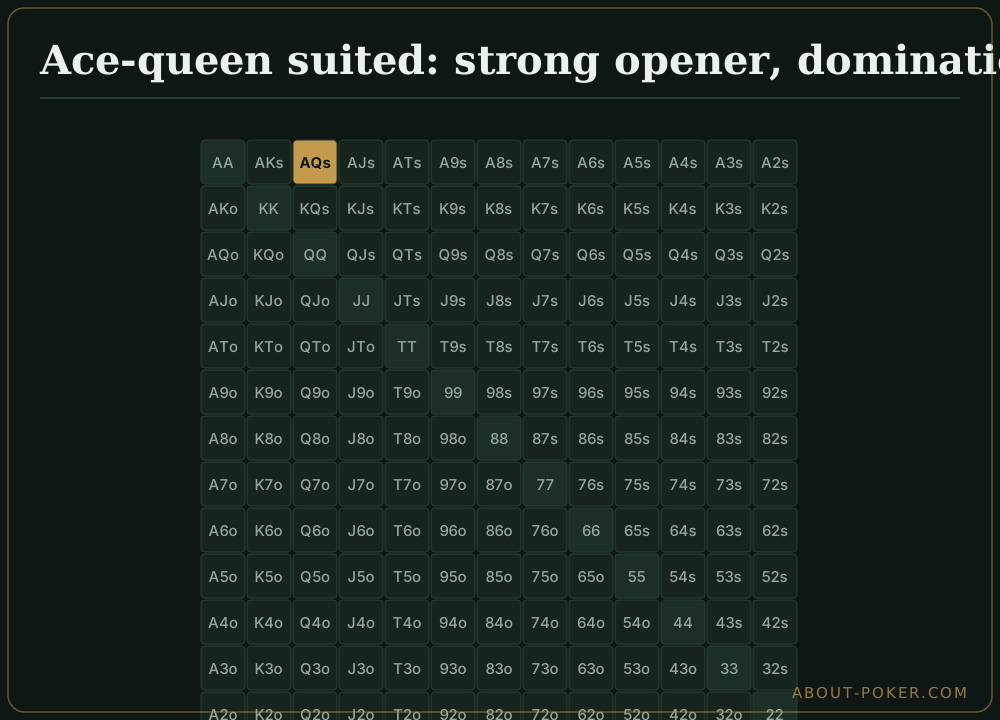
AQs is a clear raise-first-in from every seat in a 6-max game, including under the gun. It is squarely inside your preflop opening ranges because it dominates all the weaker aces and queens people call with, flops top pair with a strong kicker, and carries a flush draw that adds equity and playability. There is no position where you should be folding AQs first-in at 100bb.
Against a raise, AQs is a solid 3-bet in position — it applies pressure, isolates weaker ranges, and takes initiative. The nuance comes when you face further aggression.
The 4-bet trap
Here is where players bleed money. You 3-bet AQs, and a tight opponent 4-bets. It is tempting to “commit” with two big cards, but look at what a tight 4-betting range actually contains: KK+, AK, and maybe QQ or a rare bluff. Against that range, AQs is dominated by AK, crushed by the pairs, and ahead of almost nothing.
The correct play against a tight 4-bet is usually to fold, or occasionally flat in position — not to jam. Understanding this is part of defending against 3-bets and re-raises: strong-looking hands can be traps when the opponent’s range is capped at the top. Save the stack-off for AK and QQ+.
A worked example
You 3-bet A♦Q♦ from the button over a cutoff open. The cutoff 4-bets all-in for 100bb.
Against a standard tight 4-bet-jam range of QQ+ and AK, run the equity: you are behind everything. Versus AK you have about 30%; versus KK/QQ you are around 30% as an underdog to the pair; versus AA you are drawing to runner-runner. Blending it out, AQs is a clear fold here. The suited flush draw feels reassuring, but it does not rescue a dominated holding against a range this strong. Folding a “big” hand like AQs to a tight jam is one of the marks of a disciplined player.
Playing AQs after the flop
When AQs sees a flop, it plays cleanly:
- Top pair (ace-high or queen-high board): Bet for value. You often have the best kicker and can charge weaker pairs and draws.
- Flush draw: A powerful semi-bluff. Barrel with the nut-flush draw — you can win now or make the nuts.
- Complete whiff: On dry boards a single c-bet takes it down. On coordinated boards you missed, give up cheaply rather than firing into a range that connected.
The through-line for AQs: be aggressive when you have initiative and the range edge, and be willing to fold when a tight opponent tells you their range has you dominated. It is a hand that makes money by beating weaker aces and queens, not by stacking off against the very hands that beat it.
How stack depth changes AQs
The domination trap gets sharper or softer depending on how deep the stacks are, and adjusting for depth is a big part of playing AQs well. At 100 big blinds, the standard advice holds: open it everywhere, 3-bet it liberally, but decline to stack off against a tight 4-bet because you’re dominated by AK and the pairs. There’s simply too much money behind to commit it against a capped-at-the-top range.
Shorten the stacks and AQs gets more comfortable getting in. Around 40 big blinds, a 3-bet often commits a large share of your stack, and AQs plays fine as a 3-bet-and-call-a-jam against opponents whose 4-bet-shove range is wide enough to include AJ, KQ, or worse aces. By roughly 20 big blinds and shorter — think late-tournament play — AQs is an outright monster: it’s a happy open-shove and a fine call versus most shoving ranges, because at that depth you’re rarely up against a range tight enough to dominate you consistently, and the flush and straight equity gets to run out unimpeded. The one card that changes is patience: the deeper you are, the more you respect a tight opponent’s re-raise, and the shorter you are, the more you lean on AQs’s raw equity.
A quick AQs decision checklist
Use a short checklist to keep AQs out of trouble. First, first-in: always raise, from any seat, at any normal depth — there’s no folding AQs first to act. Second, facing a single raise: 3-bet in position by default, call out of position or against very tight openers. Third, facing a 4-bet: identify the opponent’s range. If it’s the classic nit range of QQ+ and AK, fold at 100bb and only get in when short enough that their range widens. If the 4-bettor is loose and fires light 4-bet bluffs, you can call or jam because now you’re often ahead or flipping. Fourth, on the flop: bet top pair for value, barrel the nut-flush draw as a semi-bluff, and give up cheaply when you whiff a coordinated board. Nail those four decisions and AQs turns from a hand that looks great and loses stacks into one that steadily beats the weaker aces and queens it’s meant to punish. For the reverse side of these spots, study defending against 3-bets and your overall 3-bet range.
Frequently asked
Should you 4-bet ace-queen suited?
Usually not for value. Against most tight 4-betting ranges AQs is dominated by AK and crushed by QQ+, so it plays better as a call or an occasional bluff-4-bet in position. Calling a 3-bet in position keeps your range balanced and avoids stacking off dominated.
Is AQs a good hand to open-raise?
Yes, from every position. AQs is comfortably inside the raise-first-in range even under the gun in 6-max. It flops well, dominates weaker aces and queens, and has the suited flush potential that adds equity when called.
How does AQs do against AK?
Poorly. All-in preflop, AQs has only about 30% equity against AK because it is dominated on both the ace and the queen. This domination is the main reason to avoid getting stacks in preflop against tight ranges.