How to Play Ace-Nine Suited (A9s)
Ace-nine suited is a late-position opener and a blocker-heavy bluff-3-bet. Learn where A9s belongs, why it is a draw not a made hand, and how to play it.
On this page · 8 sections
Ace-nine suited (A9s) sits at the boundary of playable suited aces. It is not a premium hand, but it is a genuinely useful one — a solid late-position opener and one of the best blocker bluff-3-bets in the deck. What it is not is a made hand you should build big pots with against strong ranges. A9s wins money through steals, blockers, and the nut-flush draw, not by grinding out showdowns where its nine kicker is dominated. Know where it belongs and it becomes a quiet profit center; overplay it and it leaks.
Where A9s belongs
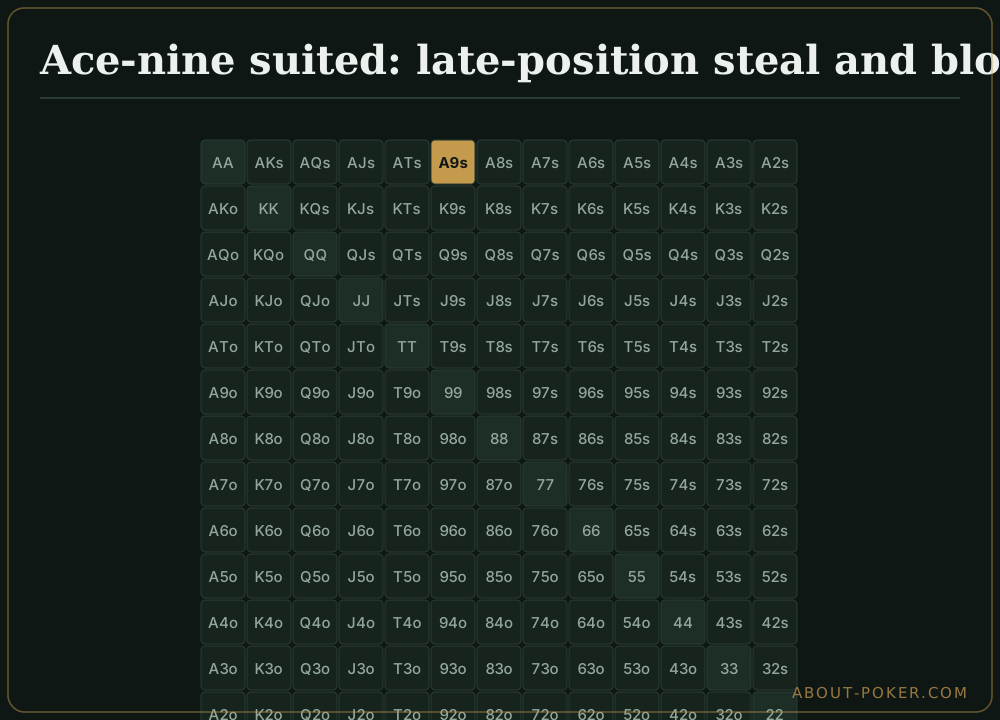
A9s is a late-position hand. Open it from the cutoff, button, and small blind, where it steals blinds effectively and dominates the weaker aces in the blinds’ defending ranges. It is inside your preflop opening ranges from those seats. From early and middle position, though, A9s is typically a fold — the players behind you continue with ranges that dominate it, and its raw strength is not enough to overcome that positional disadvantage. Understanding this seat-by-seat difference is exactly what poker ranges by position is about.
The blocker 3-bet
A9s is a textbook light 3-bet against a late-position raise. The reasoning is all about the ace:
- Blocker value. Holding an ace removes combos of AA, AK, and AQ from the opponent’s range, making it less likely they hold a hand that can continue against your 3-bet.
- Playability. When called, A9s flops the nut-flush draw and can make top pair or straights, so you have equity to barrel with.
Because the nine kicker means A9s is rarely ahead of a 3-bet-calling range for value, this is a semi-bluff, not a value bet. Against a tight early-position open, fold it — do not turn a blocker bluff into a dominated stack-off.
A worked example
You are on the button with A♦9♦. The cutoff opens to 2.5bb and you 3-bet to 8bb as a blocker bluff; the cutoff calls.
The flop is Q♦6♦2♠. You have the nut-flush draw — nine outs to the best possible flush, roughly 35% equity to make it by the river, plus the occasional ace giving you top pair. Fire a continuation bet. Many of the cutoff’s hands (weak queens, pocket pairs, missed broadways) fold, and when called you can hit the nuts and stack them. This is A9s doing its job: applying pressure with fold equity now and a premium draw for later. You did not need a made hand — you needed blockers and a strong draw, both of which A9s supplies.
Reading the danger spots
A9s gets into trouble when players treat the ace as a reason to commit. Two rules keep you safe:
- Fold to 4-bets. A tight 4-betting range dominates A9s entirely — there is nothing to continue with.
- Respect a weak kicker. If you flop top pair with the ace, your nine kicker is beaten by most other aces. Value bet worse hands, but do not pay off big aggression on ace-high boards.
Postflop summary
- Nut-flush draw: Semi-bluff and barrel — win now or make the nuts.
- Top pair (ace-high board): Value bet worse; fold to heavy pressure.
- Whiff, dry board: A single c-bet with backdoors often takes it down.
- Whiff, wet board: Give up cheaply.
How A9s changes by opponent type
The same hand plays very differently depending on who is across the table, and this is where a lot of A9s money is made or lost.
- Against a tight, aggressive regular: lean on the blocker 3-bet less for value and more as a pure bluff, and fold quickly when they fight back. Their 4-bet and 3-bet-calling ranges are strong, so your nine kicker is dominated whenever the money goes in. The ace-blocker still helps, but respect their range.
- Against a loose, passive player: the picture flips. Now you can flat A9s more, open it a touch wider, and value bet top pair more thinly on the flop and turn, because they call with worse aces and worse top pairs. Against this player, 3-bet bluffing is wasted — they call too much for the fold equity to pay off, so just open and realize your equity postflop.
- Against short-stacked opponents: the nut-flush implied odds shrink because there is less to win, so A9s leans more on its ace-high and top-pair value and less on drawing to a flush.
Match the plan to the player, and A9s stops being a one-size-fits-all hand.
How stack depth shifts A9s
At 100bb and deeper, the nut-flush draw is the star: when you make the nuts you can win a full stack, so semi-bluffing draws and barreling for stacks is highly profitable. As stacks get shallower, the flush’s implied odds fall and A9s becomes more of a top-pair-and-ace-high hand. Short-stacked in a tournament — around 15-20bb — A9s is often a clean open-shove or open-fold from late position rather than a flat, because you can rarely realize a flush draw’s full value when the effective stacks are thin. The deeper you are, the more you play A9s for its nut-flush upside; the shallower you are, the more you play it for immediate showdown value.
Common A9s mistakes
- Opening it from early position because “it’s a suited ace.” The players behind dominate it; this is the single most common leak.
- Value-3-betting it against a tight open. It’s a bluff, not a value hand. A tight opener’s continuing range crushes your nine kicker.
- Stacking off with top pair on an ace-high board. Your kicker is beaten by most other aces; value bet worse and fold to real pressure.
- Continuing to a 4-bet. There is nothing to do here but fold.
A9s is a specialist. Deploy it from late position and as a blocker 3-bet, lean on its nut-flush equity, and let it go when a tight range tells you the ace on the board is not enough.
Frequently asked
Can you open ace-nine suited?
Yes, from late position — the cutoff, button, and small blind. A9s is inside those opening ranges because it steals blinds well, flops the nut-flush draw, and dominates weaker aces. From early position it is usually a fold at a full or 6-max table.
Is A9s good enough to 3-bet?
Mostly as a bluff. A9s makes an excellent blocker 3-bet against late-position steals because the ace removes strong ace combos from the opponent's range, and it has nut-flush playability when called. It is not a value 3-bet against tight opens.
What is the difference between A9s and A9 offsuit?
Being suited is what makes A9 playable. A9s adds nut-flush potential, better connectivity, and the equity that justifies opening and 3-betting. A9 offsuit is much weaker — largely a fold outside of button steals and blind defense — because it loses the flush component that carries the suited version.