How to Play Ace-Seven Suited (A7s)
A7s is a late-position open and a big-blind defend, but a fold up front. Learn where A7 suited plays, its blocker value, and how to handle it postflop.
On this page · 8 sections
Ace-seven suited (A7s) is a late-position and blind hand. It’s past the point where the kicker helps you win big pots at showdown — a seven top-pairs badly — so almost all of its value is in the suited ace’s two reliable assets: the nut-flush draw and the ace blocker. Play it in the right seats and it’s a clear profit; play it up front and you’re inviting domination.
Where A7s belongs preflop
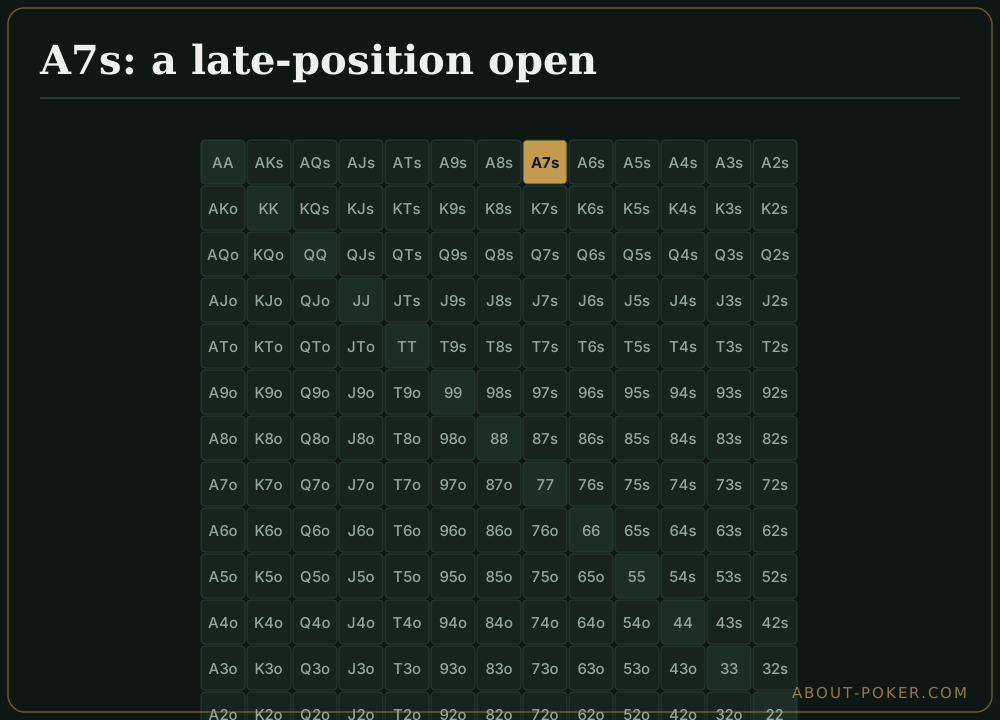
- Early position: fold. Too many players left to act, and A7s is dominated too often.
- Middle position: usually a fold at a full table, closer to a marginal open at 6-max. When in doubt, fold — the seven kicker doesn’t rescue it.
- Cutoff and button: standard opens. Your range is wide here and A7s fits comfortably.
- Small blind: open by raising, not limping — you never want to play a marginal hand out of position for a cheap look.
- Big blind: defend against most single raises, especially with a discount. This is one of A7s’ best spots. See defending the blinds.
For the seat-by-seat borders, lean on preflop opening ranges and poker ranges by position.
Facing a raise
A7s is a call-or-fold hand far more than a 3-bet hand.
- In position vs a late open: flat call. You flop draws and can realize equity cheaply.
- Out of position: usually fold to a raise from an early or middle seat — you’ll be dominated too often and can’t realize equity well.
- As a bluff-3-bet: playable but second-tier. The ace blocks A-A and strong A-x, but A-5s and A-4s do the same and make more straights, so prefer those. If you’re building a polarized 3-bet range, A7s is a bluff you add after the wheel aces, not before them.
The blocker, not the kicker
The mental model that keeps A7s out of trouble: stop valuing the seven. When you make top pair with an ace, the seven kicker will frequently be outkicked by A-8 through A-K. The hand isn’t a made-hand machine; it’s a draw-and-blocker machine. When you flop a flush draw it’s the nut draw; when you flop the ace, play cautiously; when you flop nothing, the blocker gives you a credible bluff.
A worked example
You open A♥7♥ on the button and the big blind calls. The flop is K♥ 9♥ 4♠ — you’ve flopped the nut flush draw with an overcard.
The big blind checks. This is a clear continuation bet: you have nine outs to the nut flush, three more to a top-pair ace, and fold equity against the many king-less, weak hands in the big blind’s defending range. Call it roughly 35% equity as a raw flush draw, higher with the overcard outs — you’re betting to build a pot you’ll often win and to fold out hands with more equity than they realize.
Turn is the 2♣, a brick. You barrel again: you still have the flush draw, still deny equity, and represent a strong king. If you hit the flush on the river, you have the nuts and can bet for maximum value. That combination — nut draw plus fold equity plus a nutted payoff when you hit — is the entire reason A7s is worth opening.
Postflop shorthand
- Flush draw: it’s the nut draw. Semi-bluff aggressively; you can never be drawing dead to a bigger flush.
- Top pair (ace): value bet in position, pot-control out of position — the kicker is weak.
- Air with the ace: a fine one-and-done c-bet or barrel candidate thanks to the blocker.
- Weak pair (a seven or lower): proceed carefully; this is a showdown-value hand at best.
How the plan shifts by opponent type
A7s is a hand whose right line depends heavily on who you’re up against, because so much of its value is in fold equity and thin value that both hinge on opponent tendencies.
- Versus a calling station: dial back the bluffs. The blocker is worthless against someone who never folds, so lean on A7s’ made-hand and draw value instead. Bet your flush draws and top pairs for value; skip the pure blocker barrels that only profit when they fold.
- Versus a tight, fold-happy regular: the opposite. The ace blocker becomes a real weapon — a c-bet on a dry ace-high or king-high board takes the pot down often, and your continuation bets get respect. This is where A7s’ bluffing side earns its money.
- Versus a maniac / aggressive 3-bettor: flatting A7s and letting them barrel into you can be profitable, but be ready to fold top pair to sustained aggression. Don’t turn a weak-kicker top pair into a three-street call-down against a range that has you outkicked.
Common mistakes with A7s
- Opening it up front. The single most common leak with any suited ace-rag. From early position A7s is dominated far too often by the ace-strong hands that continue against you. Cutoff, button, and small blind only.
- Stacking off with top pair. A seven kicker loses to A-8 through A-K. When the money balloons on an ace-high board, your top pair is frequently second best. Pot-control it, especially out of position.
- Over-3-betting it as a bluff. A7s blocks aces, but the wheel suited aces (A-5s, A-4s) block the same combos and make more straights, so they’re strictly better bluffs. Use A7s as a 3-bet bluff sparingly, after the wheel aces are already in the range.
- Folding the nut flush draw too passively. When you flop the nut-flush draw, this is a hand to play aggressively — you can never be drawing dead to a bigger flush, so semi-bluffing hard is correct.
Where to go next
A7s rewards discipline: open it late, defend it in the big blind, and stop paying off with a weak kicker. Sharpen the seat borders in preflop opening ranges, master the big-blind spot in defending the blinds, and keep the whole framework connected at the preflop strategy hub.
Frequently asked
Is A7 suited playable?
Yes, but conditionally. A7s is a comfortable open from the cutoff, button, and small blind, and a fine big-blind defend, but it's a fold from early and often middle position at a full table. Its value comes from the nut flush and the ace blocker, not the seven kicker.
Should I 3-bet A7 suited?
It's a reasonable but not top-tier 3-bet bluff. The ace blocks premium ace-x and pocket aces, but the wheel suited aces (A-5s, A-4s) are better bluffs because of their extra straight potential. Usually you call in position or fold out of position instead.
Is A7s better than A7 offsuit?
Significantly. The suited version adds nut-flush potential and plays enough better that A7s is a routine late-position open while A7 offsuit is much more marginal and often folded outside the button and blinds.