How to Play Ace-Seven Offsuit (A7o)
Ace-seven offsuit is a late-position steal and blind-defense hand, not one for big pots. Learn where A7o opens, when to fold it, and how to dodge domination.
On this page · 6 sections
Ace-seven offsuit (A7o) is a hand that gets a lot of players in trouble because the ace makes it feel strong. It is not strong. With a seven kicker and no flush potential, A7o is dominated by a wide swath of the hands that will actually play a big pot against you. Used from the right seats it steals blinds and wins small pots; used from the wrong seats or for stacks, it feeds chips to hands like AT, AJ, and AQ. Playing A7o well is almost entirely a question of position.
Where A7o belongs
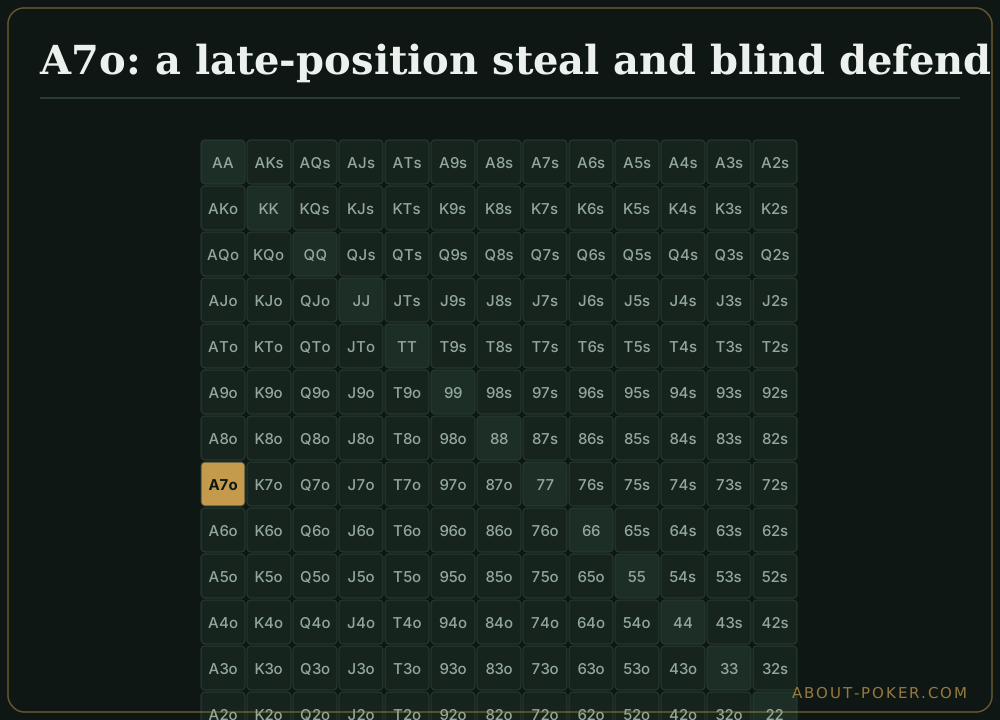
A7o is a late-position steal. Open it from the cutoff, button, and small blind, where it attacks the blinds and dominates the weaker aces and king-rag hands they defend with. In those seats it is comfortably inside your preflop opening ranges.
From early and most middle positions, fold it. The players yet to act hold ranges full of better aces and pairs, and A7o’s raw high-card strength cannot overcome being dominated and out of position. This seat-by-seat swing is the whole point of poker ranges by position: the same two cards are a routine button open and an easy under-the-gun fold.
The domination problem
The defining feature of A7o is kicker domination. When chips go in on an ace-high board, ask who is putting them in. The answer is usually a better ace — A8, AT, AJ, AQ, AK — which has your seven outkicked and leaves you drawing thin. A7o flops top pair often, but top pair with a weak kicker is the exact hand that loses big pots and wins small ones.
So treat A7o as a small-pot hand. It is fine to open and take down preflop, and fine to bet top pair once for thin value. It is a poor hand to stack off with against aggression, and only a marginal 3-bet bluff — the ace blocker helps, but with no flush draw to back it up, A7o cannot recover when its kicker is beaten.
Defending the blinds with A7o
A7o is a reasonable blind-defense hand against late-position steals. When a button or cutoff raises and you sit in the big blind, A7o is inside your defending range: it dominates the ace-rag and king-rag hands that fill a wide steal, and it flops top pair enough to win small pots. This is standard blind defense — you continue with hands that beat the bottom of a wide opening range and fold to tight ones.
A worked example
You open A7o to 2.5 big blinds on the button. The big blind calls. The flop comes A-9-4 rainbow. You bet a third of the pot and get called. This is exactly the spot to slow down. Against a calling range that includes A9, A4, 99, 44, better aces, and a scattering of draws, your seven kicker is behind a meaningful chunk of the hands that keep calling. Bet once for thin value, then check back or fold to real pressure. Firing three streets here is how a “made top pair” hand turns into a lost stack.
If instead the flop comes 7-6-2 and you have middle-ish pair plus backdoor equity, you can continue thinly — but the moment an opponent commits big, A7o is a fold, not a hero call. The discipline to give up top pair against a bigger kicker is what separates winning A7o play from losing it.
How opponent type changes the plan
The same A7o is a different hand depending on who you’re up against, and adjusting to the opponent is where most of the money is. Against a tight, straightforward player, A7o’s problems get worse: when a nit puts chips in on an ace-high board, they almost never have a worse ace, so your top pair is frequently drawing thin. Against that type you should open A7o a touch less from the small blind, fold it more to their raises, and never pay off big bets with top-pair-weak-kicker.
Against a loose, passive player — the classic calling station — A7o improves. Now your top pair can be bet for value across more streets, because the station will call with worse aces, second pair, and weak draws that a good player would fold. The trap flips: instead of losing stacks, you extract thin value. Against an aggressive, bluff-heavy opponent, A7o becomes a bluff-catcher on some boards, since your ace blocks a slice of their value aces and your pair beats their missed draws — but only call if you’ve seen them overbluff, because A7o has no equity to fall back on when it’s actually beaten.
A quick A7o decision checklist
Before you put A7o into a pot, run through a short mental checklist. First, position: are you in the cutoff, on the button, in the small blind, or defending the big blind? If not, the default is fold. Second, action in front: is it unopened, or is there a raise from an early or tight player? A single early-position raise usually means fold. Third, on the flop, did you make top pair, and if so, how many better aces are still in your opponent’s continuing range? The more there are, the fewer streets of value you fire. Fourth, are you facing a big bet or raise with only top-pair-weak-kicker? If yes, fold — the discipline to release it is the whole edge. Keep A7o in the small-pot lane, and it quietly makes money instead of quietly bleeding it. For the bigger structural picture, revisit poker ranges by position and defending the blinds.
Frequently asked
Can you open ace-seven offsuit?
Yes, but only from late position — the cutoff, button, and small blind. A7o steals well against tight blinds and dominates the weaker aces and rag hands they defend. From early and most middle seats it is a fold because the players behind hold too many hands that have it dominated.
Should you 3-bet A7o?
Almost never for value. The ace card blocks some of an opponent's strong ace combos, so A7o can occasionally serve as a blocker bluff from the blinds, but it is easily dominated when called and has no flush to fall back on. Against most opens it is a fold or an occasional call.
What beats A7o after it flops top pair?
Any better ace — A8 through AK — has your seven kicker outplayed, and any two pair, set, or straight is ahead. That is the danger: A7o makes top pair easily but it is the kind of top pair that loses stacks to a bigger kicker.