How to Play Ace-Ten Offsuit (ATo)
Ace-ten offsuit is a wide late-position open that is easily dominated and folds to pressure. Learn where ATo plays, when to fold it, and how to play it postflop.
On this page · 5 sections
Ace-ten offsuit (ATo) is a hand beginners overplay and experienced players treat with care. It flops top pairs and broadway straights often enough to be a comfortable late-position open, but it lives under constant threat of domination — every strong ace and broadway that wants a big pot against it (AK, AQ, AJ, and pairs above tens) has it beaten. The skill with ATo is knowing when it is stealing dead money and when it is the underdog being trapped.
Where ATo belongs preflop
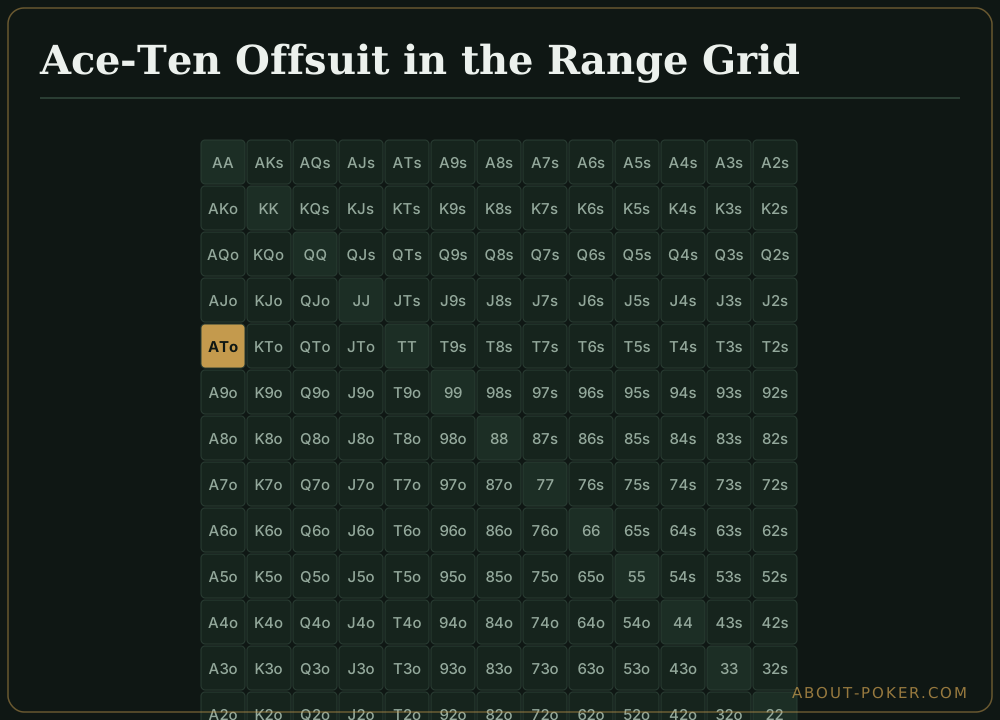
By position, ATo is a late-opening hand that tightens quickly as you move toward the front:
- Early position (UTG at 6-max, full ring): usually a fold. Too many dominating aces continue against you, and the ten kicker is a liability out of position.
- Middle position: a marginal open in many games; borderline in tighter fields.
- Cutoff and button: a standard, comfortable open. This is where ATo does most of its work stealing blinds.
- Small blind: open (raise) when it folds to you rather than limping.
- Big blind: defend widely; ATo is near the top of your defending range against a single raise.
For the exact seat-by-seat borders, anchor yourself in the preflop opening ranges and notice how ATo climbs from an early fold to a routine late-position steal.
The domination problem
ATo’s defining weakness is that it is reverse-dominated by the strongest ace-x hands. When money piles in preflop, the hands still in against you skew heavily toward AK, AQ, AJ, and big pairs — and ATo is a clear underdog to all of them. That is why ATo is frequently a fold rather than a 3-bet against tight ranges: 3-betting only folds out the trash you already beat and gets action from the exact hands that crush you.
Against wide ranges the picture flips. A button steal or a small-blind open contains so many weaker aces, weaker broadways, and junk that ATo is comfortably ahead and can 3-bet for value or as a semi-bluff. This is the same dynamic that governs ace-jack offsuit, only ATo is a notch weaker — its ten kicker loses more kicker battles, so it needs an even wider opponent to justify aggression.
Facing 3-bets and 4-bets
When you open ATo and get 3-bet, you are often in a tough spot. Against a tight 3-bettor, ATo is usually a fold — calling out of position with a dominated ace bleeds money. Against a loose, aggressive 3-bettor you can continue more, calling in position or occasionally 4-bet bluffing with the ace blocker. The full framework for these calls lives in defending against 3-bets.
When you face a 4-bet, ATo is a clean fold. The value portion of any 4-betting range — AA, KK, AK, AQ — has you dominated, and you have neither the equity nor the price to continue.
A worked example
You open A♥T♠ from the button and the big blind, a loose player, calls. The flop comes A♦-8♣-4♠ and you have top pair, medium kicker.
You bet for value and the big blind calls. The turn is the 2♥. Because your ten kicker is vulnerable — many worse aces call your flop bet, but better aces are also possible — you should size down or check to control the pot rather than blasting. You are extracting from A9, A7, and weaker aces without building a giant pot that only better aces and two pair want to play. River is the 6♦; a small value bet gets called by worse aces and folds out the missed draws. That controlled line — value bet, pot control, thin value — is how ATo makes money without paying off the hands that dominate it.
Now imagine you had opened from early position and a nitty player 3-bet. Their range is AK, AQ, AJ, TT+, and you are crushed. Same cards, different context, and the correct preflop response shifts from a comfortable steal to a fold.
Postflop in one paragraph
When ATo flops top pair, bet for value against worse aces but pot-control against ranges heavy in AK and AQ — the ten kicker means you rarely want a huge pot with one pair. When it flops a broadway draw (a KQ or QJ texture giving you a gutshot to the nuts), you can barrel with real equity. When it flops middle pair or worse, it is usually a give-up or a single bluff. The theme is restraint: ATo makes good-looking top pairs whose kicker quietly costs you money if you overplay them.
Frequently asked
Is ace-ten offsuit a good hand?
ATo is a decent but easily dominated hand. It opens comfortably from middle position through the button and defends the blinds, but it is beaten by AK, AQ, AJ, and big pairs. Treat it as a late-position steal, not a hand to play big pots with.
Should you 3-bet ace-ten offsuit?
Mostly against wide ranges. ATo can 3-bet a loose late-position opener or in blind-vs-blind spots where you are ahead. Against a tight early-position raise it is usually a fold, because the hands that continue against a 3-bet all dominate it.
Should you fold ATo to a 4-bet?
Almost always. Against a 4-bet you are crushed by the value hands — AA, KK, AK, AQ — and you lack the equity or price to continue. Fold ATo to 4-bets unless you have a strong read that your opponent is 4-bet bluffing wildly.