How to Play Pocket Aces (AA)
Pocket aces are the best starting hand, but overplaying them leaks money. Here is how to bet, raise, and read boards so AA wins the pots it deserves.
On this page · 8 sections
Pocket aces (AA) are the strongest starting hand in Texas Hold’em, winning roughly 85% of the time heads-up against a random hand. But “best hand” and “guaranteed profit” are not the same thing. Most of the money lost with aces comes from two mistakes: letting too many players in cheaply, and refusing to fold when the board and action scream that you are beaten. Play them fast, thin the field, and stay honest after the flop.
Raise and re-raise — never limp
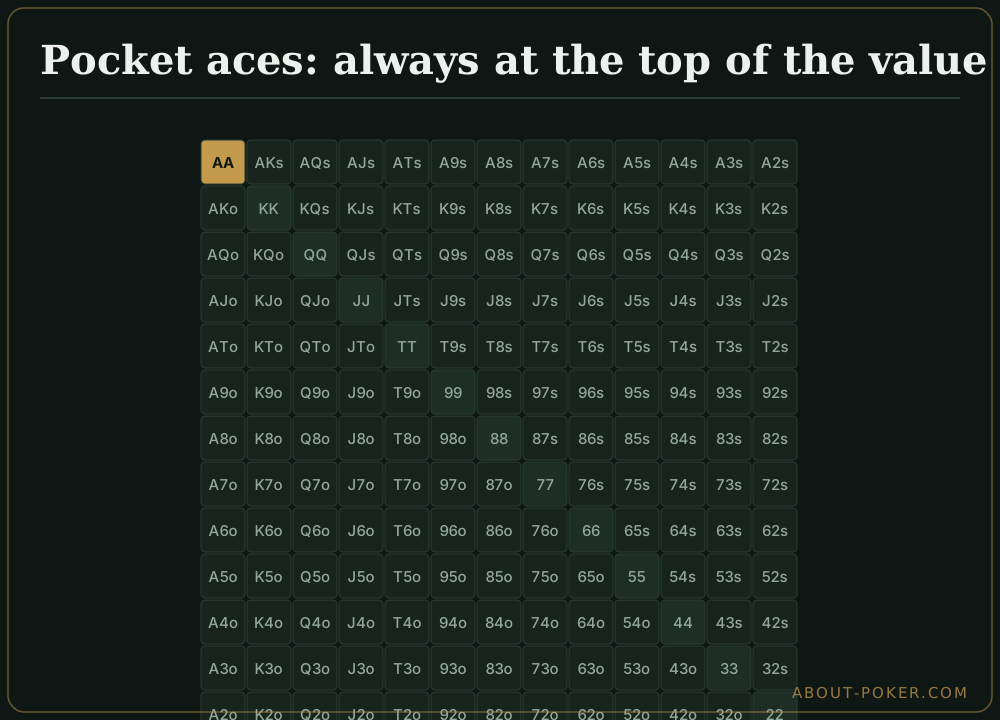
Aces play best in small, aggressive pots against one opponent. That means raising when you open, and 3-betting or 4-betting when there is action in front of you. Limping to “trap” is a leak: it caps the pot size, invites five callers, and turns your 85% equity into a coin flip.
The math is simple. Against one random hand AA has ~85% equity. Against four random hands it drops to about 55% — still ahead, but barely, and you will often be facing a made hand by the river. Every extra player you let in reduces how much your premium is actually worth. Raising thins the field and isolates a single weaker range.
When you open from any seat, use a standard raise from your preflop opening ranges. If someone raises before you, aces are the top of every 3-bet range — re-raise for value. If they 4-bet, aces are exactly the hand you want to get stacks in with, which is the core of any 4-betting strategy.
A worked example
You open to 2.5bb from the cutoff with A♠A♥ (100bb deep). The button 3-bets to 8bb. You 4-bet to 20bb. The button jams all-in for 100bb.
Call instantly. Against a typical 5-bet-jamming range of QQ+, AK, your aces are a big favorite — you dominate AK (about 88%) and crush KK/QQ (about 82%). Even if the button somehow has the one hand that flips against you, folding here is far more expensive over time than the occasional cooler. You are getting all-in with the best of it, which is the entire goal.
Playing aces after the flop
Once you see a flop, keep betting — but read the board.
- Dry boards (K-7-2 rainbow): Bet for value. You beat everything worth calling and there are no draws to fear. Size up to charge worse aces and pocket pairs.
- Wet boards (9-8-7 two-tone): Still bet, but respect big raises. Straights and two-pair combos are live, and your overpair is now vulnerable.
- Overpair is not the nuts: If a tight opponent check-raises the turn on a coordinated board and jams the river, one pair — even aces — is often a fold. Discipline here separates winning players from those who “can’t fold AA.”
When to actually fold
Folding aces is rare but real. The signals: multiway action, a scary runout, and a large bet or raise from a player whose range is heavily weighted toward sets, straights, or flushes. If the pot is multiway and a passive opponent suddenly wakes up with aggression on a 2-3-4 or three-flush board, your single pair is often behind.
The rule of thumb: aces are a monster preflop and a strong-but-beatable one pair postflop. Get the money in preflop and on dry flops; slow down when the board and a specific opponent’s range have clearly passed you.
Key adjustments by opponent
Against loose, calling-station opponents, size your value bets larger — they pay off overpairs. Against tight nits who only continue with strong hands, be ready to fold when they raise. And against aggressive 3-bettors, widen your 4-bet-for-value threshold so aces get maximum action rather than folding out worse hands too early. Aces reward players who extract value preflop and know exactly when their one pair has stopped being good.
The multiway problem in detail
The single biggest reason aces “get cracked” is playing them multiway. Heads-up you are an 85% favorite; against two opponents you drop to roughly 73%, against three to about 64%, and against four random hands to around 55%. Those numbers assume random hands — against the tighter ranges that actually call raises, your equity is lower still, because opponents show up with connected and suited holdings that flop straights, flushes, and two pair. This is why a big preflop raise is not greed, it is protection: every player you fold out restores equity you would otherwise be giving away. When you fail to thin the field and see a flop four-handed, treat your aces as a strong-but-fragile hand and be far more willing to slow down when action develops.
Sizing to build the right pot
Because aces want a single opponent and a growing pot, sizing does real work. When you open, use your standard raise, but when you 3-bet or 4-bet, do not shrink your sizing to “keep them in” — that invites multiway pots. A larger 3-bet against a wide opener isolates one caller and inflates the pot with your equity edge intact. Postflop on dry boards, size up: a K-7-2 rainbow flop gives worse aces, kings, and pocket pairs a reason to pay, so bet 60-75% of the pot rather than a token amount. On wet boards where you still lead, charge the draws — betting bigger on a 9-8-7 two-tone makes flush and straight draws pay a price to continue, and denies them the cheap look they want.
Quick checklist for playing AA
- Always raise or re-raise preflop — never limp, never slow-play deep.
- Thin the field: prefer heads-up pots and size 3-bets and 4-bets to isolate.
- Get all-in preflop against 3-bet and 4-bet ranges; you dominate them.
- Bet dry flops for value and size up to charge worse one-pair hands.
- On wet boards, keep betting but respect large raises and river jams.
- Be willing to fold one pair — even aces — to committed action from a range full of sets and straights.
Aces are the best hand you can be dealt, and the players who win the most with them are not the ones who never lose a pot, but the ones who extract maximum value before the flop and lay them down on the rare occasion the board has clearly beaten them.
Frequently asked
Should you always go all-in with pocket aces?
No. Preflop you want to build the pot with raises and re-raises, but shoving all-in 100bb deep just forces everyone but a stronger range to fold. All-in preflop is correct only when stacks are short or you can get called by worse, such as a light 3-bettor jamming into your 4-bet.
Why do pocket aces get cracked so often?
AA wins about 85% heads-up preflop, but that still means it loses one time in seven. Against multiple opponents its equity drops fast — versus four random hands it is closer to 55%. Getting cracked is normal variance, not a sign you played badly.
Should you slow-play aces?
Rarely. Aces are strongest before the board can hurt them, so betting and raising to grow the pot and thin the field is almost always better than trapping. Slow-playing invites cheap draws and multiway pots where your equity collapses.