How to Play Pocket Kings (KK)
Pocket kings are the second-best starting hand, but an ace on the flop tests every player. Learn how to raise, 4-bet, and navigate ace-high boards with KK.
On this page · 7 sections
Pocket kings — “cowboys” — are the second-strongest starting hand in Hold’em, behind only aces. All-in preflop, KK dominates every other pocket pair (it is about an 82% favorite over QQ) and beats AK (about 66% to 34%). The only hand you truly fear preflop is AA. What makes KK a skill test is not the preflop decision — that part is easy — but the ace on the flop, which appears about 23% of the time and forces you to read whether your kings are still good.
Raise and 4-bet for value
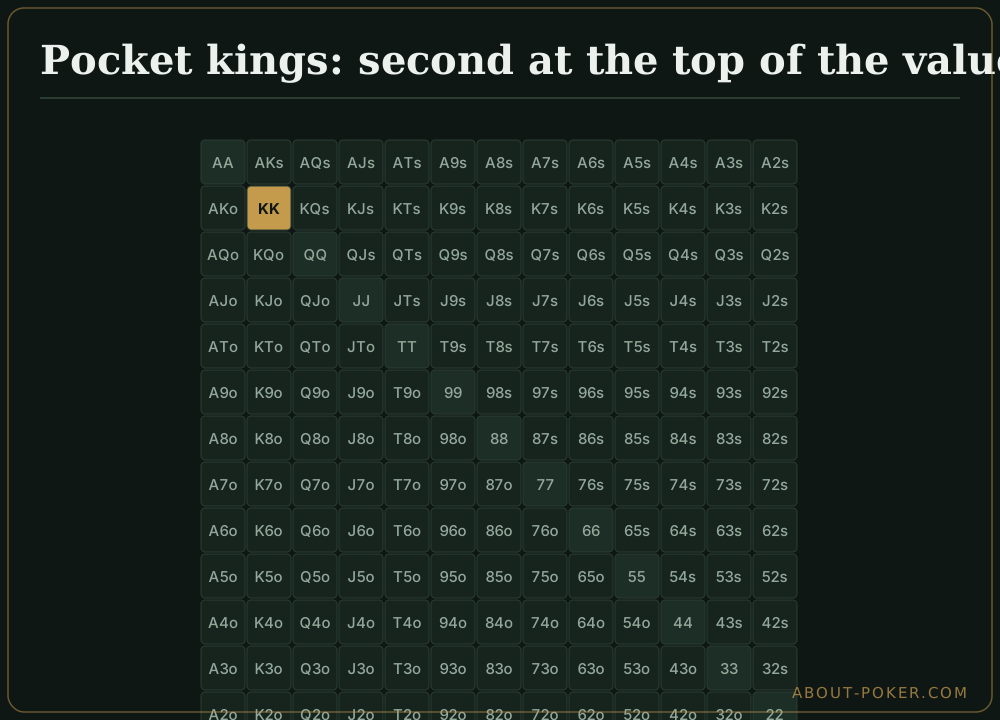
KK is a raise-first hand from every seat and a premium 4-bet. It sits right below pocket aces at the very top of your value range. Facing a raise, it belongs in your 3-bet range for value; facing a 3-bet, it is a clear 4-bet in almost every situation.
Why so aggressive? Because getting the money in preflop is where KK earns the most. It dominates QQ, JJ, TT, and AK — a huge slice of any 3-betting or 4-betting range. Only AA has you crushed, and AA is a single combination-light holding relative to everything you beat. Flatting to “keep KK safe” just lets clearly worse hands realize equity and see aces flop for free. Build the pot; the math is overwhelmingly on your side. A strong 4-betting strategy treats KK as a cornerstone value hand.
A worked example
You 4-bet K♠K♦ from the button after a cutoff 3-bet, and they call. The pot is large and you hold the second-nut preflop hand.
The flop comes A♥8♣3♦. This is the flop every KK player braces for. In a 4-bet pot, your opponent’s continuing range is ace-heavy — AK, AQ, and sometimes AA are exactly the hands that called your 4-bet. A big bet here often gets called or raised only by hands that beat you. The disciplined line is to control the pot: check back or bet small, and be ready to fold to real aggression. Yes, you sometimes fold the best hand — but over the long run, paying off ace-x on ace-high boards in 4-bet pots is a bankroll leak. Save the big value for the 77% of flops that come king-high or lower.
Navigating ace-high flops
Not every ace-high board is a fold, and the context matters:
- Single-raised pots, multiway: An ace hits many calling hands. Bet small or check; do not bloat the pot with one pair.
- Heads-up, opponent passive: You can bet for thin value, since many opponents would raise their aces. Fold to a check-raise.
- 3-bet and 4-bet pots: The opponent’s range is much more ace-weighted. Pot control is the default, and folding to sustained pressure is correct more often than beginners think.
The mistake to avoid is treating KK like AA on every board. KK is a strong one pair, not the nuts, and one specific card flips the situation.
When the board is king-high or lower
The other three-quarters of the time, life is easy. On a king-high board you often have top set — bet big and get paid. On a queen-high-or-lower board, your overpair is a monster; bet for value across streets and let opponents pay you off with worse pairs and draws. This is where KK makes its money, so extract it aggressively.
The one exception: flatting a tight 4-bettor
There is exactly one situation where slow-playing KK preflop can be correct, and it is narrow. Facing a raise, if you 3-bet and a player who only ever 4-bets with aces comes over the top, flat-calling instead of 5-betting can be the higher-expected-value line: you keep their range wide, you keep worse hands in that would fold to a 5-bet, and you avoid stacking off against the one hand that has you crushed. This only applies against a known, disciplined opponent whose 4-bet range is essentially pure AA. Against a normal player who 4-bets AA, KK, QQ, AK, and some bluffs, KK is a clear 5-bet-and-get-it-in for value — you dominate the vast majority of that range. Do not turn the exception into a habit; against unknowns, put the money in.
Multiway pots demand more caution
Everything above assumes a heads-up or short-handed pot. When three or more players see the flop, KK loses value faster than beginners expect. With four opponents, the chance that someone holds an ace climbs sharply, and the chance the board pairs a card that beats your kings rises too. In a multiway single-raised pot on an ace-high or coordinated board, a single pair of kings is often just a bluff-catcher — bet small for protection or check, and be far more willing to fold to aggression from multiple players. The general rule: KK’s raw strength is highest heads-up and preflop, and it decays with every extra player and every scary card. Play it fast preflop precisely so you are usually heads-up by the flop.
Quick reference by board texture
- King-high: you likely have top set. Bet big across streets and stack worse hands.
- Queen-high or lower: your overpair is a monster. Value bet aggressively; call down against most bluffs.
- Ace-high, single-raised, heads-up: bet small or check; fold to a check-raise.
- Ace-high, 3-bet or 4-bet pot: control the pot, and fold to sustained pressure more often than feels comfortable.
- Ace-high, multiway: treat one pair as a bluff-catcher at best.
Play pocket kings for what they are: the second-best hand in poker, a mandatory 4-bet for value, and a strong overpair that must respect exactly one card. Get the money in preflop, print on king-high and lower boards, and keep the pot small when the ace arrives.
Frequently asked
Should you always 4-bet pocket kings?
Almost always for value. KK is second only to aces and dominates every pocket pair below it plus AK. You want to build the pot and get money in preflop. Only very rarely, against extremely tight players who 4-bet only AA, might you flat to keep their range wide — and even then a call is close.
How do you play pocket kings when an ace flops?
Proceed with caution. An ace on the flop hits a big part of most calling ranges, so a large bet into heavy resistance is often KK behind. In a single-raised pot you can make a small probe or check; in a 3-bet or 4-bet pot, be ready to fold to significant aggression, because your opponent's range is ace-heavy.
What are the odds of an ace flopping against pocket kings?
Roughly one in four. An ace appears on the flop about 23% of the time when you hold KK. That is common enough that you must have a plan for ace-high boards, but rare enough that KK is still hugely profitable — the other 77% of flops, you usually have the best hand.