How to Play Pocket Jacks (JJ)
Pocket jacks are strong but awkward — they hate overcards and cold 4-bets. Here is how to raise, 3-bet, and fold JJ so it stops bleeding money.
On this page · 7 sections
Pocket jacks (JJ) are one of the most misplayed hands in poker. They win about 77% heads-up against a random hand, which puts them firmly in the top tier — yet players lose more with jacks than with almost any other premium. The reason is simple: JJ looks like a monster preflop but often becomes a marginal overpair the moment the flop brings a queen, king, or ace. Play them aggressively before the flop, then be willing to slow down.
Open and 3-bet, but be careful 4-betting
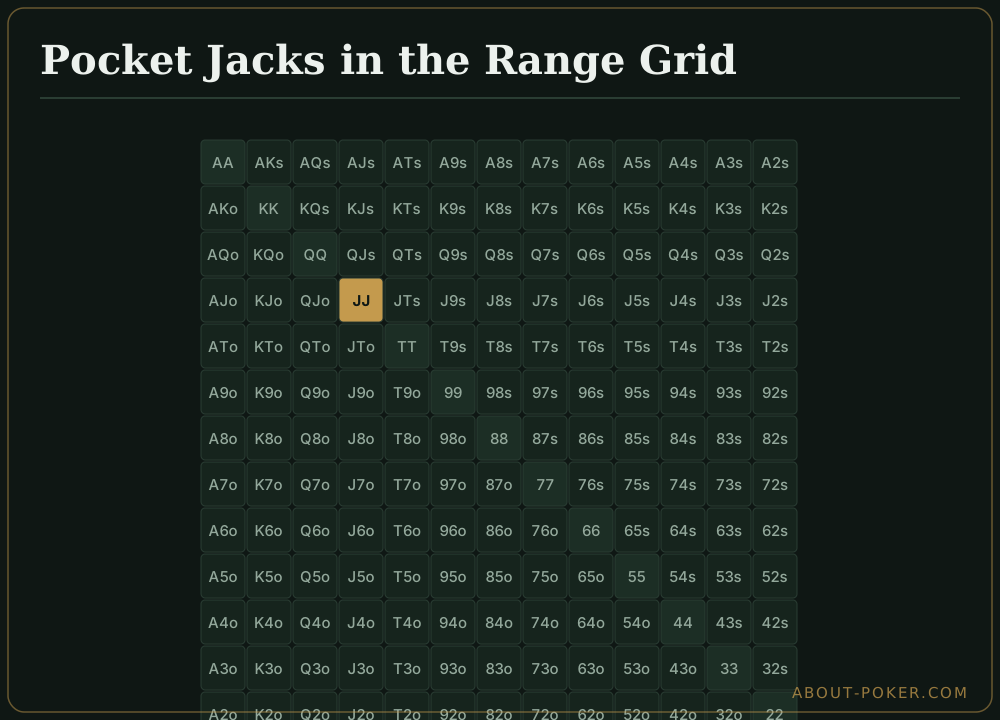
Jacks are always an open-raise from any position, and they are a comfortable 3-bet for value against a single opener. The trouble starts one level up. If you open, get 3-bet, and then face a decision, JJ is usually a call rather than a 4-bet. Calling keeps worse hands (AQ, AJ, smaller pairs, suited connectors) in the pot and avoids getting stacks in against a range that is often QQ+ and AK.
The math is the pressure point. Against a tight cold 4-betting range of QQ+ and AK, jacks have only about 40% equity — you are a coin-flip at best against AK and a big dog to the bigger pairs. That is why blasting JJ into a 4-bet is a leak against disciplined players. Save the aggressive line for loose opponents, and lean on your 4-betting strategy to decide when jacks are strong enough to jam.
When you are the one applying pressure, JJ belongs near the top of your 3-bet range. It re-raises well for value, folds out overcards that would otherwise flop a pair against you, and takes the pot down uncontested often enough to profit even before the flop.
The overcard problem
Here is the number that defines the hand: about 57% of flops contain at least one card higher than a jack. That means more than half the time you have an overpair that any ace, king, or queen in your opponent’s range now beats or draws live against.
This does not mean you should be scared of jacks — it means you should size the pot to your position and read the board honestly. On a low, disconnected flop like 8-5-2, jacks are effectively the nuts and you bet for value relentlessly. On a K-Q-7 flop against a tight caller, jacks are a bluff-catcher at best, and stacking off is often a mistake.
A worked example
You open to 2.5bb in the cutoff with J♣J♦ (100bb deep). The button 3-bets to 8bb. You call. The flop comes 9♠-6♦-2♣ — no overcards, a dream for jacks.
You have a clear overpair on a dry board. You should check-call or lead small, because your opponent’s 3-bet range still contains plenty of AK/AQ that will keep barreling. Now change one card: the flop is A♥-9♠-6♦. Now JJ is a marginal bluff-catcher. Against a range heavy in AK, AQ, and AA, calling two big bets here bleeds money. The correct play is often to check and fold to sustained pressure — the same jacks, a completely different hand.
Compare this to a true monster: unlike pocket aces, which welcome big pots on almost any board, jacks want smaller pots and cleaner flops.
Adjusting to your opponents
Against tight, straightforward players, respect the 4-bet and the big turn barrel — their ranges are exactly the hands that beat you. Against loose, aggressive opponents who 3-bet and 4-bet light, jacks climb in value: now you can 4-bet for value and call down more overpair spots, because their range is full of the AJ, KQ, and small pairs you dominate.
To 4-bet or to call: the depth question
Whether jacks want to 4-bet or flat a 3-bet is largely a stack-depth decision. Deep — 100 big blinds or more — flatting is usually best. Calling keeps the pot smaller, lets you play a hand where you have position or a range advantage postflop, and avoids committing a big stack into a range that is often QQ+ and AK. Shorter — around 40 big blinds and below — the postflop game shrinks and getting it in preflop becomes more attractive, because you are no longer navigating multiple large streets with an overpair that hates overcards. At roughly 20 big blinds, jacks are a clear get-it-in hand over most 3-betting ranges: you have enough equity as a favorite over the bluffs and a coin-flip against AK, and there is no awkward postflop decision to lose value on.
The exception at any depth is the player type. Against a loose, aggressive 3-bettor whose range is stuffed with AJ, KQ, suited connectors, and small pairs, jacks are a strong value 4-bet at almost any depth because you dominate so much of their range. Against a tight nit who only 3-bets or cold 4-bets QQ+ and AK, jacks slide down to a flat or even a fold, because that range gives you only about 40% equity.
Playing the flop by texture
Once you see a flop with jacks, sort the board into three buckets. On a low, dry board like 8-5-2, jacks are effectively the nuts and you bet for value relentlessly, because there is nothing higher and few draws to worry about. On a middling, coordinated board like 9-8-7 with a flush draw, your overpair is still ahead but vulnerable, so you bet to charge draws and deny equity rather than slow-playing. On a high board with an ace, king, or queen, jacks become a bluff-catcher — you check, keep the pot small, and are ready to fold to sustained pressure from a range that now has you beaten or drawing thin. Sorting flops this way turns “I have an overpair” into an actual plan instead of a reflex to keep betting.
A quick decision checklist
- Open and get 3-bet, deep? Usually call, keep the pot controlled.
- Facing a cold 4-bet from a nit? Consider folding — that range is QQ+ and AK.
- Facing aggression from a loose player? 4-bet and call down wider; you dominate them.
- Low, dry flop? Value-bet relentlessly.
- Overcard flop against a tight range? Check, pot-control, and be willing to fold.
The single biggest improvement most players can make with JJ is emotional, not technical: accept that jacks are strong preflop and often mediocre postflop, and stop paying off the board that clearly beat you.
Frequently asked
Should you 4-bet pocket jacks?
Usually no. JJ is at the bottom of most value 4-bet ranges and plays better as a call against a 3-bet, keeping worse hands in and controlling the pot. You 4-bet JJ mainly versus loose, aggressive 3-bettors or when stacks are short enough that you are happy getting it in.
Are pocket jacks a good hand?
Yes — JJ is a top-5% preflop hand and wins about 77% heads-up against a random hand. It is strong enough to open and 3-bet from any seat. The difficulty is postflop: roughly 57% of flops bring at least one overcard, so JJ is often an overpair that is no longer the nuts.
Should you fold pocket jacks preflop?
Rarely, but it happens. Against a tight player's cold 4-bet, especially at short stacks or in a passive live game, JJ can be a clear fold because that range is heavily weighted toward QQ+ and AK. Deep-stacked against loose opponents you almost never fold jacks preflop.