How to Play Pocket Queens (QQ)
QQ is a premium pair that raises and 3-bets from everywhere, but the overcard problem makes it tricky. Learn how to play pocket queens preflop and postflop.
On this page · 6 sections
Pocket queens (QQ) is the third-best starting hand in Texas Hold’em, behind only pocket aces and pocket kings. It’s a premium pair that opens from any seat, 3-bets and 4-bets for value, and dominates almost the entire deck before the flop. Its one recurring headache is the overcard problem: an ace or king on the flop turns a monster overpair into a nervous one-pair hand. Playing QQ well means pressing your huge preflop equity while staying disciplined when the board threatens you.
Where QQ belongs preflop
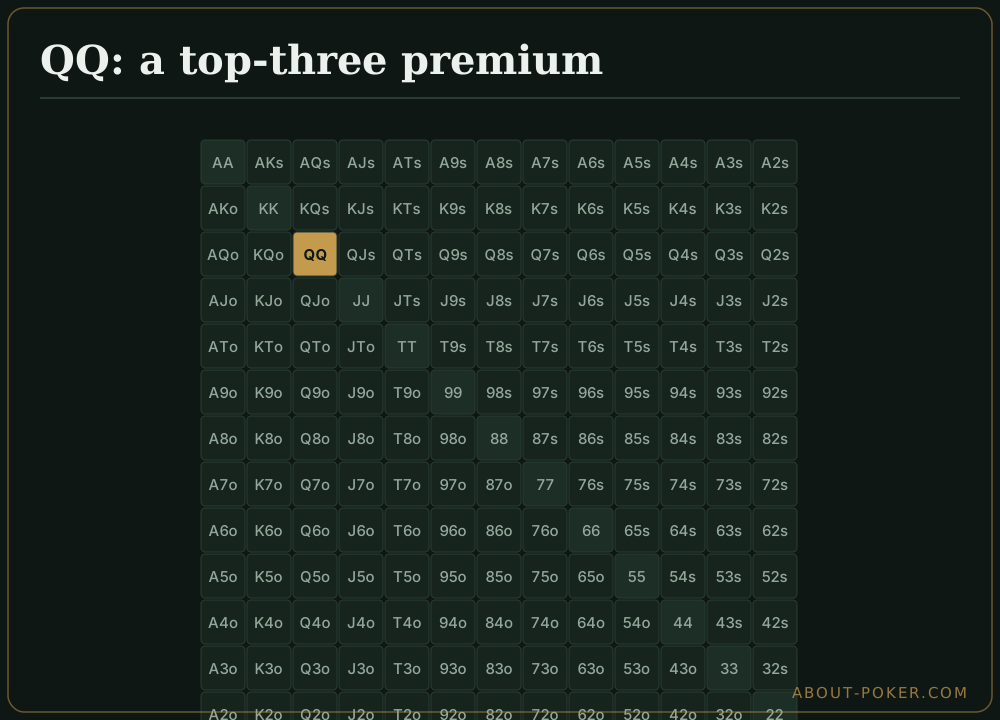
QQ is a raise-or-reraise hand from everywhere:
- Early position (UTG): open, and open large enough to build a pot. QQ is at the very top of every opening range.
- Middle and late position: always open, and always for value.
- Small blind: raise when it folds to you; consider a slightly larger size to punish the big blind.
- Big blind: 3-bet for value against opens from every seat.
There’s no position where QQ isn’t a premium. The interesting decisions come after someone reraises you, not on the open itself. Ground the opening sizes in the preflop opening ranges and see how dominant QQ is across seats in poker ranges by position.
The 4-bet decision
The signature QQ dilemma is what to do when you 3-bet and get 4-bet, or when you open and face a 3-bet you want to reraise. At 100 big blinds, 4-betting for value is standard. QQ is ahead of AK (roughly a 54% favorite), crushes every worse pair, and dominates the broadway bluffs in a typical 4-bet-calling range.
The exception is the ultra-tight opponent whose 4-bet range is only AA, KK, and AK. Against that specific range, QQ is behind — it’s crushed by the two bigger pairs and only a slight favorite over AK — so calling the 3-bet and playing a smaller pot can be better than 4-betting into a range that’s ahead of you. Absent that read, get the money in. The 4-betting strategy guide breaks down how stack depth and opponent tendencies shift this line, and the 3-bet range guide covers how QQ anchors your value reraises.
The overcard problem postflop
Preflop, QQ is a monster. Postflop, roughly half of all flops bring an ace or a king — a scary overcard on about 52% of boards. When that happens, your overpair is suddenly a one-pair hand that many opponents will only raise with a hand containing that top card.
The discipline is to keep the pot sized to your hand. On a queen-high or low board, QQ is a genuine overpair you can bet for three streets of value. On an ace- or king-high board, treat it as a strong bluff-catcher: bet or call once to gauge resistance, then fold to sustained aggression from players who don’t bluff. Overplaying QQ on ace-high flops is one of the most common ways strong players lose stacks.
A worked example
You open Q♥Q♣ from middle position. The button 3-bets. You 4-bet for value, the button calls, and you’re heads-up in a big pot. The flop comes 8♠ 5♦ 2♣ — a dream flop. Your overpair is far ahead of the button’s calling range of worse pairs, AK, and AQ.
You continuation-bet; the button calls. Turn is the 7♥. You bet again for value — you’re still ahead of AK/AQ that floated and worse pairs like TT-99. River is the J♦. You make a final value bet, targeting the exact worse hands (AJ, KJ, second pairs) that can’t fold. Now flip the runout: had the flop come A♣ 6♦ 3♠ instead, you’d check-call or bet small once and be ready to fold to a raise, because the ace flips the board in the button’s favor. Same premium hand, opposite plan — QQ’s postflop value is entirely about whether an overcard came.
Postflop in one paragraph
QQ’s postflop story is overpair versus overcard. On boards with no ace or king, you have a powerful overpair — bet for value across multiple streets and be happy to get stacks in against worse pairs and top pair. On ace- or king-high boards, downgrade to bluff-catcher mode: control the pot, take one street of showdown value, and fold to the aggression that usually means your opponent hit their overcard. On low boards where you flop an overpair, the main threats are sets and drawing hands, so bet enough to charge draws while reading the board texture. QQ is a monster you must occasionally treat like one pair.
Where to go next
QQ is a top-three premium with one soft spot: the overcard flop. Play it aggressively preflop, 4-bet it for value in most spots, and shift to disciplined bluff-catching when an ace or king hits. Compare it to the top of the pyramid in how to play pocket aces, master the reraise decisions in 4-betting strategy, anchor your value reraises with the 3-bet range guide, and connect it all through the preflop strategy hub.
Frequently asked
Is QQ a good hand?
Yes, pocket queens is the third-best starting hand in Hold'em, behind only AA and KK. It's a premium pair that opens and 3-bets from every seat and is a big favorite over any single non-pair hand. Its only weakness is the two overcards, ace and king, that can beat it after the flop.
Should I 4-bet with pocket queens?
Usually yes, at least at 100 big blinds. QQ is strong enough to 4-bet for value against most 3-bettors, since it's ahead of AK and every worse pair. Against a very tight player who only 4-bet-shoves AA, KK, and AK, you can occasionally flat the 3-bet instead, but 4-betting is the standard play.
How do I play QQ on an ace-high or king-high flop?
Cautiously. When an ace or king flops, your overpair becomes a one-pair bluff-catcher. Bet or call one street to see how the opponent reacts, but be ready to fold to heavy aggression, since many players only pile money in with a hand containing that top card. Against passive opponents you can still value-bet.