How to Play Pocket Tens (TT)
Pocket tens are a strong but overcard-prone pair. Here is how to open, 3-bet, set-mine, and fold TT so it stops losing money in tricky spots.
On this page · 6 sections
Pocket tens (TT) are a strong pair that plays awkwardly for one reason: overcards. TT is a top-6% hand and beats a random hand about 75% of the time heads-up, so it opens from every seat and 3-bets comfortably against loose players. The trouble starts on the flop, where any jack, queen, king, or ace gives your opponent a card that beats your pair. Since roughly 57% of flops bring at least one of those overcards, TT is frequently an overpair that is no longer the best possible one-pair hand. Playing it well means knowing when to build the pot and when to keep it small.
Where TT belongs preflop
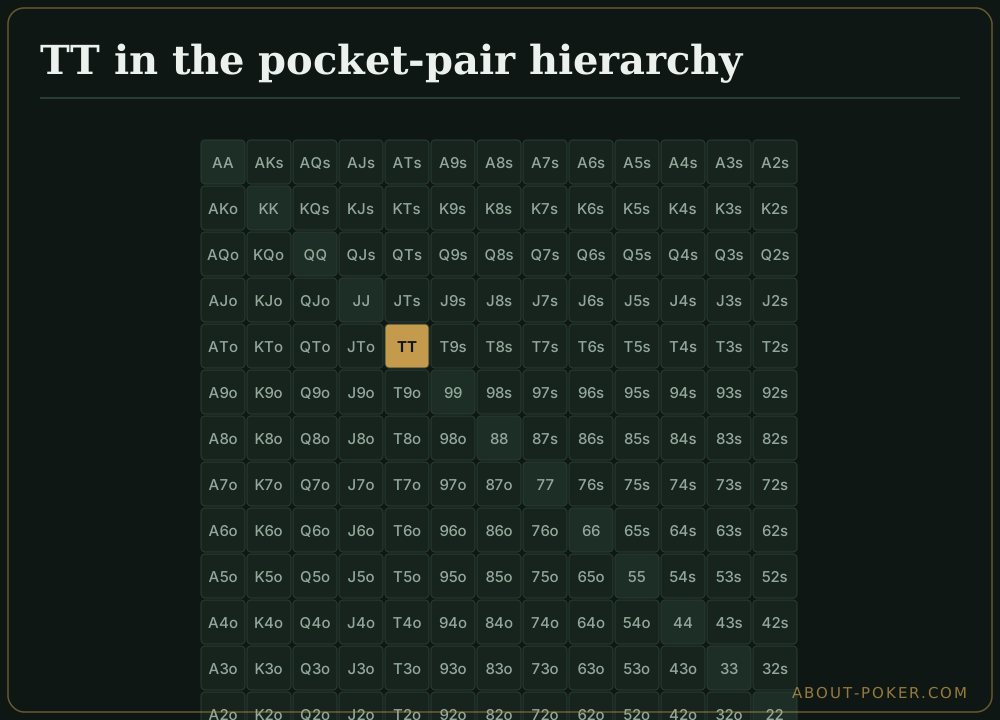
TT opens from every position — it is never a fold as the first raiser:
- Early through late position: a standard open. TT is comfortably inside every opening range.
- Small blind: open (raise) when it folds to you.
- Big blind: defend and often 3-bet against late opens.
The interesting decisions come when someone raises in front of you. See where TT sits relative to other pairs in the preflop opening ranges.
3-bet, call, or fold against a raise
Against an opener, TT is a 3-bet-or-call hand, and the choice depends on the opponent:
- Against a loose or late opener: 3-bet for value, especially in position. You are ahead of a wide range and you charge worse pairs and broadways to continue.
- Against a tight early raise: call rather than 3-bet. A tight range has too many overpairs and AK, so you keep the pot small, retain your set-mining equity, and flop an overpair only when the board cooperates.
- Against a cold 4-bet from a tight player: consider folding. That range is weighted toward QQ+ and AK, and TT is a coinflip at best against it.
TT is usually too weak to 4-bet for value; it works better as a flatting hand that realizes equity postflop. Fit it into your overall structure with the 3-bet range, and compare it to the very similar decisions you face with pocket jacks.
Set-mining and pot control
When TT calls a raise and misses the overpair, its next-best outcome is a set. You flop a set about 12% of the time (roughly 1 in 8.5), and a set of tens is nearly always the best hand and gets paid. That set potential is why calling deep-stacked against a raise is profitable even when overcards come. The rest of the time, TT is a one-pair hand that wants a small pot on overcard boards and a bigger one on ten-high-or-lower boards where your overpair is genuinely strong.
A worked example
You open T♠T♥ from middle position and the button, a loose regular, 3-bets. You call in position. The flop comes 9♦ 6♣ 2♠ — a great board for you, since your overpair beats every one-pair hand and there are no overcards. The button continuation-bets; you call to keep their bluffs and worse pairs in. The turn is the 4♥, still safe, and you call a second barrel. This is straightforward overpair play: you are ahead of the bluffs and the worse value.
Now change the flop to A♣ J♦ 5♠. Two overcards, and the button’s 3-betting range is full of ace-x and broadway hands. Here TT is a marginal one-pair hand, not a confident overpair. Against a continuation bet you often check-call once or fold to sustained aggression, because your tens are now behind much of the range that keeps betting. Same hand, opposite plan — the flop texture decides everything.
Postflop in one paragraph
When TT flops an overpair on a low board (nine-high or lower), play it for value and build the pot. When the flop brings one or more overcards, downgrade TT to a marginal one-pair hand: control the pot, call a reasonable amount, and fold to heavy pressure that represents the overcards it is scared of. When TT flops a set, it is almost always best — get the money in. The whole art of playing tens is reading the flop for overcards and adjusting your aggression accordingly.
Where to go next
TT is a strong pair with an overcard problem, and the fix is disciplined pot control. Slot it into your 3-betting with the 3-bet range, study the near-identical spots you face with pocket jacks, and ground your opens in the preflop strategy hub.
Frequently asked
Is pocket tens a good hand?
Yes. TT is a top-6% preflop hand and wins about 75% heads-up against a random hand. It opens from every seat and is strong enough to 3-bet for value against loose players. The difficulty is postflop, where overcards on the flop turn your overpair into a marginal one-pair hand.
Should you 3-bet pocket tens?
Sometimes. TT is a fine value 3-bet against a wide or loose opener, especially in position. Against a tight early raise it plays better as a call, keeping the pot smaller and letting you set-mine or flop an overpair on a favorable board. It is usually too weak to 4-bet for value.
Should you fold pocket tens preflop?
Rarely, but it happens against a cold 4-bet from a tight player, whose range is heavily weighted toward QQ+ and AK. In most spots TT is a clear open or call. Deep-stacked against loose opponents you almost never fold tens preflop.