How to Play Queen-Eight Offsuit (Q8o)
Q8o is a weak, dominated offsuit queen that only opens from the button and small blind. Learn where Q8 offsuit folds, when it steals, and how to play it postflop.
On this page · 6 sections
Queen-eight offsuit (Q8o) is another “it has a face card” trap. A lone queen with a weak, unconnected kicker is fragile: it’s dominated by every stronger queen (Q9–QJ) and outclassed by ace-x and king-x whenever a broadway card hits. Q8o makes weak top pairs, has no real straight or flush potential, and can’t stand pressure. Its only legitimate jobs are stealing from the back seats and defending the big blind cheaply.
Where Q8o belongs preflop
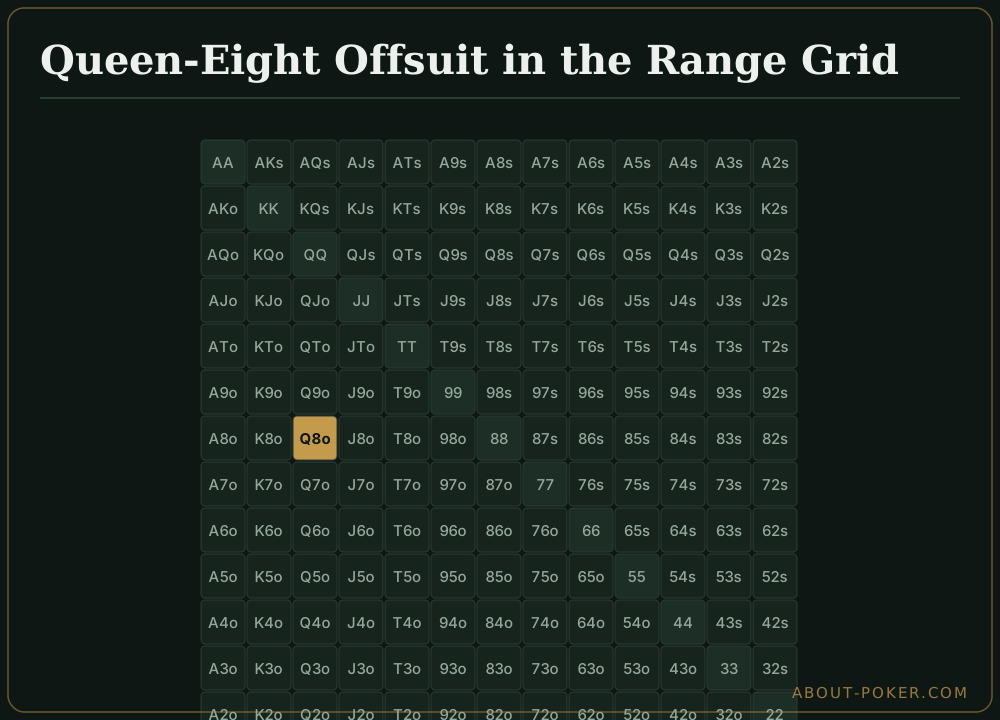
Q8o is a raise-or-fold hand that raises only from late position:
- Early and middle position: fold. Opening Q8o here walks into dominating queens, kings, and aces, and it has no plan against a 3-bet.
- Cutoff: marginal at best; many solid ranges fold it here.
- Button: a standard steal. With just the blinds behind, Q8o collects dead money and can flop a workable top pair.
- Small blind: open (raise) rather than limp when it folds to you.
- Big blind: defend against a single raise when the price is right, especially versus late steals.
For the exact borders, anchor to the preflop opening ranges; Q8o lives at the bottom edge of the offsuit queens you may open.
The domination problem
Q8o’s flaw is straightforward: when it makes top pair with the queen, the eight kicker is beaten by QT, QJ, and every stronger queen, and any ace or king on the board turns your pair into a second-best hand fast. There’s very little straight equity (the gap between the queen and eight is wide) and no suited flush help. That combination — dominated pairs, thin draws — is exactly why you should not cold-call raises with Q8o. Flatting out of position with a hand that’s usually behind is a classic money-loser.
Against wide ranges, Q8o gets a small amount of life. The queen blocks some of the strong Qx and broadway hands a stealer holds, so Q8o can occasionally attack or defend in blind-vs-blind spots. Those are marginal, situational plays — the framework lives in blind vs blind play and in defending the blinds.
Facing 3-bets and 4-bets
Open Q8o, get 3-bet, and you should fold almost every time. You’re dominated by stronger queens and broadways, and out of position you can’t continue profitably. Only against a very loose blind 3-bettor, in position, is an occasional call defensible — and it’s never a priority. Against a 4-bet, folding is automatic; the value hands crush you.
A worked example
You open Q♥8♠ from the small blind, and the big blind defends. The flop comes Q♣ 9♦ 4♠ — top pair, weak kicker. You bet, get called, and the turn is a J♦. This is a bad card: it completes straights, brings a broadway, and improves many of the hands that call you (QJ just made two pair, JT made a straight, KT–AT picked up equity). Your eight kicker was already thin, and now the board is scary. Against a bet you should usually fold rather than pay off. This is a weak one-pair hand in a spot where the turn favored your opponent’s range. Heads-up, Q8o has about 56% equity against a random hand, but that edge disappears once real money goes in against stronger holdings.
Playing Q8o postflop when you do continue
Because Q8o’s best case is a fragile top pair, the postflop plan is about controlling the size of the pot rather than building it. When you flop a queen, treat it as a one-street hand: bet or check once for thin value or protection, but do not fire multiple large barrels into a caller who is representing a stronger queen or a broadway. A queen-high board that also brings an ace or king on a later street is a signal to shut down — those cards hit the exact hands that called your flop bet.
When you flop nothing, Q8o has almost no equity to fall back on: no flush draw, rarely a straight draw, and two overcards that are frequently dominated. That means your bluffing frequency with Q8o should be low. It is a poor semi-bluff candidate precisely because it lacks the backdoor draws that make hands like suited connectors good barreling material. If you steal with Q8o and get called on a flop that misses you, checking and giving up is usually correct.
Q8o versus Q8 suited: why the suit matters so much
It is worth seeing how much a single shared suit changes this hand. Q8 suited adds a flush draw that shows up on roughly one flop in eight, and those flush draws convert Q8s from a fold-heavy hand into a genuine playable one with two more positions of opening range. The suited version can barrel flush draws as semi-bluffs, continue on more textures, and realize its equity better because it folds less often to aggression. Q8o loses all of that. The practical takeaway: do not mentally lump Q8o in with Q8s. The offsuit version opens from fewer seats, folds to 3-bets more readily, and bluffs far less often after the flop. For the exact opening borders where these thin offsuit queens live, revisit the preflop opening ranges and the blind-battle framework in blind vs blind play.
Open Q8o from the button and small blind, defend it cheaply in the big blind, and fold it everywhere else. It’s a minor steal hand — not a pot-builder.
Frequently asked
Is Q8 offsuit a good hand?
Q8o is a below-average hand that is dominated by every stronger queen and by ace-x and king-x. It only opens from the button and small blind and is a fold from every earlier seat.
Should I open Q8 offsuit?
Only from late position. Q8o is a fine button steal and a small-blind open when the action folds to you. From early and middle position it should be folded because you're too easily dominated and can't defend against 3-bets.
Can I call a raise with Q8 offsuit?
Almost never. Cold-calling a raise with an offsuit queen out of position is a leak — you are frequently dominated. Q8o is a raise-or-fold hand outside of cheap big-blind defends.