How to Play Queen-Five Offsuit (Q5o)
Q5o is a weak offsuit queen that folds early and steals late. Learn where Q5 offsuit is playable, its best blind-vs-blind spot, and how to avoid kicker traps.
On this page · 9 sections
Queen-five offsuit (Q5o) is a weak offsuit queen — a decent high card yoked to a poor kicker, with no flush to soften the blow. When it flops top pair, that queen is often dominated by a better queen, a king, or an ace in your opponent’s range. Q5o isn’t unplayable — a queen is frequently the best hand heads-up, and it steals fine from late position — but it lives near the bottom of your range and rewards discipline: fold it early, steal with it late, and keep pots small when it hits.
Where Q5o belongs preflop
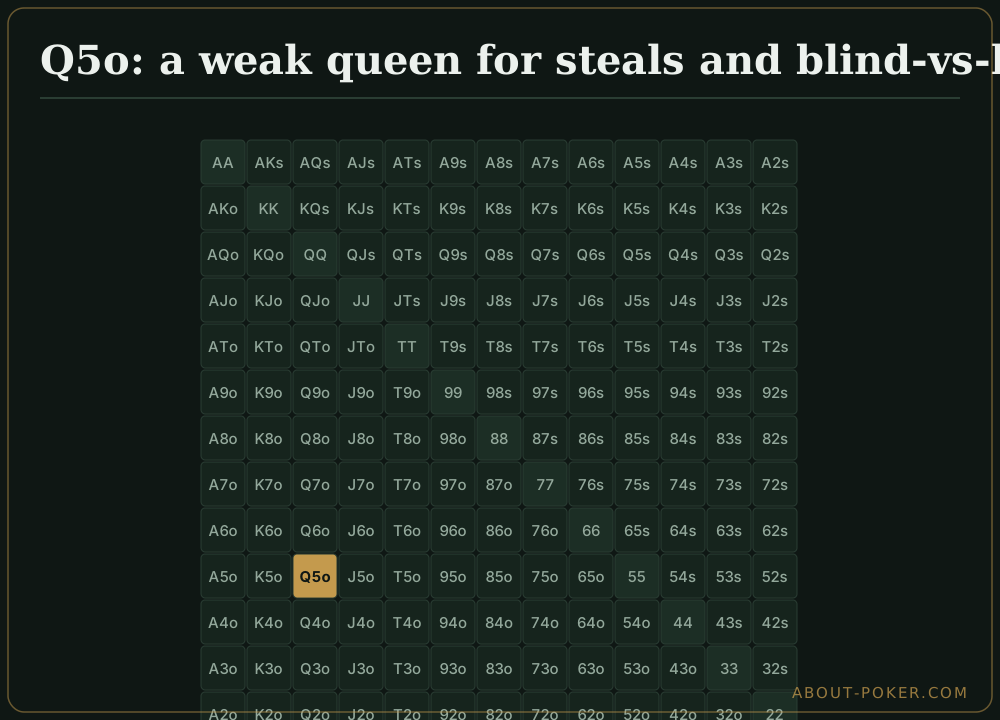
- Early and middle position: fold. A weak queen opened into a full field runs into domination and unwanted 3-bets.
- Cutoff: a fold at a full ring, at most a marginal 6-max open.
- Button: a reasonable steal against tight blinds — its main opening spot.
- Small blind: a steal-raise when the big blind over-folds; otherwise fold.
- Big blind: defend against small opens and then proceed carefully — the queen plays, the kicker doesn’t.
For where a hand like this sits at the edge of a full opening chart, check preflop opening ranges. Its strongest environment is heads-up, where high cards jump in value — see blind vs blind play.
The domination trap
The defining risk with weak queens is flopping top pair and paying it off. When a queen hits, you beat worse pairs and draws but lose to K-Q, A-Q, and every better queen — plus two pair and sets. The offsuit form can’t rescue you with a flush the way Q5 suited sometimes does, so Q5o must win with one pair at showdown. That forces a pot-control mindset: get to the river cheaply and fold when the action screams that your kicker is beat.
A worked example
You open Q♠5♣ on the button as a steal. The big blind, a solid regular, calls.
Flop: Q♥ 9♦ 4♣. You’ve flopped top pair, weak kicker. Against the big blind’s calling range you’re ahead of a lot — worse pairs, floats, and draws — but crushed by K-Q, A-Q, and better queens. The correct plan is a small continuation bet or a check to keep the pot manageable. You want a cheap showdown, not a bloated pot with a five kicker. If the big blind check-raises the flop or fires big on the turn, you can release without a second thought.
Change the flop to 8♣ 5♦ 2♥ and you hold a middle pair of fives — pure showdown value, worth a single small bet or a check-back, never a hand to build a big pot with. Q5o profits from steals that just take the blinds and from cheap showdowns when it connects — not from stacking off with a dominated pair.
Postflop shorthand
- Top pair (queen), weak kicker: pot-control; don’t stack off. Thin value in position only.
- Middle pair (fives): showdown value, keep the pot small.
- Queen-high, no pair: occasional give-up or single-barrel bluff on the right board.
- Facing heavy aggression on queen-high boards: fold — better queens are the norm.
When to just fold
Fold Q5o from early and middle position, against any 3-bet, and in multiway raised pots out of position. It’s a button, small-blind-steal, or cheap-defend hand only. Folding it automatically from up front is one of the easiest leaks to plug — the money saved by not paying off dominated queens adds up fast.
Why blind-vs-blind is Q5o’s best home
The single spot where Q5o shines is small blind versus big blind, and the reason is arithmetic. Heads-up, a queen-high hand is often simply the best hand — you’re up against one random range, not eight, so the odds that someone holds a better queen, a king, or an ace collapse. A hand that would be crushed opening into a full table becomes a comfortable favorite when only one opponent can fight back. The five kicker still matters, but its downside shrinks: with one opponent, the number of better queens and dominating aces in their range is small enough that top pair is genuinely a good hand rather than a trap. That’s why every solver widens queen-x dramatically in blind-vs-blind spots. If you only remember one thing about Q5o, remember that it’s a heads-up hand pretending to be a full-ring hand — treat it that way and see blind vs blind play for the full picture.
How stack depth shifts Q5o
Depth changes the calculus. Deep-stacked (100 big blinds or more), the kicker problem is at its worst — there are three postflop streets on which a better queen can extract chips, so Q5o wants small pots and cheap showdowns, and you should fold it more freely preflop. Short-stacked (15 to 25 big blinds), Q5o improves as a steal-shove or open-jam from the button and small blind, because you take down the blinds and antes uncontested most of the time and, when called, you get your queen-high equity in without a dangerous kicker war on later streets. The pattern mirrors most weak-kicker hands: the less postflop poker you have to play, the safer a dominated holding becomes.
A quick fold-or-play checklist
Run Q5o through four questions before you act. Am I on the button, small blind, or defending the big blind cheaply — or somewhere earlier where I should just fold? Is it heads-up or close to it, where a queen jumps in value? Are stacks short enough to steal-jam, or deep enough that I must keep the pot tiny? And on a queen-high flop, is the action telling me a better queen is out there? Fold it from up front and against 3-bets automatically, steal with it late, fight with it heads-up, and control the pot when it connects. Plugging the “paying off dominated queens” leak alone makes Q5o a net positive rather than a slow drain.
Where to go next
Q5o is a steal-and-control hand: raise it late, fight with it heads-up, and never let a five-kicker top pair drain your stack. See the stronger version in Q5 suited, master its best spot in blind vs blind play, and fit it into your full chart at the preflop strategy hub.
Frequently asked
Is Q5 offsuit a good hand?
Q5o is a weak, kicker-troubled hand. It's a fold from early and middle position, a marginal button or small-blind steal, and it's most playable blind-vs-blind where a queen is often ahead heads-up. Top pair with a five kicker is easily dominated, so play it for cheap showdowns.
Should you open Q5 offsuit?
Only from the button or small blind as a steal against tight blinds. From the cutoff and earlier it's a fold at a full table — too many better queens, kings, and aces sit behind you to open a hand this weak profitably.
How does Q5o compare to Q5 suited?
Q5 suited is stronger because it adds flush potential and better playability, so it opens a bit wider. Q5o keeps only the queen high card and a weak kicker, giving it less to work with postflop, so it's folded more often and played more cautiously.