How to Play Queen-Four Offsuit (Q4o)
Q4o is a weak offsuit queen that only earns a seat in blind-vs-blind and the widest button steals. Learn where Q4 offsuit plays and how to dodge kicker trouble.
On this page · 8 sections
Queen-four offsuit (Q4o) is a weak offsuit queen whose kicker is bad and whose queen is not high enough to be a reliable blocker asset. It scrapes into playable territory only where ranges are widest — blind-vs-blind pots and the loosest button steals. Everywhere else, Q4o is dominated by better queens and folds. Think of it as a marginal, position-driven hand: play it heads-up when the price is right, and let it go the moment you face real strength.
Where Q4o belongs preflop
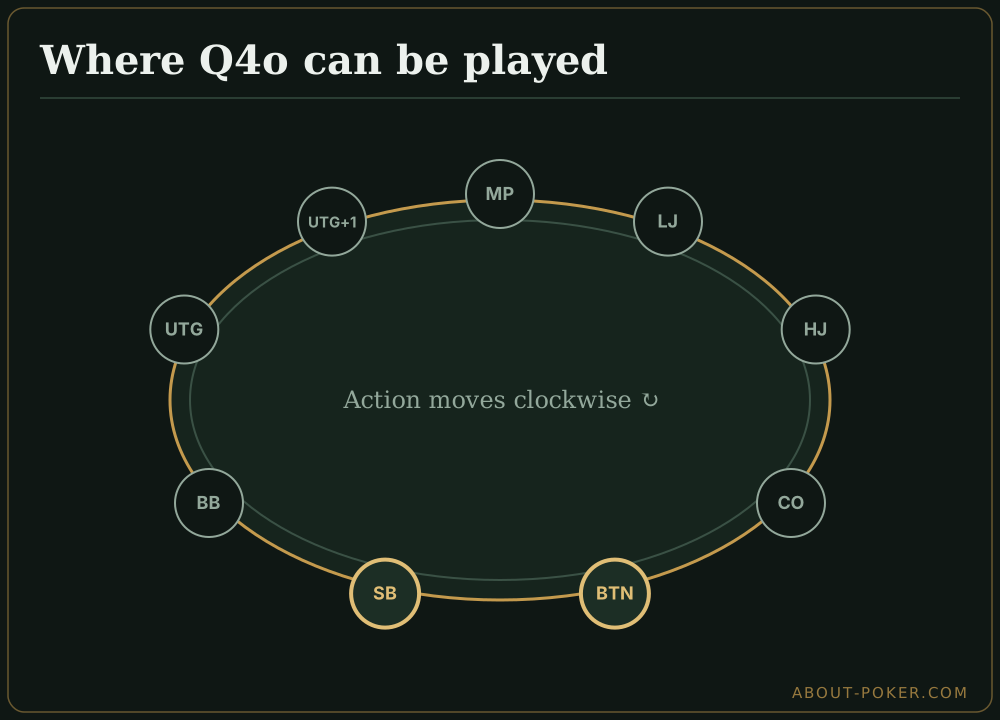
- Early and middle position: fold. Q4o is dominated by nearly every queen that continues.
- Cutoff: a fold at most tables; a rare steal only against very tight blinds.
- Button: a marginal open when both blinds fold often. Position and fold equity carry it.
- Small blind: open by raising in blind-vs-blind spots, where wide ranges give a queen enough showdown value. See blind vs blind play.
- Big blind: a price-based defend against small opens, then cautious postflop play. See defending the blinds.
Why the queen doesn’t rescue the kicker
Unlike a weak ace, Q4o rarely works as a 3-bet bluff. The queen blocker removes only Q-Q and some Q-x from your opponent’s range, which isn’t enough to make re-raising profitable when you have no flush backup and are frequently dominated once called. Q4o’s real value is heads-up showdown value: in wide-range spots, a pair of queens is often good, and the hand can pick up a cheap pot with position. That’s the same territory Q4 suited occupies, except the suited version adds a flush that lets it continue far more often. With Q4o, you’re relying on the queen to be the top pair and on your discipline to fold when it isn’t.
A worked example
You’re on the button, both blinds are tight, and you open Q♠4♦ as a steal. The big blind calls. Flop: Q♥ 7♣ 2♠. You’ve flopped top pair, weak kicker — against a wide big-blind range, a pair of queens is usually best, so a small continuation bet for value and protection is standard. But keep the pot small: if the big blind check-raises, your four kicker is dominated by every Q-7 through Q-5, and stacking off is a mistake. Now suppose the flop is K♦ 9♣ 3♠ instead. You have queen-high, no pair, and no draw — a straightforward check-fold against any resistance. Q4o wins by making a cheap pair of queens heads-up and reaching showdown, not by building a big pot with a dominated kicker.
Postflop shorthand
- Top pair (queen), weak kicker: bet small heads-up for value and protection; pot-control against aggression.
- Pair of fours: a marginal showdown hand; peel at most one cheap card.
- Queen-high, no pair: usually a check-fold; the queen offers only thin bluff-catch value.
- Overcard boards (A or K high): give up cheaply — your queen is likely behind.
When not to play it
Fold Q4o from early and middle position and against any raise from a tight range. Don’t call opens out of position hoping to flop a queen; you’ll too often make a dominated top pair. And skip the 3-bet bluff: the queen blocker removes too little of a raiser’s continuing range, and with no flush you have nothing to fall back on when called.
How opponent type decides everything
Q4o is one of the most opponent-dependent hands in the deck, because almost all of its value is fold equity and thin showdown value — neither of which exists against the wrong player.
- Against tight, folding blinds: the button steal works. They fold their bottom hands to your open, and when they call you often have the best hand with a pair of queens. This is the only spot where Q4o is comfortably profitable.
- Against a calling station in the big blind: drop the steal. If they never fold preflop, you lose the fold-equity half of the hand and are left playing a weak, kicker-troubled queen out of position against someone who won’t let you win without a fight.
- Against an aggressive 3-bettor: fold to the re-raise every time. Q4o has no equity to continue and no blocker worth defending. Trying to flat or 4-bet-bluff a good queen kicker you don’t have is just burning chips.
Reading the specific blinds matters more here than any chart. The same Q4o that’s a fine button open against two nits is an instant muck against a big blind who defends 60% and check-raises light.
Stack depth and Q4o
Depth barely helps Q4o and can actively hurt it. A hand this dominated has almost no implied odds: when you make top pair and get action deep, you’re usually the one paying off a better queen, not the one getting paid. So the deeper the stacks, the more disciplined you should be about not stacking off with a four kicker.
Short stacks change the calculus slightly. Under about 15bb in a tournament, Q4o’s raw all-in equity — two live-ish overcards to much of a caller’s range — makes it an occasional button or small-blind shove when it folds to you and the blinds are tight. It’s near the very bottom of any shoving range, but the fold equity plus a live queen can tip it over. At normal cash-game depths, though, treat Q4o as a small-pot hand: make the cheap pair, take it to showdown when it’s likely good, and fold the moment a bigger queen shows interest. For the seat borders and the price math that govern these spots, lean on blind vs blind play and defending the blinds.
Where to go next
Q4o is a narrow, position-driven hand: fold it early, open it only from the button and small blind, and keep pots small when your queen pairs. See the stronger version in Q4 suited, master its best home in blind vs blind play, and learn the price-based defends in defending the blinds.
Frequently asked
Is Q4 offsuit a good hand?
Q4o is a weak hand with a bad kicker and no flush. Its playable spots are narrow: blind-vs-blind pots and the widest button steals. Outside those situations it is a clear fold because it is easily dominated by better queens.
Can you open Q4 offsuit?
Only from the button in loose games and from the small blind in blind-vs-blind spots. From early or middle position Q4o is a fold. It has no flush or straight backup and is dominated by most queens that continue against you.
How does Q4o compare to Q4 suited?
Q4 suited is noticeably stronger because the flush adds equity and playability, letting it defend and steal more often. Q4o keeps only a middling queen and a weak kicker, so it opens from fewer positions and folds far more often preflop.