How to Play Queen-Two Offsuit (Q2o)
Q2o is one of the weakest offsuit queens and mostly a fold. Learn the rare spots where Q2 offsuit opens, when to defend it, and how to play it postflop.
On this page · 7 sections
Queen-two offsuit (Q2o) is near the very bottom of the offsuit-queen family. It carries a queen blocker and can flop top pair, but the deuce kicker contributes nothing and, unlike Q2 suited, there’s no flush draw to lean on. Q2o is a fold from the great majority of seats — the exceptions are the button and some cheap blind defenses.
Where Q2o belongs preflop
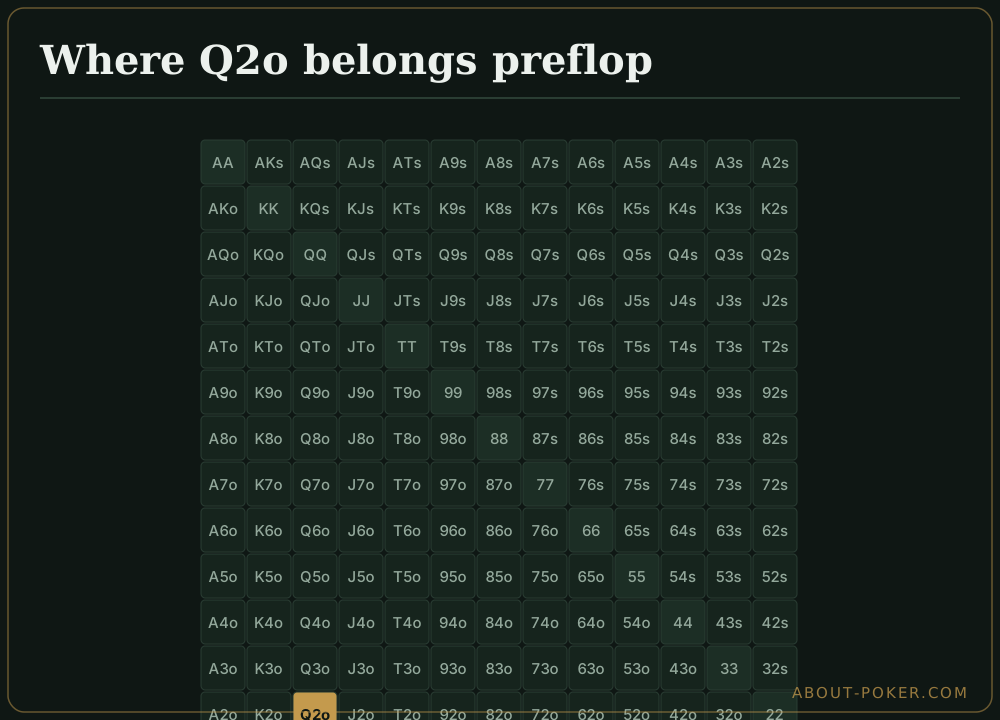
In 6-max, Q2o is not part of any early- or middle-position opening range. Even the cutoff should fold it. Only the button, opening wide against two blinds, can include some Q2o combos, and even then it’s a low-frequency addition rather than a default raise. Compare where each queen enters the mix in the preflop opening ranges reference before you rely on a hand this weak.
The more common home for Q2o is the big blind. Against a button or cutoff open at a good price, you can flat some Q2o because you’re closing the action cheaply and only need a little equity to justify a call. You are never 3-betting Q2o for value, and it’s a poor bluff because it unblocks most calling hands.
Why the kicker sinks this hand
Queen-high pairs are frequently dominated. When you flop a queen with Q2o, better queens (QJ, QT, KQ, AQ) all have you out-kicked, and against real aggression you’re usually behind. The deuce also gives you essentially no straight potential, so your equity is almost entirely “flop a pair, get to showdown cheaply.” That’s a narrow way to make money, which is exactly why the hand sits at the bottom of the chart.
A worked example
You open Q♠2♥ on the button to 2.5bb and the big blind defends. The flop comes Q♦ 7♣ 3♠ — top pair, deuce kicker.
Bet small, roughly one-third pot. You want thin value from worse queens and draws while keeping the pot small, because your kicker means you don’t want to play a big pot against a range that beats you. If you get check-raised, your hand plays poorly: against a raising range of better queens, sets, and two pair you’re usually drawing thin, so folding is the standard line. On a dry board like this you might call one small bet, but you’re not committing chips over multiple streets with a queen-deuce.
Now suppose the flop is J♣ 9♦ 4♠. You have queen-high and no draw. Check and give up — there’s no equity worth continuing with and no reason to bluff a dead hand.
How Q2o fits the bigger picture
Q2o plays a touch worse than Q3o or Q4o because the deuce cannot contribute to any realistic straight, and clearly worse than its suited counterpart, which at least adds flush equity. Its natural habitat is blind-versus-blind, where ranges are widest and a queen blocker has real value; for how those wide spots play out, see blind vs blind play.
Blind-versus-blind: the one spot it comes alive
Q2o is at its best in the small blind versus big blind, or big blind versus a small-blind open. Ranges here are the widest at the table, so the average hand you are up against is weak, and a queen is genuinely ahead of a lot of it. From the small blind you can raise Q2o at some frequency as part of a wide steal, since folding every weak hand there would let the big blind print money by defending. From the big blind you defend Q2o comfortably against a small-blind raise because you are getting a great price closing the action and your queen dominates the jack-rag and ten-rag hands in their range.
The key is that “ahead of a wide range” does not mean “strong.” You are still going to be out-kicked by the better queens and the paired-up broadways whenever real money goes in. So play these pots small: raise or call preflop, take a stab or a value bet with top pair, and fold to sustained aggression rather than stacking off. The value of the queen blocker is real but modest, and it disappears the moment a competent opponent starts fighting back. For the mechanics of these widest-range pots, see blind vs blind play.
How Q2o stacks up against its neighbors
Q2o plays a touch worse than Q3o or Q4o because the deuce cannot contribute to any realistic straight — those hands at least have a sliver of straight potential, while the deuce is completely dead. It is clearly worse than Q2 suited, which adds flush equity and can therefore open a bit earlier and continue on more boards. Within the offsuit-queen family, Q2o sits at the very bottom, above only the truly unplayable offsuit trash. That ranking is exactly why it opens from just one seat and defends only at a price.
A quick decision checklist
- Position: Only the button (occasionally) and blind-versus-blind spots. Fold from cutoff and earlier.
- Price: In the big blind, is the open small enough to defend cheaply? If it is a large raise, fold.
- Postflop: Did I flop top pair on a dry board? Bet small once for thin value, then control the pot.
- Facing aggression: A raise almost always beats my kicker — fold rather than commit chips.
The bottom line: open Q2o only from the button and only occasionally, defend it selectively at a good price, and treat it as fold-or-top-pair after the flop. Folding a hand this marginal in the wrong spot is one of the easiest ways to protect your win rate.
Frequently asked
Is Q2 offsuit a good hand?
No. Q2o is one of the weakest offsuit queens and a clear fold from almost every position. It plays only from the button in wide-open spots and in some big-blind defenses at a good price.
Should I ever open Q2 offsuit?
Only from the button, and even there it's a marginal, low-frequency open. The queen has a mild blocker, but the deuce kicker is dead and there is no flush draw, so it belongs at the very bottom of your opening range.
Can I defend Q2 offsuit in the big blind?
Sometimes, against a late-position raise at a cheap price. You're closing the action and can flop a queen, but you'll often be out-kicked. Play it passively and be ready to fold to aggression.