How to Play Queen-Two Suited (Q2s)
Q2s is the weakest suited queen and opens only from the button and small blind. Learn where Q2s belongs, when to fold it, and how to play it after the flop.
On this page · 6 sections
Queen-two suited (Q2s) is the very bottom of the suited-queen family. It has almost nothing going for it besides a flush draw and the ability to steal blinds from the two latest positions at the table. The deuce is dead weight as a kicker, and the queen is a chronic domination magnet. If you can play Q2s correctly, you can play any weak suited hand — it’s a pure steal-and-flush hand and nothing more.
Where Q2s belongs preflop
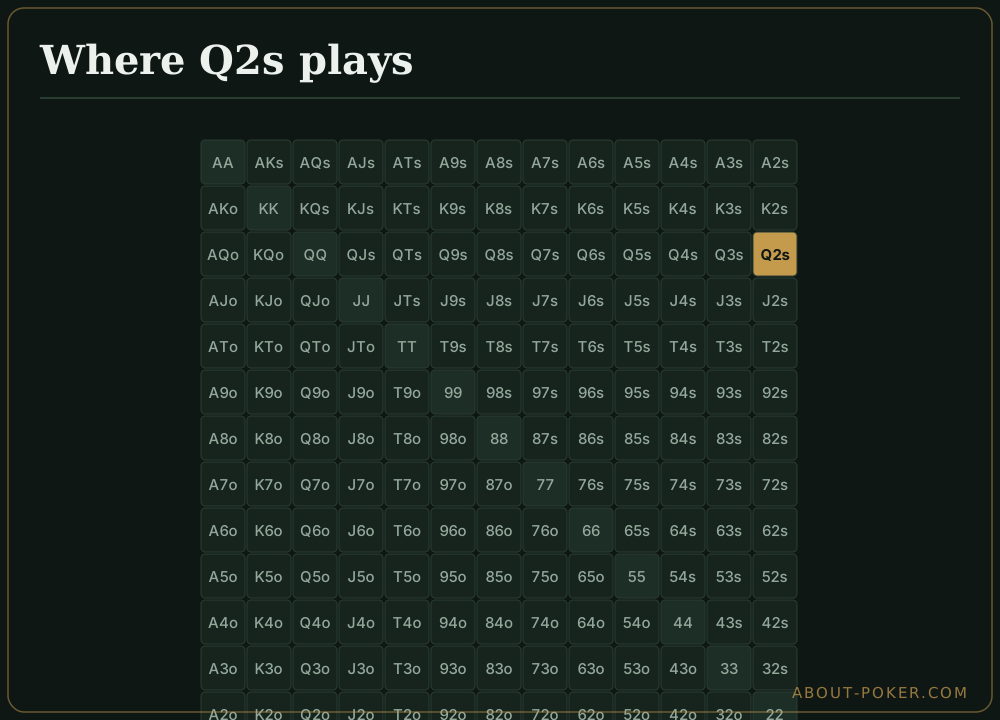
By position, Q2s is a button-and-small-blind steal only:
- Early, middle, and cutoff: fold. There are simply too many players left behind you, and Q2s isn’t close to a profitable open from any of these seats.
- Button: a thin, optional open when it folds to you. You’re raising a wide stealing range, and Q2s barely clears the bar — it can take the blinds down and occasionally flops a flush.
- Small blind: open (raise) when the action folds to you, so you avoid limping into a flop out of position. One opponent to beat makes a suited hand acceptable.
- Big blind: defend only rarely, against a single late raise at a very good price.
Because you’re opening these hands purely to steal, your raise size matters — see open-raise sizing for how a smaller button open keeps your bluffs cheap. For the seat-by-seat frequencies, use preflop opening ranges and poker ranges by position.
Why Q2s is the floor
Q2s combines the two worst traits a “raisable” hand can have. First, domination: pairing the queen almost always leaves you behind a better queen, and the deuce never rescues you. Second, no connectivity: the queen and deuce can’t make a straight together, so the only nut-ish hand Q2s makes is a queen-high flush — which itself loses to any king- or ace-high flush.
That combination is why Q2s is barely profitable even from the button. Its edge comes almost entirely from fold equity preflop: opponents folding their blinds, and opponents folding the flop when you continuation-bet. Take away the steal and there’s very little hand here.
Facing a raise
When someone raises in front of you, Q2s is a fold essentially everywhere. It’s too weak to call out of position and far too weak to 3-bet — it has no value and makes a poor bluff. The only spot to continue is closing the big blind at a deep discount against a wide button or small-blind open, and even there it’s optional.
Never treat Q2s as a 3-bet bluff candidate. The queen blocks few of your opponent’s continuing hands, and you’d rather bluff with hands that also make straights.
A worked example
You open Q♣2♣ from the small blind after everyone folds, raising to keep the initiative. The big blind calls. The flop comes T♣ 7♣ 3♦ — you’ve flopped a flush draw, the best realistic outcome for this hand.
You continuation-bet as a semi-bluff. You hold nine clubs’ worth of outs, giving you roughly 35% equity to make the flush by the river with two cards to come, plus the chance the big blind simply folds. If called, the turn is the 2♠, pairing your deuce — a card you can mostly ignore, since bottom pair with a flush draw is still primarily a drawing hand. You bet again to keep folding out equity and to build the pot for when your flush arrives. That flush draw, not the pair, is the reason Q2s ever leaves your hand.
Contrast that with a dry flop like Q♠ 8♦ 4♥, where you flop top pair with the worst kicker in the deck. Bet once small at most, then give up to real resistance — a bare, dominated queen is not a hand to stack off with.
Postflop in one paragraph
When Q2s flops a flush draw, semi-bluff aggressively; the draw and fold equity are its whole reason for existing. When it flops top pair, keep the pot minimal and fold to pressure — the deuce kicker gives you no protection. When it flops a flush or two pair, it becomes a legitimate value hand worth betting across streets. When it flops air, give up cheaply. Q2s makes money by stealing preflop and by the occasional big draw, never by grinding marginal edges.
Where to go next
Q2s is the literal floor of the suited-queen family — a wide-position steal and nothing else. Keep your steals cheap with open-raise sizing, tighten the borders with preflop opening ranges, and connect everything through the preflop strategy hub.
Frequently asked
Is Q2 suited a good hand?
No, Q2s is the weakest suited queen and one of the weakest hands you'd ever raise. It's a marginal open only from the button and small blind, where blind-stealing carries the hand. Everywhere earlier it's a clear fold.
Should I ever 3-bet Q2 suited?
No. Q2s has no value-3-betting equity and makes a poor bluff since the queen blocks little and the deuce blocks nothing. Fold it whenever you face a raise, aside from an occasional discounted big-blind defense.
Why is Q2 suited playable at all?
Only because being suited adds flush potential and because from the button and small blind you're attacking just one or two players. The steal equity plus the occasional queen-high flush is barely enough to make it a break-even open in those seats.