How to Play Seven-Five Suited (75s)
75s is a suited one-gapper: it flops big draws and disguised straights but needs late position to profit. Learn where to open 75 suited and how to play it postflop.
On this page · 6 sections
Seven-five suited (75s) is a suited one-gapper — the same family as the connectors, but with a single hole in the middle. That gap matters. It costs 75s some of the straight-making power that makes 76s so smooth, but the hand still flops flush draws and makes well-hidden straights. Like every hand in this class, its value is about playability in position, not high cards. Treat it as a late-position speculative hand and it earns its keep; open it too early and it just loses money out of position.
Where 75s belongs preflop
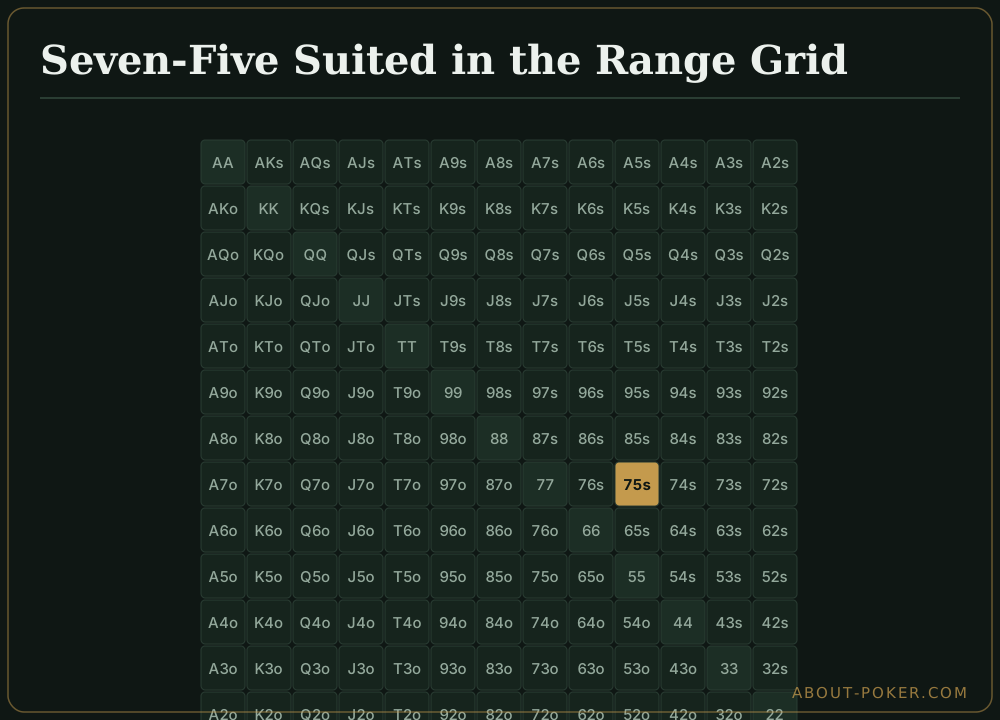
- Early position (full ring): fold. A one-gapper out of position is exactly the kind of hand that fails to realize its equity.
- Middle position: generally a fold at a full table, sometimes a marginal open at 6-max.
- Cutoff and button: standard opens — this is where suited gappers live.
- Small blind: a reasonable raise-first hand when you can play heads-up.
- Big blind: defend against single raises at a good price.
Compared to a true connector, 75s should be opened from a slightly tighter set of positions. Map it against the rest of your range in preflop opening ranges.
How the gap changes things
A connector like 76s can be the top or bottom of a straight and hit open-ended draws constantly. A one-gapper makes more gutshots and fewer open-enders, because the missing rank breaks up some of those runs. In exchange, a one-gapper’s straights are even more disguised — nobody expects 7-5 to have made a straight on a 4-6-8 board.
The suited flush component is identical, so 75s keeps a big chunk of a connector’s value. Think of it as 90% of 76s at a small discount — playable in the same late-position and blind spots, just with a touch less straight equity. Everything you know about seven-six suited applies here with that one adjustment.
A worked example
You open 7♥5♥ on the cutoff. The button folds and the big blind calls. Flop: 6♠ 8♥ 2♥.
This is a dream flop for 75s. You have a flush draw (nine outs) plus a gutshot straight draw — any nine makes the straight (four more outs), for thirteen combined outs. A thirteen-out draw with two cards to come is roughly 54% equity, so you’re actually a slight favorite against many made one-pair hands. That makes this a clear, aggressive semi-bluff: bet the flop and plan to barrel.
Turn is the K♣, a brick that misses your draws but also misses most of the big blind’s range. You keep firing — you still hold thirteen live outs and plenty of fold equity. If a heart or a nine hits the river, you make a strong, disguised hand and bet for value. If you brick, you give up. Recognizing when a big combo draw justifies barreling is core to playing draws postflop.
Realizing equity with a one-gapper
Because 75s makes more gutshots and fewer open-enders, it needs the right conditions even more than a connector does:
- Position lets you take free cards on your many gutshot-plus-backdoor flops instead of guessing out of position.
- Deep stacks turn your disguised straights and flushes into stack-winners, boosting the implied odds that make a speculative hand worth playing.
Against opponents who fold too easily postflop, lean on 75s’ fold equity and semi-bluff more. Against calling stations who won’t pay off draws, tighten up — a one-gapper needs those implied-odds paydays to break even. Table dynamics matter too: at a loose, passive table where several players see the flop, 75s gains value from the extra multiway payoffs, while at an aggressive table full of 3-bettors it loses value because you’ll get to realize its equity less often.
Postflop shorthand
- Flush draw + gutshot (combo draw): your best flops — semi-bluff hard, you’re often a favorite.
- Bare flush draw or open-ender: standard semi-bluff in position.
- Made straight or flush: bet to build the pot; your hand is well disguised.
- Whiff: fold to pressure; no showdown value.
Where to go next
75s is a small step down from a pure connector, and playing it well means respecting that gap: slightly tighter opens, more reliance on the flush and disguise. Slot it into your late-position range via preflop opening ranges, compare it directly to seven-six suited, and connect the ideas at the preflop strategy hub.
Frequently asked
Is 75 suited a good hand?
75s is a solid but marginal suited one-gapper. It still flops flush draws and makes disguised straights, but the single gap means it completes fewer open-ended draws than a true connector like 76s. It's a late-position and blind-defense hand, not an early-position open.
What's the difference between 75s and 76s?
76s is a connector and 75s is a one-gapper. The gap costs 75s some straight combinations — it makes fewer open-enders and relies more on gutshots and the flush — so it's slightly weaker and should be opened from a touch tighter range of positions.
Should I 3-bet 75 suited?
Rarely. 75s doesn't block premiums the way a suited ace does, and its equity when called is a bit thinner than a true connector's. It's better used as an occasional flat-call in position or a blind defend than as a 3-bet bluff.