How to Play Seven-Four Suited (74s)
74s is a suited two-gapper on the fringe of playability. Learn the narrow spots where 74 suited opens, why the flush carries it, and how to avoid bleeding chips.
On this page · 6 sections
Seven-four suited (74s) is a suited two-gapper sitting right on the edge of playability. Two gaps between the cards strip away most of the straight potential that makes real connectors worth playing, leaving 74s to lean heavily on its flush and the surprise value of the occasional straight. It’s not a hand you play often, and never out of position — but in the widest late-position and blind spots, a suited two-gapper still beats total junk. The skill is knowing exactly where that line is.
Where 74s belongs preflop
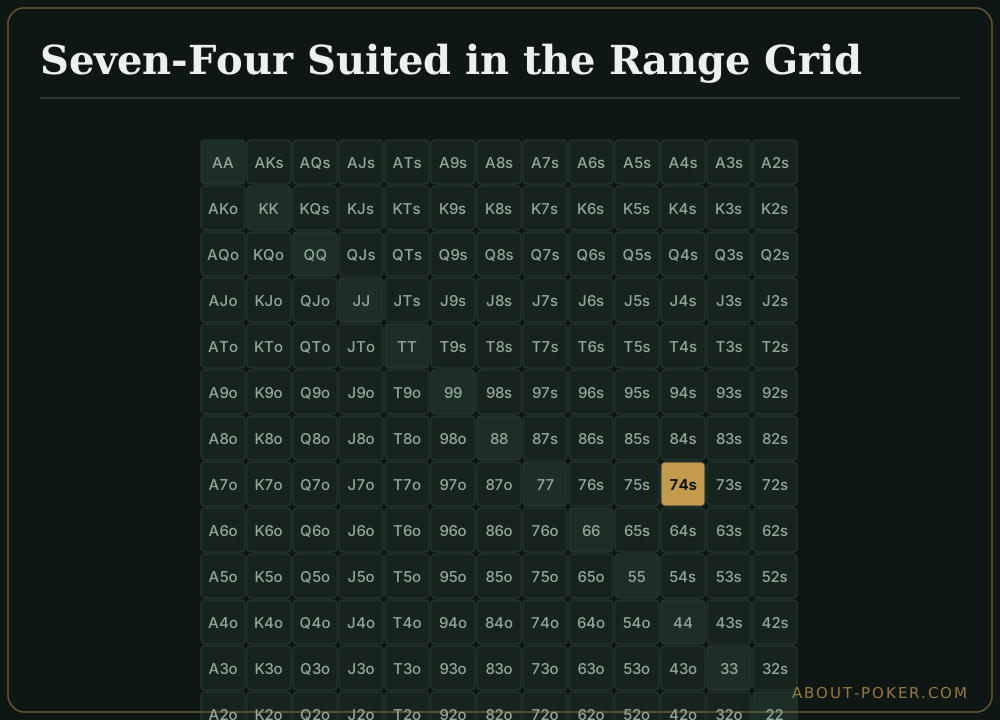
- Early and middle position: fold, at both full ring and 6-max. There’s no case for a two-gapper out of position against a wide field.
- Cutoff: usually a fold; only the loosest cutoff ranges include it.
- Button: a marginal open at the bottom of your stealing range.
- Small blind: a borderline raise-first hand when you can play heads-up.
- Big blind: defend against a single raise at a good enough price — this is where 74s sees the most action.
74s is the point where “add another speculative suited hand” tips into “this is too weak.” Anchor it against tighter holdings using preflop opening ranges.
The flush carries the hand
With two gaps, 74s makes far fewer straights than a connector or one-gapper — it’s mostly gutshots that need exactly one rank to fill. So the flush does the heavy lifting. When 74s flops a flush draw, it plays like any other suited speculative hand: nine outs, real semi-bluff equity, and a disguised nut-ish payoff when it completes (nobody reads 7-4 for a flush).
Because the straight component is so thin, 74s is a clear step below seven-five suited. If you find yourself opening two-gappers from middle position “because they’re suited,” that’s a leak — the suitedness alone doesn’t rescue a hand with almost no straight equity and no high cards.
A worked example
You open 7♣4♣ on the button as a light steal. The big blind calls. Flop: A♣ 9♣ 3♦.
You’ve flopped a flush draw — nine outs, roughly 35% equity as a bare draw with two cards to come. The ace on board is important: it hits a big chunk of the big blind’s defending range, so your continuation bet represents an ace credibly while you actually hold a strong draw. That’s an easy semi-bluff — you fold out air and price in your flush.
Turn is the 6♥, giving you a backdoor gutshot to go with the flush draw, but essentially a brick. You can barrel selectively on this board because your story (an ace) is believable and your draw is live. If a club rivers, you have a well-hidden flush and bet for value; if it bricks, you give up with no showdown value. This is textbook playing draws postflop: the flush equity plus a credible line, not the raw hand, is what makes 74s playable here.
Don’t overvalue “suited”
The most common mistake with hands like 74s is treating “suited” as a license to play. Being suited adds only a few percent of raw equity — useful, but not enough to turn a two-gapper into a middle-position open. Keep 74s disciplined:
- Play it only in position or from the blinds, where you can realize equity and control the pot.
- Lean on the flush; the straight will occasionally surprise someone, but you can’t build a strategy around gutshots.
- Fold when you whiff. With no high cards, a missed 74s has essentially zero showdown value.
Against tight opponents who fold to steals, 74s’ fold equity on the button makes it a fine light open. Against a field that calls everything, drop it — you can’t manufacture enough big pots to justify it.
Postflop shorthand
- Flush draw: standard semi-bluff, especially with a credible board story.
- Made flush or straight: bet for value; your hand is deeply disguised.
- Weak pair or gutshot only: proceed cheaply or give up; equity is thin.
- Air: fold to any pressure.
Where to go next
74s marks the boundary of the suited-speculative family: playable only in the widest late-position and blind spots, and carried almost entirely by its flush. Place it correctly with preflop opening ranges, see how much strength it gives up to its neighbor in seven-five suited, and return to the preflop strategy hub to tie it together.
Frequently asked
Is 74 suited a playable hand?
74s is a fringe hand — a suited two-gapper that's playable only from the button, small blind, and as a wide big-blind defend. The two-card gap sharply reduces its straight potential, so most of its value comes from the flush and disguise. Outside late position, it's a fold.
Why is 74 suited weaker than 75s or 76s?
Every extra gap between your cards removes straight combinations. 76s makes the most straights, 75s a bit fewer, and 74s fewer still — it relies heavily on gutshots. That makes 74s the weakest of the three and pushes it toward a fold in all but the latest positions.
Should I ever open 74 suited from early position?
No. 74s from early position is a clear fold. Out of position against a wide field, a two-gapper can't realize enough of its equity to profit, and its high-card strength is nearly zero. Save it for the button, the small blind, or a cheap big-blind defend.