How to Play Seven-Three Suited (73s)
73s is a suited three-gapper and one of the weakest hands you'll ever play. Learn the tiny set of spots where 73 suited is defensible and when to just fold it.
On this page · 6 sections
Seven-three suited (73s) is a suited three-gapper and one of the weakest hands you will ever voluntarily put chips in with. Three gaps between the cards means it makes almost no straights, and a seven-high offers essentially no showdown value. What’s left is the flush and a whole lot of folding. This isn’t a hand you build a strategy around — it’s a hand you occasionally defend in the big blind for a cheap price, and otherwise send to the muck. The real lesson of 73s is knowing when not to play.
Where 73s belongs preflop
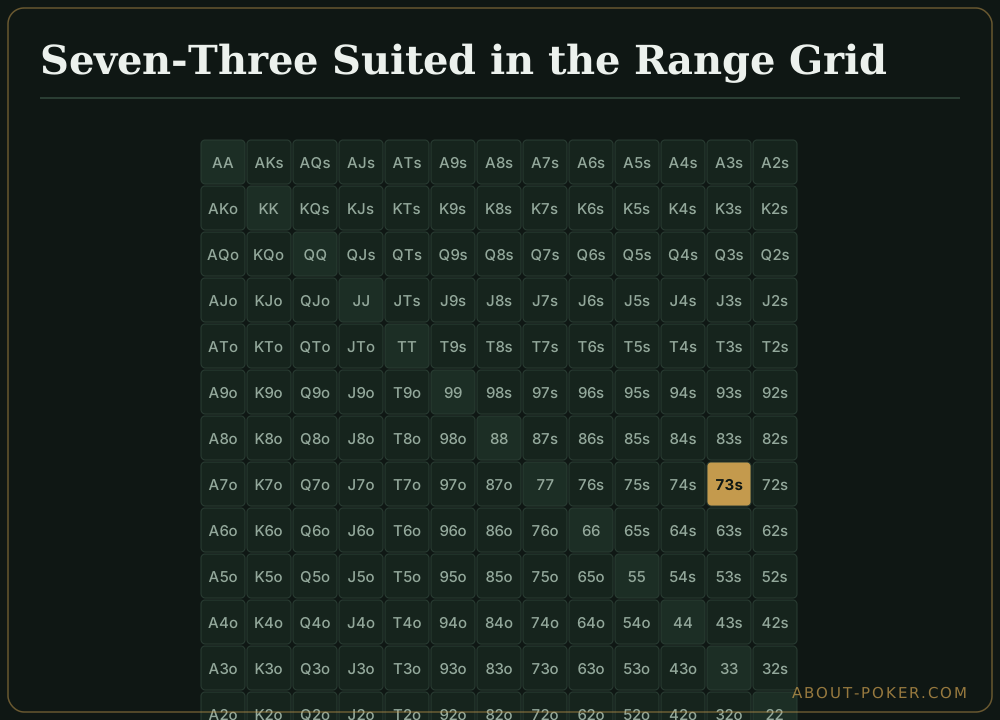
- Early, middle, and cutoff: fold, always. There is no serious argument for opening a three-gapper from these seats.
- Button: a rare, marginal light steal against opponents who fold too much — at the very bottom of your range.
- Small blind: occasionally a raise-first steal, but usually a fold.
- Big blind: defend against a single raise only when the price is very cheap and you’re closing the action.
Compared to almost anything else in a standard range, 73s is the hand you drop first. Use preflop opening ranges as your reference for just how far below the cutoff line it sits.
Why 73s is nearly unplayable
Every gap between your cards removes straight combinations, and by three gaps there’s almost nothing left. 73s can only make a straight through narrow four-card gutshots (like needing 4-5-6 with your 7-3 to reach 3-4-5-6-7), so its straight equity is minimal. That leaves the flush as the only real source of value, plus the rare backdoor.
Contrast this with a two-gapper: seven-four suited at least catches meaningful gutshots and can pair up to a slightly more useful holding. 73s gives up even that. When you flop a flush draw it plays like any suited hand, but you’ll flop that draw only about one time in eight — and the rest of the time you have close to nothing.
A worked example
Suppose you’re in the big blind with 7♦3♦ and the button opens a standard raise. It folds to you. You’re getting a good price to close the action, so calling here is defensible — you’re not investing much and you can flop a flush draw or a sneaky two pair.
Flop: 7♣ 3♥ Q♠. You’ve flopped bottom two pair. This looks great, but on a queen-high board against a button’s raising range, it’s more fragile than it seems: many turn cards (any queen, and overcards that pair the button’s holdings) can leave you behind, and you’re deeply reverse-dominated by better two pairs and sets. Play it as a modest made hand — check-call one street, and be ready to slow down when the board gets scary rather than stacking off. This is exactly the kind of thin, marginal spot covered in defending the blinds: the cheap defend is fine, but the postflop plan has to respect how weak the underlying hand really is.
The value is in folding
The most profitable thing you can do with 73s is recognize how rarely it belongs in the pot:
- Keep your stealing range disciplined. Adding three-gappers to your button opens looks aggressive but leaks money — better hands exist at the bottom of every steal range.
- Only defend it cheap. A big-blind call getting a great price is fine; calling a large raise or playing it out of position is not.
- Don’t get married to marginal made hands. Bottom two pair or a weak seven can look like a reason to stack off — it usually isn’t against a stronger range.
Against opponents who fold too much to steals, a rare 73s button open exploits them. Against anyone who plays back or calls widely, fold it and move on.
Postflop shorthand
- Flush draw: semi-bluff normally, but expect to flop it rarely.
- Made flush: bet for value; it’s deeply disguised.
- Two pair or a pair of sevens: a marginal made hand — pot-control and get to a cheap showdown.
- Air: fold to any pressure; seven-high wins nothing.
Where to go next
73s is a discipline hand: its main value is teaching you where the bottom of a range actually is. Anchor it with preflop opening ranges, see how much even one fewer gap buys you in seven-four suited, and study the cheap-defend logic in defending the blinds.
Frequently asked
Is 73 suited ever worth playing?
Barely. 73s is a suited three-gapper with almost no straight potential and no high-card value. Its only defensible spots are a wide big-blind defend when the price is very cheap and, rarely, a light button steal. From every other position it's a fold.
Why is 73 suited so weak?
Three gaps between the cards mean 73s makes essentially no natural straights — it needs a specific four-card gutshot run to make one. Strip the straights away and you're left with just the flush and a seven-high, which is close to the bottom of all suited hands.
Should I open 73 suited to steal?
Only occasionally from the button or small blind against opponents who over-fold to steals. Even then, higher connectors and suited gappers are better choices. Most of the time, folding 73s and keeping your stealing range disciplined is the more profitable play.