How to Play Seven-Two Suited (72s)
72s is the near-bottom of every range — the suited version of the worst hand in holdem. Learn the rare spots where 72 suited is defensible and when to fold it flat.
On this page · 6 sections
Seven-two suited (72s) is the suited cousin of the most infamous hand in poker — 72 offsuit, the traditional “worst hand in Hold’em.” Being suited nudges 72s up a rung, but only a small one. With the maximum gap between the cards, it makes no natural straights, and a seven-high has essentially zero showdown value. Its entire case rests on the flush. This is a fold from virtually everywhere, and the point of studying it is to understand why — so you never talk yourself into playing junk as a “trap.”
Where 72s belongs preflop
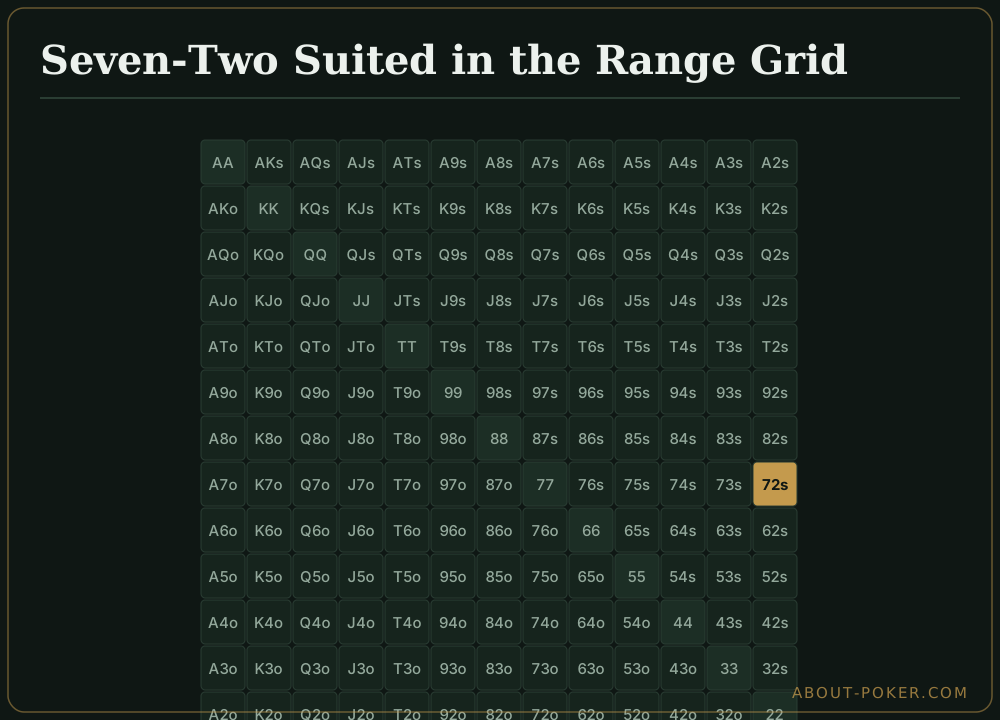
- Every opening position from early through the button: fold. There is no serious opening case for 72s at a full table or 6-max.
- Small blind: essentially always a fold; even most stealing ranges stop short of it.
- Big blind: the one spot with any defensible play — a call against a single raise when the price is very cheap and you’re closing the action.
72s is the floor of your range. Everything in preflop opening ranges is a better hand than this one, which is exactly why mapping it helps: it shows how far below the cutoff line 72s really sits.
Why 72s is the bottom
Two things make 72 the theoretical worst starting hand, and both apply to the suited version:
- No straights. With a four-rank gap, 7 and 2 can never appear in the same five-card straight. That erases an entire category of value that even 73s occasionally taps.
- Lowest useful high card. Among unpaired hands, seven-high with a deuce kicker is about as low as it gets, so pairing up rarely produces a hand worth playing.
The flush is the only thing keeping 72s off the absolute bottom. Suited, it will flop a flush draw around one time in eight and can make a well-disguised flush — that’s genuinely all it has going for it. Even the three-gapper seven-three suited makes a few more gutshots and is a clear step above.
A worked example
You’re in the big blind with 7♠2♠. The button min-raises and it folds to you. Getting an excellent price to close the action, a call is defensible — you’re risking little and can occasionally flop a flush draw.
Flop: 7♥ 7♦ 2♣. You’ve flopped a full house, sevens full of deuces. This is the daydream that tempts people into playing 72s, and it does happen — but notice how it colors the whole calculation. It’s a rare, non-repeatable jackpot; you cannot base a strategy on flopping a boat. Here, play it for value: your hand is invisible, so let the button barrel into you and call down, or check-raise a later street to build the pot. Just remember this outcome is the exception. Nearly every other flop leaves you with air, which is why the correct default is to defend cheaply and give up the moment you miss — the disciplined logic in defending the blinds.
Why “trapping” with 72s loses
The biggest 72s leak is playing it hoping for the miracle flop. The math is unforgiving:
- You flop that huge hand a tiny fraction of the time, and the rest of the time you have nothing to continue with.
- With no straight outs and a bottom-tier high card, a missed 72s can’t bluff-catch or improve credibly.
- Any pot you enter with it out of position amplifies the cost of being dominated.
Against opponents who fold too much to steals, the fix is not to defend 72s more — it’s to steal wider yourself with better hands. Against a field that calls everything, 72s simply has no path to profit. Fold it and keep your range clean.
Postflop shorthand
- Full house or trips (rare): slow-play for value; you’re deeply disguised.
- Flush draw or made flush: play it like any suited draw when it appears — but it appears seldom.
- A pair of sevens: a weak made hand — get to a cheap showdown, don’t build a big pot.
- Air: fold immediately; there is nothing to protect.
Where to go next
72s is the discipline hand at the very bottom of the chart — a reminder that “suited” alone never justifies playing junk. See where it sits in preflop opening ranges, compare it to the slightly-more-playable seven-three suited, and study the only spot it’s defensible in defending the blinds.
Frequently asked
Is 72 suited the worst hand in poker?
72 offsuit is famous as the worst starting hand in Texas Hold'em because it can't make a straight and has the lowest high card among unpaired hands. 72 suited is a small upgrade thanks to flush potential, but it's still near the very bottom of every range.
Why is 72 suited so bad?
72s has the maximum four-card gap, so it makes no natural straights at all, and a seven-high has almost no showdown value. Only the flush gives it any equity, which is why it sits just above 72 offsuit and near the bottom of the hand chart.
Should I ever play 72 suited?
Almost never as an open. The only defensible spot is a very cheap big-blind defend when you're closing the action, and even then it's marginal. From every other position, 72s is a routine fold — playing it as a 'trap' is a losing habit.