What Is Backdoor in Poker?
A backdoor draw in poker needs both the turn and river to complete, also called runner-runner. Learn what backdoor means and why the equity still matters.
On this page · 7 sections
A backdoor draw is one that needs both remaining cards, the turn and the river, to complete. It is also called a runner-runner draw, because you have to run two specific cards in a row. On the flop a backdoor flush draw means you hold two cards of a suit and only one more of that suit is on the board, so you need both the turn and river to be that suit as well.
Backdoor equity is small, but it is not zero, and understanding it is a mark of a thoughtful player. The times you pick up a real draw on the turn, or use the extra outs to keep betting, are exactly where thin edges come from.
What backdoor actually means
Most draws you hear about are single-card draws: a flush draw with nine outs, an open-ender with eight, a gutshot with four. Each needs just one more card. A backdoor draw is different because after the flop it needs two more cards to arrive.
Because you need two specific cards, the odds are much lower than a normal draw. But a backdoor draw has a hidden benefit: after the turn, if you catch the first card, it converts into a normal single-card draw with full outs. That conversion is what gives backdoor equity real, if modest, value.
The math of backdoor draws
The most common backdoor draw is a flush:
- A backdoor flush draw completes roughly 4.2 percent of the time from flop to river. Practically, you need two running cards of your suit.
- A backdoor straight draw varies by the exact holding but is usually a bit lower, often around 1.5 to 4.5 percent depending on how many combinations of running cards complete it.
Neither number is large. But four percent here and three percent there add up, especially when combined with other outs. A hand with a backdoor flush draw, a backdoor straight draw, and two overcards can have surprisingly strong total equity even though no single piece is big.
A worked example
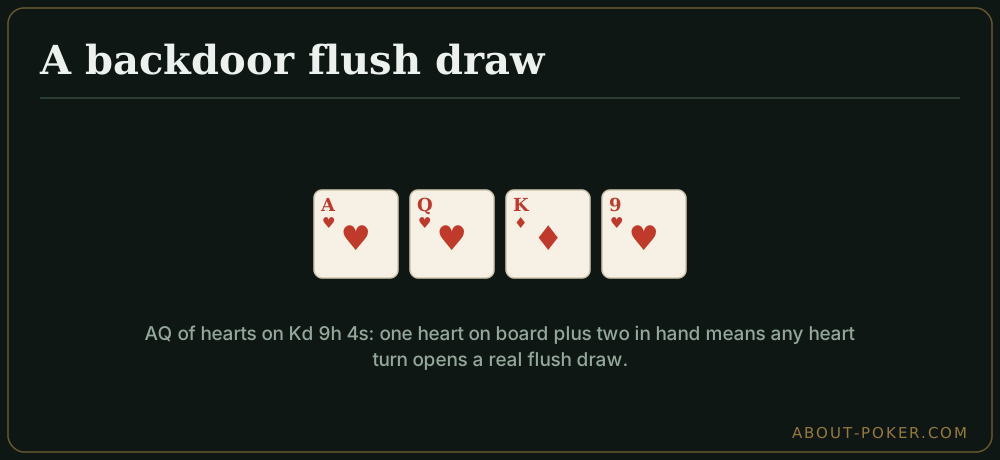
You hold Ah Qh and the flop comes Kd 9h 4s. You have no pair, no flush draw, and no straight draw yet. But you do hold two hearts, and one heart sits on the board, so you have a backdoor flush draw: any heart on the turn gives you a real nine-out flush draw for the river.
You also have two overcards, the ace and queen, which can pair to make top pair. On the turn, if a heart falls, your equity jumps from a marginal holding to a strong draw. This is why continuation betting a hand like this is reasonable. You are not just betting air; you have overcards plus backdoor flush and backdoor straight potential, giving you many ways to improve and a credible reason to keep barreling. Our guide to backdoor flush draws covers this specific spot in more depth.
Why backdoor equity matters
The main value is turn barreling. When you bet the flop with backdoor draws and the turn improves you to a live draw, you can keep betting with a hand that now has real equity. This lets you apply pressure credibly rather than bluffing with nothing.
The second value is range balance. Because backdoor draws are hidden, a good player can bet flops with them as bluffs, then continue on favorable turns. This makes your betting range harder to read and means your value bets get paid off more often. The distinction between a true backdoor and a bare bluff is covered in our page on backdoor draws.
Common backdoor mistakes
- Overvaluing it as a made draw. A backdoor flush draw on the flop is not a flush draw yet. It needs two cards. Do not call big bets as if you have real outs.
- Ignoring it entirely. The opposite mistake. Backdoor equity is a legitimate reason to continuation bet and to keep barreling on good turns.
- Not upgrading your plan on the turn. When the first running card arrives and you now have a genuine draw, adjust your aggression accordingly instead of playing it the same way.
- Chasing runner-runner at bad prices. Once the turn misses, your remaining backdoor equity is often gone. Do not keep paying to hit a two-card miracle.
Quick checklist
- Do I have two cards of a suit with one on board? That is a backdoor flush draw.
- Do I have overcards plus a backdoor draw? That combined equity supports a continuation bet.
- If the turn improves me to a live draw, am I ready to keep applying pressure?
- Am I treating backdoor equity as a bonus, not as a real draw to call big bets with?
The bottom line
A backdoor draw needs both the turn and river to complete, which is why it is also called runner-runner. On its own the odds are small, around four percent for a flush, but the equity is real when you use it to barrel and to balance your range. The skill is respecting it as a bonus that supports aggression, not as a draw worth calling big bets, and upgrading your plan the moment the first running card actually arrives.
Frequently asked
What does backdoor mean in poker?
A backdoor draw is one that needs both the turn and the river to complete, rather than a single card. It is also called a runner-runner draw. A backdoor flush, for example, needs two more cards of your suit after the flop.
What are the odds of hitting a backdoor draw?
A backdoor flush draw completes roughly 4.2 percent of the time, and a backdoor straight draw is usually a little lower depending on the exact cards. That is why backdoor equity is small on its own but adds up across many hands.
Are backdoor draws worth anything?
Yes, more than beginners think. Backdoor equity gives you extra outs to barrel, more ways to improve on later streets, and helps balance your betting range. It is small per hand but meaningful when you bet with it and pick up a real draw on the turn.