What Is Blocker Bet in Poker?
A blocker bet is a small bet you make to set the price and stop a bigger bet from your opponent. When to use it, sizing, and a worked river example.
On this page · 6 sections
Poker is partly a fight over how much money goes in the pot. A blocker bet is one of the cleaner tools for winning that fight. It is a small bet — often a quarter to a third of the pot — that you make on the river (sometimes the turn) with a medium hand, mostly to stop your opponent from making a much larger bet if you had checked. You give up a little to avoid paying a lot.
The core idea: set the price yourself
When you check to an opponent, you hand them the choice of how big to bet. A skilled player will often make that bet large and awkward, forcing you to call off a big chunk of your stack with a hand that is only okay. A blocker bet takes that choice away. By betting small first, you set the price low. Many opponents will simply call your small bet rather than raise, and you get to see a showdown for far less than you feared.
Think of it as buying a cheap ticket to showdown. You are not betting for value in the usual sense — you do not expect worse hands to call a big bet. You are betting so that the pot stays a size you are comfortable with.
A worked river example
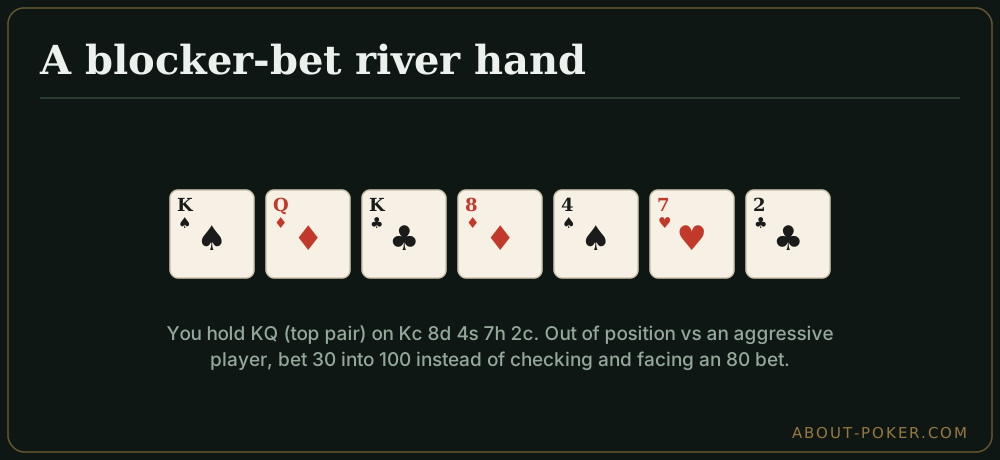
You hold K♠ Q♦ on a final board of K♣ 8♦ 4♠ 7♥ 2♣. You have top pair with a decent kicker, but the turn and river bricked and you are out of position against a player who has been betting aggressively. The pot is 100 chips.
If you check, your opponent might fire 80 chips. Now you are stuck: fold a hand that is often good, or call 80 to win 180 and sometimes get shown a better king or two pair. Neither feels great.
Instead, you bet 30 into 100. Most opponents just call with a worse pair or a weak king, and you win 30 you might not have gotten. When they have you beat, you lose only 30 instead of 80. You have paid a small, predictable price and dodged a big, ugly decision.
Blocker bet versus value bet versus check
These three lines cover most river spots with a marginal hand, and picking the right one is the real skill.
A true value bet is large and aims to get called by worse. Use it when your hand is strong enough that worse hands will pay a real price. A blocker bet is small and aims mainly to control the pot with a hand that is good often but not always. A plain check is best when your hand is either strong enough to trap or so weak you would rather fold to any bet and save the chips.
The mistake beginners make is blocker-betting hands that should just value bet. If worse hands would happily call a half-pot bet, do not settle for a quarter-pot blocker — you are leaving money on the table.
Position matters a lot
Blocker bets live mostly out of position. When you act first, you cannot see what your opponent does, so taking control of the price early has real value. In position, you already get to decide whether to bet or check behind after seeing their check, so the blocker bet loses much of its purpose. If you are last to act and your opponent checks, you can simply check behind for a free showdown or bet if you want value.
So the classic blocker-bet spot is: you are out of position, on the river, with a medium hand, facing an opponent who bets big when checked to.
Common mistakes
The biggest error is blocker-betting against the wrong opponent. Aggressive players who love to raise will punish small bets by blasting a raise, turning your cheap ticket into an expensive nightmare. Against those players, checking is often safer — at least a check-call caps your loss at their chosen size, and you are not inflating the pot yourself.
Another mistake is using the same tiny size every time, which lets observant opponents read you. Mix in some checks and some normal value bets with strong hands so your small bet does not always scream “medium hand, please do not raise me.”
Finally, do not confuse a blocker bet with a blocker card. They share a name and nothing else. A blocker card removes combos from your opponent’s range; a blocker bet manages the price of the pot.
Quick checklist
Before you fire a blocker bet, run through this: Am I out of position? Is my hand medium strength — good enough to want showdown but not to value bet big? Does my opponent bet large when checked to, and does he tend to just call small bets rather than raise? If the answers are yes, a small bet of roughly a quarter to a third of the pot is a clean, disciplined play that saves you chips over the long run.
Used well, the blocker bet is one of the quiet, unglamorous plays that separates thoughtful players from the crowd. It rarely wins a big pot, but it steadily stops you from losing big ones.
Frequently asked
Is a blocker bet the same as a blocker card?
No. A blocker bet is a small bet you make to control the price of the pot. A blocker card is a card in your hand that removes combos from your opponent's range. The names are similar but they describe different ideas.
What size should a blocker bet be?
Usually small, around a quarter to a third of the pot. The point is to be cheaper than the bet you fear facing if you checked, so the size has to look tempting enough to just be called rather than raised.
When should I avoid a blocker bet?
Avoid it against aggressive players who love to raise small bets, and avoid it when your hand is strong enough to value bet or weak enough that you would rather check-fold. Blocker bets fit medium-strength hands out of position.