What Is Blocker in Poker?
A blocker is a card in your hand that reduces the combos your opponent can hold. Learn what blockers are, how card removal works, and how to use them.
On this page · 6 sections
A blocker is a card you hold that reduces the number of card combinations your opponent can have. Because there are only four of each rank and thirteen of each suit in a deck, every card you can see, whether in your hand or on the board, removes possibilities from the unseen cards. This idea is called card removal, and a blocker is simply card removal working in your favour.
The basic idea of card removal
Suppose your opponent could hold pocket aces. There are six ways to make a pair of aces from four aces in the deck. Now imagine you hold one ace yourself. Suddenly only three aces remain, and the number of possible AA combos drops from six to three. Just by holding one card, you have cut their strongest hand in half. That is what a blocker does, and it is the foundation of the broader blocker effect.
Blockers are most powerful against specific, narrow parts of a range, especially the nuts. If the board makes a flush possible and you hold the ace of that suit, you block every nut flush your opponent could have. You do not have the flush yourself, but you know they are less likely to.
Why blockers matter for bluffing
The classic use of a blocker is to pick better bluffs. When you bluff, you want your opponent to fold, so you want to hold cards that reduce their strong hands. If you fire a big river bet holding the ace of spades on a three-spade board, you block the nut flush. Your opponent is far less likely to be looking at a monster, so your bluff gets through more often.
This is why strong players choose bluffs with blockers rather than random air. A bluff with a good blocker is not just any weak hand; it is the weak hand that is least likely to run into a call. Understanding this turns bluffing from a gamble into a calculated attack, and it is covered in more depth in the guide to blockers in poker.
A worked example
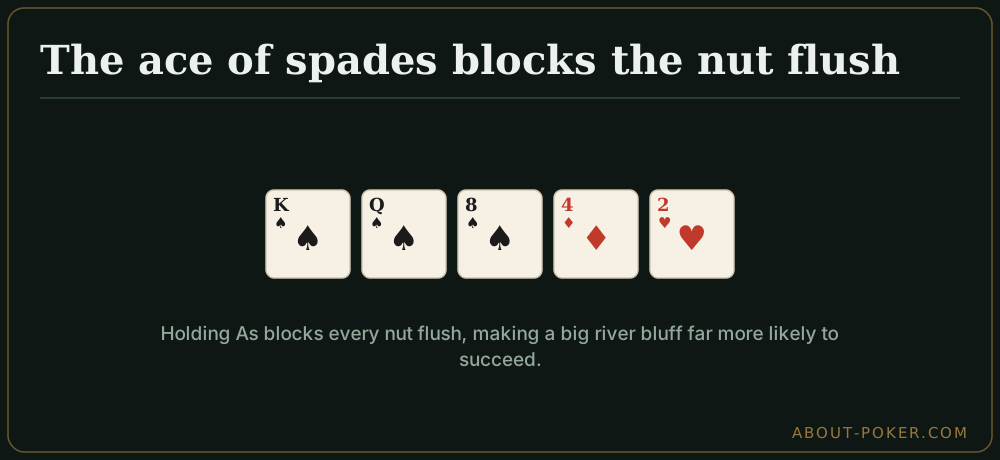
The board reads Ks Qs 8s 4d 2h. Your opponent has been betting and now checks the river to you. You hold As Th. You have missed everything, but you hold the ace of spades.
On this board the nut flush is any two spades, and the strongest single card is the ace of spades. By holding it, you block the nut flush completely. Your opponent cannot have the nut flush, and they can have far fewer strong flushes than they otherwise would. This makes your As Th an excellent bluffing candidate. A large bet represents the flush you are actually blocking, and because your opponent holds fewer flushes than usual, they fold more often. You never had a hand, but the blocker did the work.
Compare this to bluffing with Jc Th on the same board. That hand blocks almost nothing relevant, so your opponent’s flushes are all still in play. Same street, same missed hand, but a much worse bluff because you are not blocking anything that matters.
Blockers for calling and value
Blockers help beyond bluffing. When facing a bet, holding a blocker to your opponent’s value range makes calling safer. If you block their sets and straights, they hold those hands less often, so your medium hand is good more of the time.
The reverse also matters. When you call a potential bluff, you ideally want to unblock their bluffs, meaning you do not hold the cards they would be bluffing with. A card that blocks their value but unblocks their air is the perfect calling card. This is the flip side of the concept, explained under unblocker.
Common mistakes
- Bluffing with cards that block your opponent’s folding range. If you hold cards they would fold anyway, you are not reducing their strong hands and your bluff gains nothing.
- Overvaluing weak blockers. Blocking one combo of a marginal hand rarely changes a decision. Focus on blockers to the nuts and to key value hands.
- Ignoring board blockers. Cards on the board block combos too. A paired board removes many two-pair and set combinations for everyone.
Quick checklist
- What are my opponent’s strongest hands here? Do I hold a card that blocks them?
- If bluffing, do I block their calls and leave their folds alone?
- If calling, do I block their value and unblock their bluffs?
- Am I giving weight to real blockers, not trivial ones?
Blockers are the bridge between hand reading and range reading. Once you start asking what your own cards remove from your opponent’s range, your bluffs, calls, and value bets all sharpen at once.
Frequently asked
What is a blocker in poker?
A blocker is a card in your own hand or on the board that removes combinations from your opponent's possible range. Holding the ace of spades, for example, blocks every nut spade flush they could have made.
Why do blockers matter for bluffing?
Blockers make bluffs more effective by reducing the number of strong hands your opponent can hold. If you hold a card that blocks their nutted combos, they are more likely to fold to your bet, so your bluff succeeds more often.
Are blockers only useful when bluffing?
No. Blockers also help you call and value bet. Blocking your opponent's value hands makes calling safer, and unblocking their bluffs makes calling more profitable. Blockers inform every street of decision-making.