What Is Bottom Pair in Poker?
Bottom pair is a pair made with the lowest card on the board. Learn how weak it really is, when to bet or fold it, and how to squeeze value from a marginal holding.
On this page · 6 sections
Bottom pair is a pair you make by matching the lowest card on the flop. Hold A♠ 4♣, see a K♦ 9♥ 4♠ flop, and you have bottom pair — your four pairs the smallest board card. It’s a made hand, but only just, and knowing how thin it is keeps you from paying off better hands.
The definition
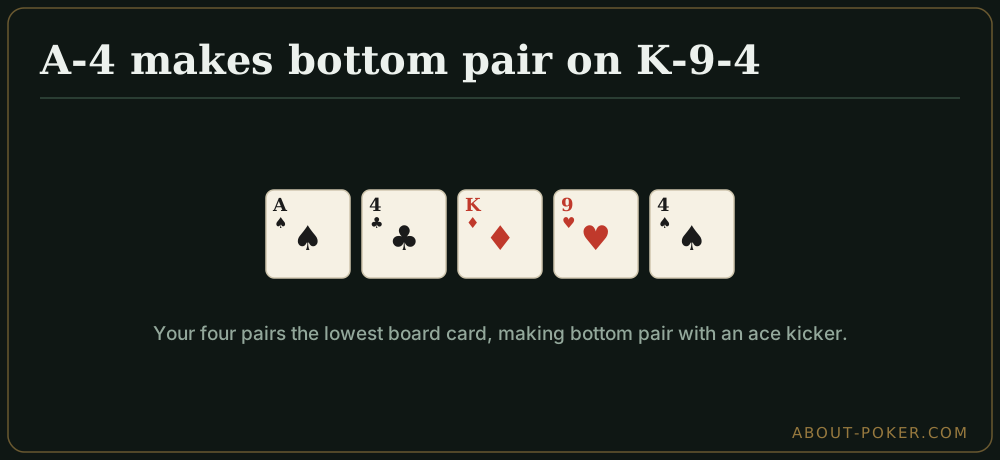
The board’s cards can be ranked top, middle, and bottom. Pair the top card and you have top pair; pair the middle card, middle pair; pair the bottom card, bottom pair. On a Q-8-3 flop, a hand with a 3 makes bottom pair. Your other card becomes your kicker, though with a hand this weak the kicker rarely matters at showdown.
Bottom pair is distinct from an underpair: an underpair is a pocket pair below the whole board, while bottom pair uses one hole card plus the lowest board card.
How weak is bottom pair, really?
Bottom pair beats only hands that completely missed — ace-high, overcards that didn’t connect, busted draws. It loses to:
- Top pair and middle pair
- Any overpair
- Two pair and sets
- Made straights and flushes
Because it beats so little, bottom pair is a marginal bluff-catcher at best. Its job is usually to reach a cheap showdown, not to win a big pot.
When bottom pair is worth something extra
Bottom pair gains value in a few specific situations:
- When it comes with a draw. A♠ 4♠ on K♦ 9♠ 4♠ is bottom pair plus a flush draw — now you have real equity and can bet as a semi-bluff.
- Heads-up against an aggressive opponent whose betting range is full of missed hands. Your bottom pair can call down cheaply and beat all their air.
- As a blocker to two pair. Holding the bottom card removes some of the two-pair combos your opponent could have.
- When you also hold a backdoor draw. A runner-runner straight or flush possibility adds hidden equity that makes a single call more defensible.
Against tight, straightforward players, none of this applies — they only put money in with hands that crush you, so fold and move on. The whole point of tracking these small edges is to know when a hand that beats “only air” still has a legitimate reason to keep going.
A worked hand
You call a button raise from the big blind with 6♥ 5♥. The flop is J♣ 8♦ 5♠ — you flop bottom pair of fives with a backdoor straight draw. The button, the preflop aggressor, bets 4 into a pot of 9.
This is a reasonable check-call once. Your fives beat all the button’s overcards that whiffed (A-K, A-Q, K-Q), and you have backdoor equity. You call.
The turn is the 2♣, a total blank. The button fires again, 11 into 17. Now the situation has shifted: bottom pair with no improvement rarely wants to face two barrels, because the button’s range has narrowed toward real value. Unless you have a specific read that this player barrels air relentlessly, this is a fold. You called one small bet with a hand that had a little equity, missed, and got out cheaply.
Had the turn been the 7♥ — giving you an open-ended straight draw on top of the pair — continuing would be easy, because now you have a strong draw plus the showdown value.
Common mistakes with bottom pair
- Calling down three streets “because it’s a pair.” A pair that beats only air is not a calling station’s license. Fold to sustained aggression without a read.
- Bluff-raising bare bottom pair. You fold out worse and get called by better — the worst of both worlds.
- Overvaluing it multiway. In three- or four-way pots, someone almost always has you beat.
- Ignoring board texture. On coordinated boards, bottom pair’s already-thin equity shrinks further.
Quick checklist
- Does my bottom pair come with a draw or blocker? If so, it can bet or continue.
- Am I heads-up against an aggressive, bluff-heavy opponent? Then it’s a decent bluff-catcher.
- Am I facing one bet (often callable) or multiple (usually a fold)?
- Would I rather reach a cheap showdown than build a pot? Almost always yes with bare bottom pair.
Treat bottom pair as the marginal hand it is, and you’ll fold it in time far more often than you pay it off.
Frequently asked
What is bottom pair in poker?
Bottom pair is a pair made by matching the lowest card on the flop with one of your hole cards. For example, holding A-4 on a K-9-4 flop gives you bottom pair — your four pairs the smallest board card.
Is bottom pair a good hand?
It is a weak made hand. Bottom pair beats only hands that missed entirely, and it loses to every higher pair, two pair, and set. It is best treated as a marginal bluff-catcher or a cheap showdown hand rather than a hand you build a big pot with.
Should you bet bottom pair?
Often you should check it for showdown value, but a small bet can work as a semi-bluff when you also hold a draw, or to deny equity to overcards. Betting big or bluffing multiple streets with bare bottom pair usually loses money.
Does bottom pair beat top pair?
No. Top pair uses the highest board card and always outranks bottom pair, which uses the lowest. Bottom pair only beats weaker holdings such as ace-high, king-high, and busted draws.