What Is Brick in Poker?
A brick in poker is a card that misses every hand and changes nothing. Learn what a brick means, how it differs from a blank, and how to play around one.
On this page · 6 sections
A brick is a card that misses everyone and changes nothing about the hand. No draws complete, no new hands form, and the situation on the river or turn looks essentially the same as it did before. When a card is a brick, the person who was ahead is still ahead, and the person chasing a draw is out of luck.
Players use the word two ways. Sometimes it describes a card that fails to help a specific draw, as in “I bricked the turn.” Other times it just means a card that keeps the board quiet for both ranges. Either way, a brick is the opposite of a card that gets the chips moving.
What a brick actually means
A brick is a low-impact card. It does not complete flushes, fill straights, or bring a scary overcard that connects with a caller’s range. Because nothing changed, the incentives on the street stay the same. Whoever had the best hand still has it, and nobody suddenly has a reason to commit more chips.
That is why bricks tend to keep pots small. Without a completed draw or a new strong hand, there is less to bet for value and less to call with. The pot often stalls, which is exactly what the term implies compared with a lively action card.
Brick vs blank
In everyday play, brick and blank mean nearly the same thing, and most players do not distinguish them. If a difference exists, it is one of emphasis:
- A brick often refers to a card that misses a draw you were chasing.
- A blank is any card that helps neither player’s range.
You can safely treat them as synonyms in casual conversation. Both describe a card that leaves the equities roughly where they were, and both are the calm counterpart to a big, actionable runout.
A worked example
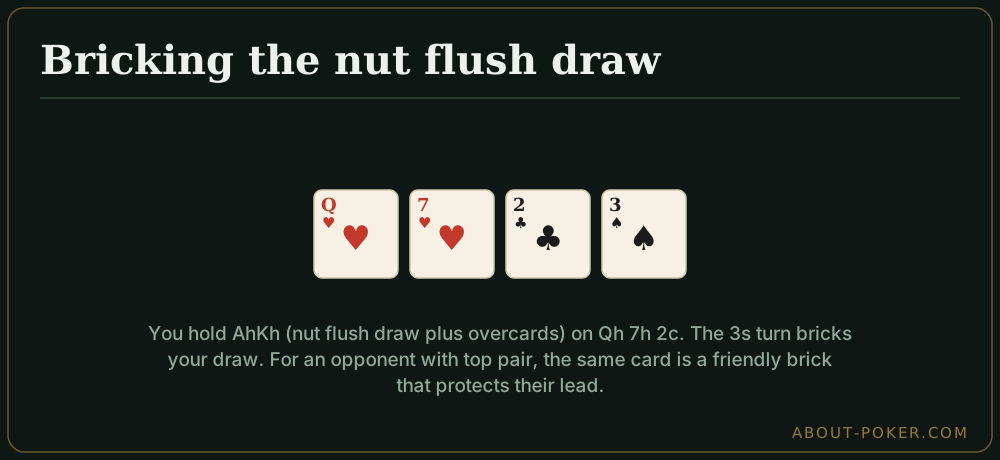
You hold Ah Kh on a flop of Qh 7h 2c. You have the nut flush draw and two overcards. The turn is the 3s. That is a brick for your draw: no heart, no ace, no king. Your equity dropped because you now have one card left to improve instead of two, and none of your outs arrived.
Now consider your opponent, who holds Qs Jd for top pair. For them, the very same 3s is a friendly brick. Their pair is still good, no draw got there, and they can keep value betting with confidence. One card, two opposite feelings: you bricked your draw while they enjoyed a card that protected their lead.
How to play around a brick
If you have the best hand, a brick is your friend. You can bet for value or thin value knowing the board did not just hand your opponent a reason to raise. Nothing improved for them, so a bet is unlikely to run into a suddenly stronger holding.
If you are the one drawing, a brick forces a decision. You can give up, take a free card if offered, or turn your busted draw into a bluff. Semi-bluffing on the flop and then following through on a brick can still work, because your opponent cannot always tell your draw missed. But do not fire mindlessly: pick bricks where your betting story still makes sense.
Common mistakes with bricks
A frequent error is refusing to give up after bricking a draw with no fold equity. If your opponent is never folding and you have no showdown value, betting a brick just burns chips. Recognize when the draw missed and the bluff has no path to success.
The opposite mistake is checking away value when a brick keeps you ahead. Players sometimes get so used to slowing down on quiet cards that they miss thin value spots. If a brick means the worse hands your opponent holds can still call, keep betting. A quiet board does not mean a quiet bet is wrong.
A quick checklist
When a brick lands, ask:
- Do I have the best hand, or was I the one drawing?
- If I was drawing, does a bluff on this card still tell a believable story?
- If I am ahead, can worse hands still call a value bet?
- Am I betting out of habit, or because the math supports it?
Answer those and a brick becomes simple. It is a card that changed nothing, so let it change your plan only where the numbers say it should.
Frequently asked
What is the difference between a brick and a blank?
They mean almost the same thing: a card that misses hands and changes little. Many players use them interchangeably. If there is a shade of difference, a brick often refers specifically to a card that misses a draw you were chasing, while a blank is any card that fails to help either range. In practice both describe a quiet, non-action card.
What does it mean to brick a draw?
It means the card you needed did not come. If you are on a flush draw and the turn is an offsuit low card, you bricked the turn. Your draw missed and you have to decide whether to keep betting as a bluff, give up, or take a free card.
Is a brick good or bad for me?
It depends on your hand. If you already have the best hand, a brick is great because it protects your lead and gives opponents nothing. If you are drawing, a brick is bad because your hand did not improve. The same card can be a gift or a disaster depending on where you stand.