What Is Dead Money in Poker?
Dead money in poker is chips in the pot from players who have folded or won't fight for it. Learn how to spot it and use it to boost your steals.
On this page · 7 sections
Dead money is a concept that separates players who just react to their cards from players who understand pot economics. Once you learn to spot it, you find profitable spots to raise, steal, and pile on pressure that other players walk right past.
The Core Answer
Dead money is money in the pot that no one is actively fighting for. It usually comes from three sources: blinds and antes posted by players who will fold, chips put in by a weak opponent who is likely to give up, and dead calls from players who limp along without a real plan. Because this money is up for grabs, it raises the reward for aggression without raising your risk.
There is also a second, slang meaning: describing a losing player as “dead money,” implying their chips will inevitably flow to stronger players. Both meanings share the same core idea — chips that are effectively free to whoever plays well.
A Worked Example
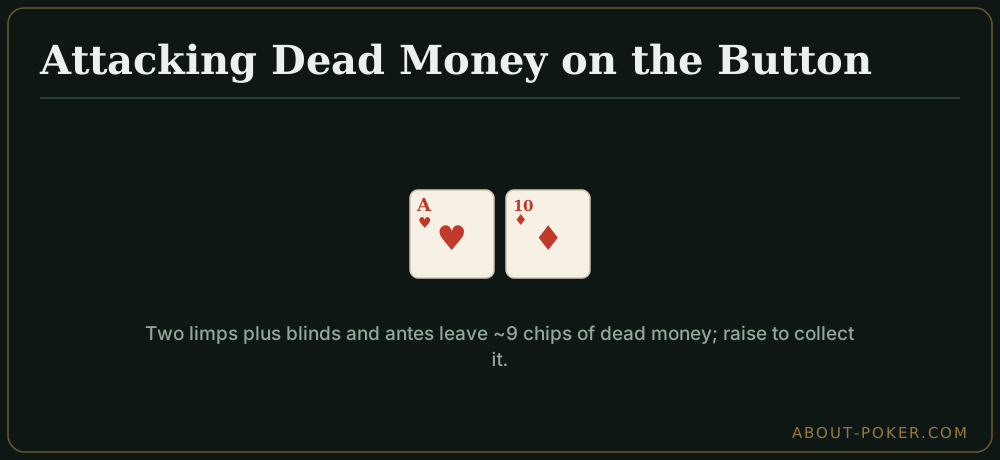
Imagine a nine-handed table with a 1/2 blind structure and a mandatory ante of 0.25 from everyone, so nine antes add 2.25 to the pot before the deal. That is 2.25 plus the 3 in blinds — over 5 total — sitting there as dead money. You are on the button with a decent but not premium hand. Two loose players limp for 2 each, adding 4 more chips they are unlikely to defend hard. Now the pot holds roughly 9 chips of largely dead money. A raise to 10 risks 10 to win 9 immediately if everyone folds, and you also have position and a real hand as backup. That is a far better proposition than the same raise into an empty pot.
Why Dead Money Boosts Steals
Every steal attempt is a bet that folds happen often enough to profit. Dead money tips that math in your favor. The more chips already sit in the pot that opponents are not committed to, the smaller the fold percentage you need to break even. This is why late-position raises get more profitable as antes kick in and as passive limpers pad the pot. Recognizing a fish who limps and folds a lot tells you their limp chips are usually dead money you can attack.
Dead Money and the 3-Bet
Dead money also makes the 3-bet more attractive. When a loose player opens and a caller flats behind, the pot now holds the opener’s raise, the caller’s call, and the blinds — a pile of chips where at least one player has shown weakness. A well-sized 3-bet can scoop all of it. The presence of that extra dead money is often the whole reason a 3-bet bluff turns profitable.
Common Mistakes
The biggest error is ignoring dead money entirely and only playing your own two cards. Players fold profitable steal spots because their hand is “just okay,” missing that the pot is fat with free chips. The opposite mistake is overreaching — attacking dead money against opponents who never fold, so the dead money is not actually available. Finally, some players confuse dead money with committed money and try to steal pots where opponents are already priced in to call.
Dead Money in Tournaments
Dead money takes on extra weight in tournaments, where antes are almost always in play and every chip matters for survival. As blinds and antes climb, the pot before the flop grows relative to stacks, so the dead money you can win by opening or stealing becomes a larger and larger fraction of your stack. In the late stages, a single successful steal of the blinds and antes can be worth 20 percent or more of a short stack, which is why aggressive players attack dead money relentlessly once antes kick in. Bust-outs also leave dead money: when a short stack shoves and gets called, the chips of the player who busts effectively transfer to the survivors. Understanding that the pot is often mostly dead money is what drives correct late-game aggression.
Quick Checklist
Before you raise to collect dead money, ask three things. How many chips in this pot belong to players likely to fold? Do I have position and a hand that can continue if called? And are my targets capable of folding, or will they defend no matter what? When the answers are “plenty,” “yes,” and “they fold enough,” attacking the dead money is one of the easiest ways to grow your stack without a big hand.
Frequently asked
What is dead money in poker?
Dead money is chips already in the pot that no longer belong to a player actively contesting it, such as folded blinds, antes, or chips from a weak player who is likely to fold. It sweetens the pot and makes stealing more profitable.
Why does dead money matter?
Dead money improves the risk-to-reward of aggressive plays. When there are extra chips nobody is fighting for, a well-timed raise or steal wins more than the usual pot for the same risk.
Who is called dead money at the table?
Players sometimes call a weak or losing opponent 'dead money' because their chips are expected to end up with stronger players. It is slang for someone unlikely to hold onto their stack.