What Is Depolarize in Poker?
To depolarize in poker means to bet a merged range of medium-strength value hands with few bluffs, using a small size. Learn when to depolarize and why.
On this page · 6 sections
To depolarize in poker means to bet a merged range — a band of mostly medium-strength value hands with few or no bluffs — using a small size. It is the mirror image of polarizing, where you split your betting range into just the nuts and pure air. A depolarized range instead clusters around the middle: top pairs, second pairs, and thin value all bet together at a small price. Depolarizing (also called merging) is how you extract value from opponents who call a lot and how you keep your betting range wide without over-committing chips.
The Core Logic of Merging
A small bet asks your opponent to risk very little, so they continue with a wide, weak range. Against that wide calling range, your medium hands suddenly become profitable value bets — a hand like top pair with a mediocre kicker gets called by dozens of worse hands that would have folded to a big bet. Because the risk is small, you do not need a high proportion of bluffs to stay balanced. The result is a betting range that is fairly linear: it runs from strong down through medium value, without the empty middle and the big pile of bluffs that define a polarized range.
Polarize vs Depolarize at a Glance
- Polarized: big size, nuts + bluffs, medium hands checked, high bluff ratio.
- Depolarized (merged): small size, thin-to-strong value, few bluffs, medium hands included.
The single most useful shortcut is: small bet → depolarize, big bet → polarize. Your chosen size should always match the shape of your range.
A Worked Example
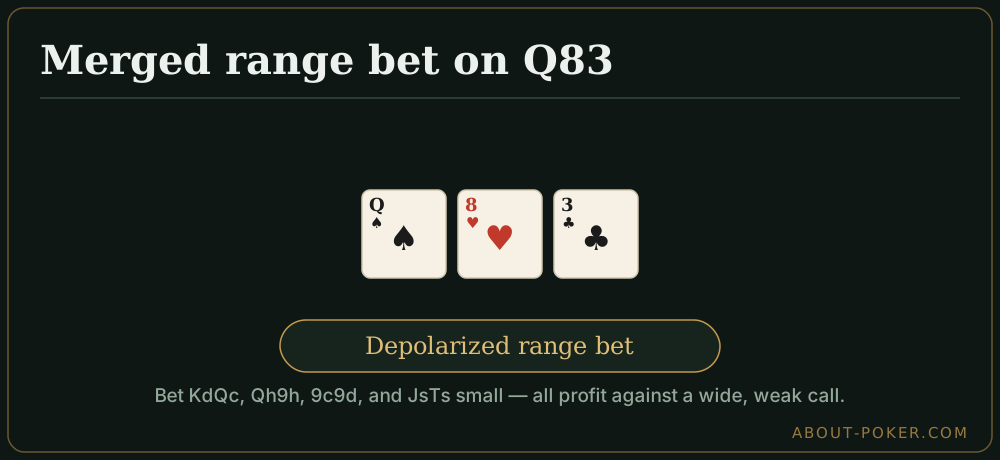
You raise from the cutoff and the big blind calls. The flop is Qs 8h 3c — a dry board that heavily favors your raising range. You decide to make a small flop bet of about a third of the pot with your whole range, a classic range bet, and this is a depolarized construction:
- You bet Kd Qc (top pair good kicker) for value.
- You bet Qh 9h (top pair weak kicker) for thin value.
- You bet 9c 9d (a pair below the queen) for a mix of protection and thin value.
- You even bet Js Ts as a hand with a gutshot and backdoor equity that benefits from the fold equity.
Notice there is no cluster of pure air firing a huge size. Because the bet is small, worse queens, eights, and pairs all call, and every one of these hands profits. That is depolarizing: a merged, small-size range that milks a wide, weak defending range.
When Depolarizing Beats Polarizing
Depolarizing shines in a few clear situations. First, on flops where you hold a big range advantage but the board is dry — a small range bet pressures the whole field cheaply. Second, against opponents who overfold to large bets: if a player folds too much to overbets, you cannot get value from big sizes, so you merge and bet small to keep their weak hands in. Third, on rivers where your value is thin — when your best hands are only medium strength, there is nothing to polarize around, so you merge and take a small, safe bet that worse hands still pay off. This trade-off is explored further in our guide on the polarized range.
Common Mistakes
The biggest leak is depolarizing with a big size. If you fire a large bet with a merged, medium-strength range, better hands call or raise and worse hands fold — you get value from no one and lose to everyone. Merged ranges must stay small.
A second mistake is including too many bluffs in a merged range. Depolarized ranges are value-heavy by design; stuffing them with air defeats the purpose and turns them into an unbalanced mess. Keep the bluffs to a minimum and let the thin value do the work.
Quick Checklist
- Is a small bet the right size here? If yes, depolarize.
- Are you getting called by many worse hands? Merge for thin value.
- Does your opponent overfold to big sizes? Bet small to keep them in.
- Is your best hand only medium strength? Merge rather than polarize.
- Keep bluffs minimal — depolarized means value-heavy.
Learn to switch cleanly between polarizing and depolarizing, and you will always be matching your range to your size — the foundation of profitable, balanced betting.
Frequently asked
What does depolarize mean in poker?
To depolarize means to bet a merged range of mostly medium-strength value hands with few or no bluffs, using a small size. Instead of splitting to the extremes of nuts and air, a depolarized range clusters around the middle and thin value.
When should you depolarize?
You depolarize when a small bet is best — when you want thin value, expect calls from many worse hands, and hold a range advantage but not a big nut advantage. It is common on the flop with a range bet and on rivers where merging beats an opponent who overfolds to big sizes.
What is the difference between polarize and depolarize?
Polarizing bets only the strongest hands and bluffs with a large size, checking the middle. Depolarizing bets a merged band of medium-value hands with a small size and few bluffs. Big bet means polarized; small bet means depolarized.
Is a depolarized range the same as a merged range?
Yes, the terms are used interchangeably. A merged or depolarized range folds thin value into the same size as your stronger hands, so the whole betting range is fairly linear in strength rather than split into two poles.