What Is Donk Lead in Poker?
A donk lead is betting into the previous street's aggressor before they can c-bet. Learn what a donk lead is, when it works, and how to defend against it.
On this page · 6 sections
A donk lead — often just called a donk bet — is when the out-of-position player bets into the previous street’s aggressor before that aggressor can continuation bet. In the normal rhythm of a hand, the preflop raiser fires the flop and the caller waits to react. A donk lead breaks that rhythm by betting first, right into the person who was expected to bet.
The name is not a compliment. It comes from “donkey,” poker slang for a weak player, because for years leading into the raiser was a hallmark of people who did not understand initiative. But the modern game has rehabilitated the play: used selectively, a donk lead is a sharp tool.
Why It Got a Bad Name
In classic no-limit strategy, the preflop raiser holds the betting lead. The caller’s job on most flops is to check and let the raiser continuation bet — the c-bet — then decide whether to call, raise, or fold.
Leading out disrupts this for no clear reason if you have not thought it through. Weak players used to donk bet with middling made hands, essentially announcing “I have something but I am scared.” Strong opponents simply raised them off the pot or floated in position. So the habit became a tell for inexperience, and the “donk” label stuck.
For the broader definition and the history of the term, see what is a donk bet.
When a Donk Lead Actually Works
The modern case for donk leading rests on range advantage. If the flop hits your range harder than the raiser’s, betting into them can be correct because you have more strong hands than they do.
The classic spot is the big blind defending against a button open. You call with a wide range, and the flop comes something like 6h 5s 4d. That low, connected board smashes your calling range — you have all the 87, 76, 33, 65 combos — while the button’s range is loaded with big cards and overpairs that just flopped an overpair or air. On that texture, a small donk lead pressures the raiser’s many weak holdings and denies them a free look at the turn.
Donk leads also shine against opponents who check back too often. If a player rarely c-bets, checking to them hands you a free card you did not want to give. A lead takes control back and charges their draws.
A Worked Example
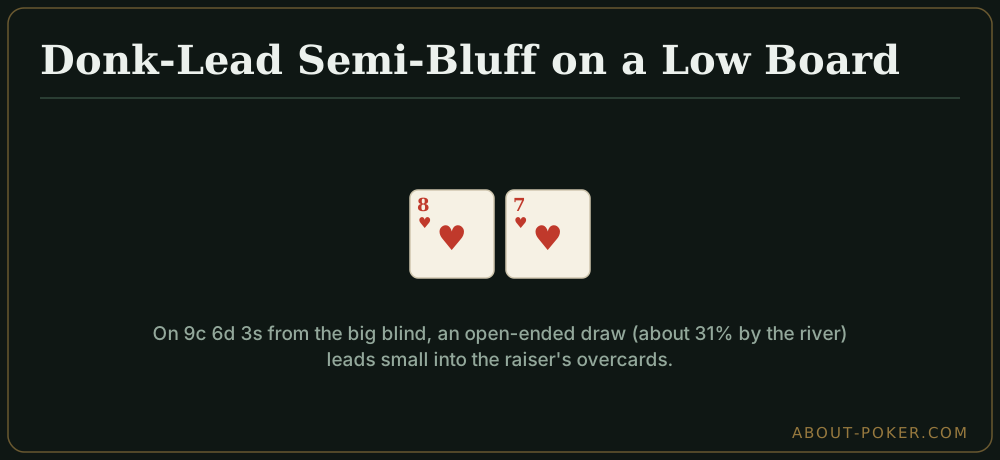
You defend the big blind with 8h 7h after the cutoff raises. The flop is 9c 6d 3s, giving you an open-ended straight draw with a backdoor flush. The cutoff is a tight player who c-bets almost every flop.
- Standard line: check, expect the c-bet, then call or check-raise.
- Donk-lead line: bet small, around one-third pot.
Why lead here? The board slightly favors the defender’s connected hands, and a small bet does double duty: it charges the cutoff’s overcards to continue, and it sets up a semi-bluff where you have real equity — roughly 31% to hit your straight by the river with eight outs. If you hit, you get paid; if you miss, you have already applied pressure. This is a stab bet philosophy applied from out of position with a plan.
How to Defend Against a Donk Lead
When someone donk leads into you, do not panic and do not auto-fold your overpairs. Ask two questions:
- Does the board favor their range? On low connected boards from the big blind, respect it — they may genuinely have more strong combos. Continue mostly by calling and raising your best hands.
- Is this player just leaking? If a weak player donk leads small on every flop, treat it as a c-bet you can raise. Many recreational players lead with medium strength and fold to aggression, so a raise prints money.
The correct counter depends entirely on which of those two the lead is.
A Quick Checklist for Donk Leading
- Board favors your range? Green light for a small lead.
- Opponent checks back too much? Lead to deny free cards.
- You have a made hand plus a plan? Good — decide your turn action in advance.
- No reason, just fear? Do not lead. That is the old donkey habit.
Sizing and Frequency
When you do donk lead, keep sizing small — roughly one-quarter to one-third of the pot on most textures. A small lead accomplishes the goal of denying free cards and pressuring weak hands without bloating the pot when you are out of position and capped in strength.
Frequency matters too. Donk leading every flop turns you predictable and exploitable. Reserve it for the specific board-and-opponent combinations above, and let your default remain the check-call or check-raise line so your leads stay meaningful.
Frequently asked
What is a donk lead in poker?
A donk lead is when a player who is out of position bets into the aggressor from the previous street, before that aggressor gets a chance to continuation bet. It breaks the normal flow where the raiser bets and the caller checks, which is why it earned the slightly mocking name.
Is a donk lead a bad play?
Not always. The name is a leftover from an era when leading into the raiser was almost always a mistake. Against the right board textures and opponents, a small donk lead can be a strong, deliberate strategy. Blindly leading with no plan, however, is still a leak.
When should you use a donk lead?
Donk leads work best on boards that favor your range more than the raiser's, such as low connected flops out of the big blind after calling a raise. They are also useful against opponents who check back too often and let you steal the turn card for free.