What Is Double Barrel in Poker?
A double barrel is betting the flop and then betting again on the turn. Learn which turn cards to fire, when to shut down, and a worked hand example.
On this page · 7 sections
A double barrel is the act of betting the flop and then betting again on the turn as the player with the betting lead. The flop bet is your continuation bet; the turn bet is the “second barrel.” The phrase borrows from a double-barreled shotgun — you fire once, then fire again — and it describes one of the most important skills in No-Limit Hold’em: knowing when to keep the pressure on after your first bet gets called.
Where the term comes from
When you raise preflop and bet the flop, you tell a story about a strong hand. If your opponent just calls, they have not given up — but they usually have not shown much strength either. A double barrel continues the story onto the turn. A player with a real hand would keep betting, so betting again makes your bluffs and your value hands look identical. The word “barrel” simply means a bet made to apply pressure; firing the second one is the double barrel.
Why the second barrel works
Most hands that call a flop bet are weak: middle pairs, weak draws, and floats hoping to steal later. Those hands are not eager to call two big bets. When the turn card changes the board in a way that favors your range, a second barrel folds out a large chunk of that weak calling range. You are not just bluffing at random — you are betting a story that got more credible.
The key idea is that you win the pot two ways. Either your opponent folds now, or you have a hand or draw that can still win at showdown. This is the difference between a pure bluff and a semi-bluff barrel, where a flush draw or straight draw gives you outs to fall back on.
Worked example: firing the second barrel
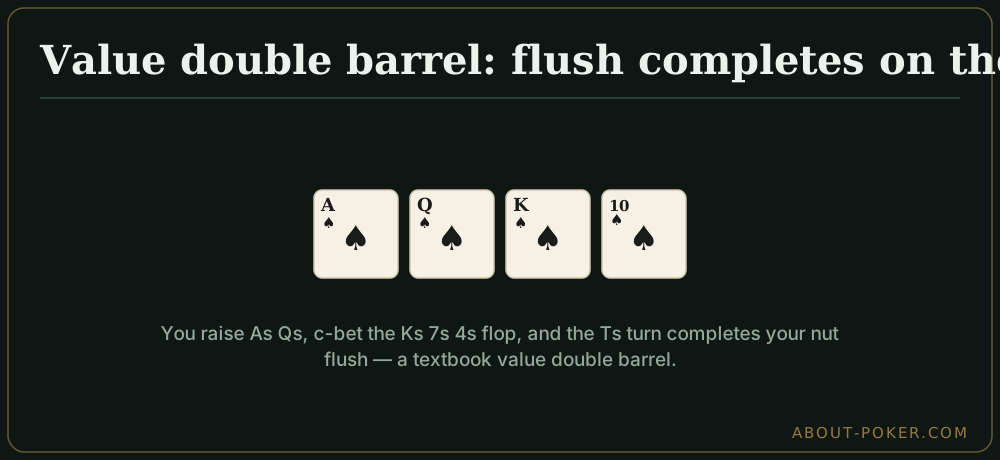
You raise to 3 big blinds preflop with A♠ Q♠ from the button and the big blind calls. The flop comes:
K♦ 7♠ 4♠
You have ace-high with the nut flush draw. You bet 5 into 7 — your first barrel. The big blind calls. The turn comes the T♠, completing your flush.
Now you fire the second barrel, betting 14 into 17. This is a value double barrel: you have the nut flush and want to build the pot against weaker flushes, sets, and two pair. But even without hitting, this turn is a great barreling card as a bluff — it brings the flush and adds a broadway card, cards that hit your raising range far more than the big blind’s calling range. That is what makes a good second-barrel spot: the turn threatens hands you could easily have.
Now imagine the turn had been the 2♥ instead. Nothing changed. Your opponent’s weak pairs and draws are still comfortable calling. On that brick, checking is often better than blindly firing again.
Which turn cards to barrel
The single most important read is whether the turn card improves your range more than your opponent’s. Good barrel cards do at least one of these:
- Overcards to the flop — an ace or king that fits your preflop raising range.
- Cards that complete draws you would have — flush or straight cards that you could credibly hold.
- Scare cards that make the caller’s marginal made hands nervous.
Bricks — low, disconnected cards that change nothing — are usually check-and-reassess cards, because they keep your opponent’s weak hands in. Reading these spots well means understanding what a range looks like on each street, not just your own two cards.
Common mistakes
- Barreling every turn automatically. If you always fire twice, thinking opponents simply call down lighter and let you bluff yourself broke. Pick cards that favor you.
- Ignoring board texture. A wet, connected board that smashed the caller’s range is a poor spot to barrel with air.
- Barreling into a calling station. If a player never folds, the double barrel loses its power — bet for value and drop the bluffs.
- Sizing the same every time. Your bet size tells a story too; a robotic amount lets sharp opponents read whether you have it.
How position and stack depth change it
In position, the double barrel is stronger because you act last on every street and can control the pot on the river. Out of position, you are guessing about what comes next, so barrel a tighter, more value-heavy set of hands. Stack depth matters too: deeper stacks let you plan a third barrel on the river, while shorter stacks may mean your turn bet already commits you. Think about the whole hand before you fire the first shot, not just the current street. A double barrel is closely related to the bluff family of plays, but it is far more disciplined than a random stab.
Quick checklist before you fire the second barrel
- Does the turn card improve my range more than my opponent’s?
- Do I have outs if I get called (a draw, overcards)?
- Is this opponent capable of folding a marginal hand?
- Do I have a plan for the river if the barrel gets called?
If you can answer yes to most of these, pull the trigger. If the turn is a brick and your opponent never folds, check and save your chips for a better spot. Explore the rest of the vocabulary in the poker terms glossary.
Frequently asked
What is a double barrel in poker?
A double barrel is when you bet the flop and then bet again on the turn as the aggressor. The first bet is your continuation bet; the second bet — the turn bet — is the second barrel. It keeps pressure on an opponent who called the flop but likely has a weak or marginal hand.
When should you double barrel?
Fire a second barrel when the turn card improves your range or your perceived range — overcards, cards that complete draws you would have, or scare cards that hit your hand more than the caller's. Shut down on bricks that change nothing and keep your opponent's weak calls in.
Is a double barrel a bluff?
It can be a bluff or a value bet. A double barrel with a strong made hand is betting for value; a double barrel with air or a draw is a bluff or semi-bluff. The move works because it credibly represents a hand that would keep betting on both streets.
What is a triple barrel?
A triple barrel is betting all three postflop streets — flop, turn, and river — as the aggressor. It applies maximum pressure and represents the strongest possible story, but it also risks the most chips, so it needs strong hand-reading or a genuine value hand behind it.