What Is Drawing Dead in Poker?
Drawing dead means no card can make your hand win. Here's what the poker term means, a clear example, and how to spot spots where your outs are worthless.
On this page · 6 sections
Drawing dead means no card left in the deck can turn your hand into a winner. Your equity is zero. You might be holding what looks like a promising draw, counting the cards that would complete it — but every one of those cards either gives your opponent an even better hand or simply isn’t enough to beat what they already have. When you’re drawing dead, the hand is over; you just may not know it yet.
The exact definition
To be drawing dead is to have zero outs that win. An out is normally a card that improves you to the best hand. When you’re drawing dead, the cards you’re chasing are illusions — they improve your hand, but not past your opponent’s. The math is brutal and simple: if you continue, you’re setting money on fire, because you cannot win the pot no matter what the board brings.
The key distinction is between improving and winning. Beginners count outs by asking “what makes my hand better?” Winners ask “what makes my hand best?” Those are very different questions, and the gap between them is where drawing dead lives.
The classic example
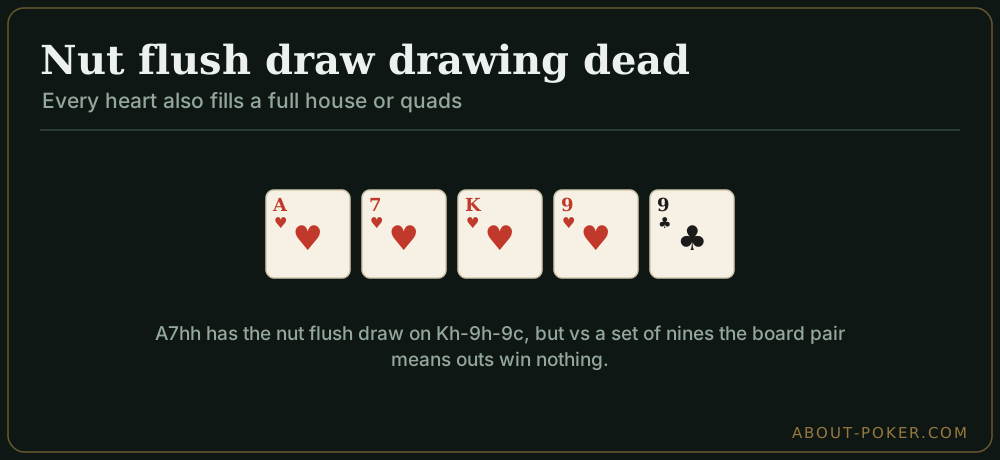
You hold A♥ 7♥ on a flop of K♥ 9♥ 2♣. You’ve flopped the nut flush draw — any heart gives you the best possible flush. Nine hearts remain, so it looks like a huge draw.
But your opponent holds 9♦ 9♠ — a set of nines. On the turn, the board pairs: 9♥. Two things happen at once. First, that nine is a heart, so you complete your flush. Second, it gives your opponent four of a kind — quad nines. Your beautiful nut flush is now worthless.
Worse, look at the river to come. Your opponent has a set, which can improve to a full house on any board pair. If, say, the turn had been the K♦ instead, your opponent’s set of nines fills up to a full house on any pairing card — and a full house beats your flush. On many run-outs, every heart that completes your flush also pairs the board and gives your opponent a full house or better. You count nine “outs” and the true number is zero. You are drawing dead and don’t feel it, because your hand keeps improving while never becoming best.
Drawing dead versus being behind
These get confused constantly, but they’re not the same.
- Behind means you’re losing the hand right now, but live cards remain that could win it for you. You have real outs.
- Drawing dead means you’re losing and no card can save you. Your outs are zero.
Every drawing-dead hand is behind, but the reverse isn’t true. A flush draw against top pair is behind — yet it has nine clean outs and plenty of equity. That same flush draw against a made full house is drawing dead, because the flush loses even when it hits. Same cards in your hand, wildly different situation, depending entirely on what your opponent holds.
How this becomes a cooler
Drawing dead is a frequent ingredient in a cooler — a hand where you lose a big pot through no real fault of your own. You flop a monster draw, the money goes in, and only afterward do you realize your opponent had the nuts or a hand that left you drawing dead all along. The chips are gone and there was little you could have done. Recognizing when you’re likely drawing dead is one of the few defenses against turning a cooler into a disaster.
How to spot drawing-dead spots
You’ll rarely know for certain — you can’t see your opponent’s cards — but you can read the danger signs:
- Paired boards. When the board pairs, full houses and quads become possible, and your flush or straight may already be dead against them.
- Heavy action on a wet board. If a passive player suddenly commits big on a board that completes obvious draws, your own draw may be second-best or drawing dead.
- Chasing non-nut draws. A low flush or the ignorant end of a straight can be drawing dead against the nut version of the same hand.
- The card that helps everyone. Ask whether the card you want also completes a bigger hand for your opponent. If it does, it isn’t a real out.
The discipline it demands
The practical lesson is to count winning outs, not hopeful ones, before you put money in. When a bet comes and honest counting says you have zero or near-zero real outs, fold — even when your hand “looks” strong. Pouring chips into a drawing-dead hand is one of the most expensive habits a developing player has, precisely because the hand feels alive right up until the loss.
Great players fold monster-looking draws more often than beginners expect, because they’ve trained themselves to ask the harder question: not “can my hand improve?” but “can my hand actually win?” When the answer is no, the only move is to save your chips.
For more on draws, outs, and hand strength, browse the full poker glossary.
Frequently asked
What does drawing dead mean in poker?
Drawing dead means no remaining card can make your hand into a winner — your equity against your opponent is zero. Even if you complete the draw you're chasing, you still lose, because the card that helps you also gives your opponent a better hand or your opponent already has you beaten.
Can you be drawing dead before the river?
Yes. You can be drawing dead on the flop or turn if there is no card in the deck that gives you a winning hand. A common example is chasing a flush when your opponent already holds a full house — even hitting your flush loses to the boat.
How do I know if I'm drawing dead?
Count your true outs — the cards that actually give you the best hand, not just any improvement. If a card that seems to help you also completes a stronger hand for your opponent, it isn't a real out. When zero cards win, you're drawing dead and should fold to any bet.
Is drawing dead the same as being behind?
No. Being behind means you're losing right now but could still improve to win. Drawing dead means you cannot win no matter what comes — your outs are zero. Every drawing-dead hand is behind, but not every behind hand is drawing dead.