What Is Flat Call in Poker?
A flat call is calling a bet or raise instead of re-raising. Learn what a flat call is, why players flat strong hands, and when calling beats raising.
On this page · 6 sections
A flat call — usually shortened to flatting — is simply calling a bet or raise instead of re-raising. The word “flat” distinguishes the action from raising: you match the wager and add no pressure of your own. Most often the term describes calling a preflop raise rather than making a 3-bet.
Calling sounds like the most passive thing you can do, and beginners often overuse it. But a well-placed flat call is a deliberate, strategic choice — sometimes with weak hands to see a cheap flop, and sometimes with monsters to spring a trap.
Flat Call vs. Limp vs. Raise
These get tangled, so it helps to separate them clearly.
- A limp is calling the big blind amount when no one has raised — just paying the minimum to enter the pot.
- A flat call is calling a raise — matching a bet larger than the blind.
- A raise or 3-bet puts in more chips and seizes the initiative.
So limping and flatting are both calls, but a limp faces no prior raise while a flat call answers one. The distinction matters because a flat call implies you are choosing to continue against aggression without escalating it.
Why Flat a Strong Hand
The most sophisticated reason to flat is to trap. When you have a monster, re-raising can fold out everyone and win you a tiny pot. Flatting keeps the action alive.
Flatting a big hand accomplishes three things:
- Keeps weaker hands in. By not re-raising, you let the opener continue with hands you dominate.
- Disguises your strength. Your calling range contains many medium hands, so a flat call hides your monster inside that crowd.
- Keeps their bluffs firing. An aggressive opener will keep betting into your “capped-looking” call, paying you off on later streets.
This is why a player might flat pocket kings against a habitual bettor rather than 3-bet — to let the opponent hang themselves postflop.
A Worked Example
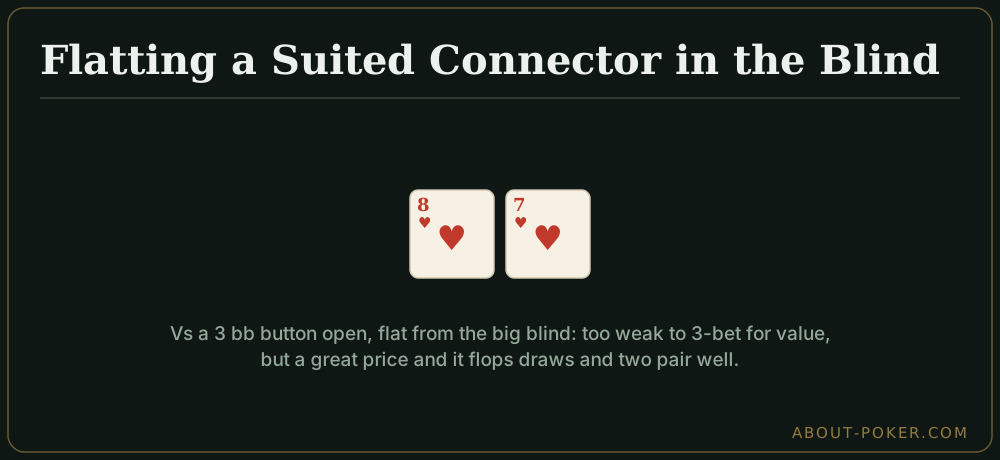
You are in the big blind with 8h 7h. A solid player opens to 3 big blinds from the button.
Should you 3-bet or flat? Ace-king or queens want a 3-bet for value. But eight-seven suited is not strong enough to re-raise for value, and 3-betting it as a bluff is fine only sometimes. The clean, low-variance choice is to flat call.
Here is why flatting is right for this hand:
- You are getting a good price closing the action from the big blind, needing to call just 2 more big blinds into a pot already holding roughly 7.5.
- Eight-seven suited flops well — open-ended straight draws, flush draws, and two pair — so it realizes equity on many boards.
- 3-betting would fold out the exact weak hands you want to keep in and only get called by hands that dominate you.
Flatting keeps a playable, disguised hand in a pot at a good price. That is the textbook case for a flat call.
When Flatting Becomes a Leak
Calling too much is one of the most common losing habits, so guard against these traps:
- Flatting weak hands out of position. Calling a raise from the small blind with a mediocre offsuit hand invites tough spots on every street. You will often be first to act and rarely realize your equity.
- Flatting when raising is clearly better. If your hand wants to build the pot and fold out equity, a flat call leaves value on the table.
- Flatting to “see what happens.” Every call should have a plan — which flops you continue on, which you fold. Calling without one bleeds chips.
Understanding how flatting fits into your overall range is what keeps it from becoming passive drift.
Flat Calling In and Out of Position
Position changes everything about a flat call. In position, flatting is far more forgiving — you act last, control the pot size, and can bluff or extract value based on how your opponent reacts. Out of position, the same call is more dangerous because you must act first and guess more.
A practical rule: widen your flatting range in position and tighten it out of position, leaning toward raising or folding the marginal hands from the blinds.
A Quick Checklist
- Is my hand too weak to raise for value but too good to fold? Flatting is likely right.
- Do I have a monster and an aggressive opponent? Consider flatting to trap.
- Am I in position? Flat wider. Out of position? Tighten up.
- Do I have a plan for the flop? If not, do not call.
Frequently asked
What is a flat call in poker?
A flat call, or flatting, is simply calling a bet or raise rather than re-raising it. The word flat distinguishes it from raising, emphasizing that you are matching the wager without adding pressure. It is most often used to describe calling a preflop raise instead of 3-betting.
Why would you flat call a strong hand?
Players flat strong hands to keep weaker hands in the pot, to disguise their strength, and to keep the opener's bluffs firing. Flatting a monster preflop can trap an aggressive player and win more than a re-raise that folds everyone out would.
Is flat calling a mistake?
Not inherently, but calling too often is a common leak. Flatting is correct with hands that play well but are not strong enough to raise for value, and as a trap with some premiums. Flatting weak hands out of position just to see flops loses money over time.