What Is Exploitative Play in Poker?
Exploitative play means deviating from balanced strategy to punish an opponent's specific mistakes. Learn how it differs from GTO and when to use it.
On this page · 7 sections
Exploitative play means deliberately deviating from a perfectly balanced strategy to punish the specific mistakes an opponent is making. Rather than trying to be unbeatable no matter what the other player does, you observe this player’s tendencies and adjust to win the maximum against them. If someone folds too much, you bluff more. If they call too much, you stop bluffing and bet your value hands relentlessly. Exploitative poker is where most real profit comes from, because nearly every opponent you face has leaks worth attacking.
Exploitative Versus GTO
The counterpart to exploitative play is GTO, or game-theory-optimal play — a perfectly balanced strategy that cannot be beaten in the long run regardless of what the opponent does. GTO is a defensive equilibrium: it refuses to lose. Exploitative play is offensive: it tries to win the most.
The trade-off is real. A GTO strategy is unexploitable but leaves money on the table against weak players, because it does not press their specific mistakes. An exploitative strategy wins more against those players but opens you up to being counter-exploited if your opponent adjusts. The practical answer for most players: use GTO as a baseline and default, then deviate exploitatively as soon as you spot a reliable pattern.
The Core Idea: Attack the Leak
Every deviation follows the same logic — find how an opponent’s range or frequencies differ from balanced, then move in the opposite direction:
- They fold too much → bluff more, bet more thin, and steal relentlessly.
- They call too much (a “station”) → stop bluffing entirely and value bet wider and bigger.
- They never bluff → fold your medium hands to their aggression and only pay off with strong holdings.
- They over-bluff → call down lighter and let them barrel into you.
A Worked Example
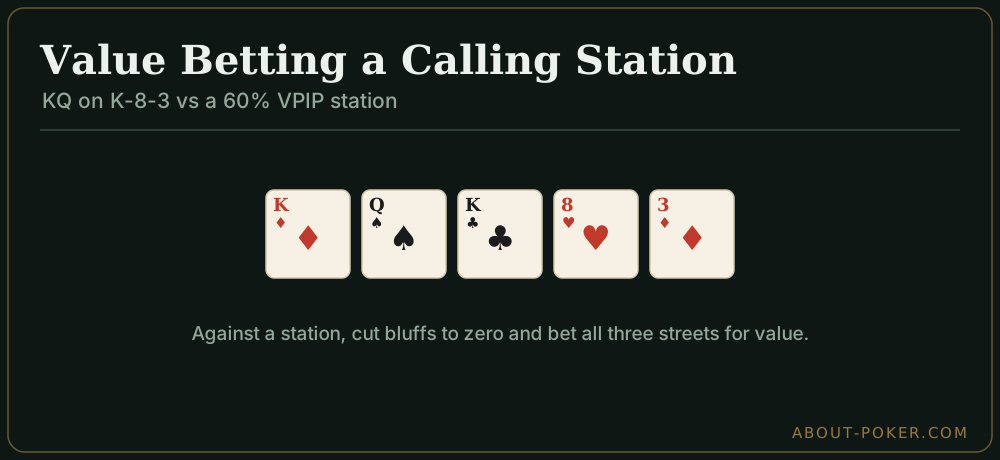
You are in a low-stakes cash game against a player whose VPIP is huge — they play 60% of hands and call almost any bet to see a showdown. A balanced strategy says you should bluff at some fixed frequency to stay unexploitable. But against this calling station, bluffing is a waste of chips: they will not fold.
So you exploit. You cut your bluffs to nearly zero and instead value bet aggressively with any decent hand. On a K-8-3 board, you hold K-Q. A GTO player might size cautiously and mix in checks; you simply bet all three streets for value, because your opponent will call with any king, any pair, and often ace-high. You are no longer “balanced” — and that is exactly the point. You are printing money by targeting one specific leak.
When to Lean Exploitative
Exploitative play shines against the players you will meet most often: recreational players, tilted regulars, and anyone whose patterns are readable. At low and mid stakes, the field is full of exploitable habits, and rigid GTO would leave you far short of your potential win rate.
Lean back toward GTO when you face strong, thinking opponents who can notice your deviations and punish them — a player who realizes you have stopped bluffing will simply fold everything to your bets, and your unbalanced strategy backfires. The higher and tougher the game, the more balance protects you.
The Risk of Over-Exploiting
Every exploit is a bet that the read is correct and stable. If you decide a player never bluffs and start folding your medium hands, a single well-timed bluff from them costs you a pot you should have won. Good exploitative players hold their reads loosely, update them constantly, and back off when a player adjusts. The most dangerous mistake is exploiting a pattern that has already changed.
Common Mistakes
- Exploiting on too little information. One hand is not a pattern; wait for a reliable read before deviating hard.
- Bluffing calling stations. The single most expensive leak — never try to fold out a player who does not fold.
- Staying rigid against fish. Playing pure GTO versus obvious weak players wastes your biggest edge.
- Ignoring counter-adjustments. Strong opponents will notice and flip your exploit against you.
Quick Checklist
Watch each opponent, name their biggest leak in a sentence, then move opposite to it: bluff the folders, value bet the callers, fold to the honest players, and call the maniacs. Keep GTO as your fallback for tough spots and tough players — and always be ready to update the moment the read changes.
Frequently asked
What is exploitative play in poker?
Exploitative play means intentionally deviating from a balanced, game-theory-optimal strategy to punish the specific mistakes an opponent makes. Instead of being unexploitable, you aim to win the most against the actual players in front of you.
What is the difference between GTO and exploitative play?
GTO is a balanced strategy that cannot be beaten in the long run no matter what the opponent does. Exploitative play abandons that balance to take maximum advantage of a specific opponent's leaks, winning more but becoming exploitable itself.
When should you play exploitatively?
Play exploitatively against weaker, predictable opponents whose mistakes you can read — which is most players in low and mid stakes. Against strong, balanced opponents who could counter-exploit you, lean closer to GTO.
Is exploitative play better than GTO?
Against imperfect opponents, exploitative play wins more money than GTO because it targets their specific errors. GTO is a safe default and a baseline to measure deviations from, but pure balance leaves money on the table versus weak players.