What Is Give Up in Poker?
A give up is when you stop betting and abandon a hand you were bluffing, checking or folding instead of firing again. Learn when giving up saves you money.
On this page · 7 sections
To give up in poker means to stop betting and abandon a hand you were trying to win with aggression — you check instead of firing again, planning to fold if bet into. It is one of the most underrated skills in the game. Anyone can start a bluff; the discipline to stop one when it has stopped working is what separates winning players from losing ones. A well-timed give-up saves the chips that a stubborn extra barrel would have thrown away.
What Giving Up Actually Means
Giving up is the decision to quit applying pressure on a hand that has run out of profitable moves. Most often it looks like this: you c-bet the flop as a bluff, get called, and on the turn you decide the barrel no longer makes sense. Rather than fire again, you check — and if your opponent bets, you fold. You have given up on the hand.
It is closely related to folding but not identical. Folding is surrendering to a bet. Giving up is the earlier decision to stop being the aggressor. The two often go together — a give-up frequently ends in a fold on a later street — but the give-up itself is the moment you concede the initiative.
Why Giving Up Is a Skill
A bluff is only worth continuing if it can still make a better hand fold. The instant that stops being true, every additional chip you bet is pure loss. Beginners feel committed after betting once — “I’ve already put money in, I have to keep going” — and they barrel into calling stations and locked-up ranges that will never fold. Strong players feel no such attachment. They treat each street as a fresh decision and give up the moment the math turns against them.
When to Give Up
Give up when any of these is true:
- The card did not help. A blank turn that improves neither your hand nor your story kills the double barrel.
- Their range stayed strong. If your opponent’s calls only keep in hands that beat you, there is nothing left to bluff out.
- They will not fold. Against a calling station, fold equity is near zero, so a bluff is dead on arrival.
- You have no equity. With no draw and no showdown value, a failed bluff has no backup plan.
A Worked Example
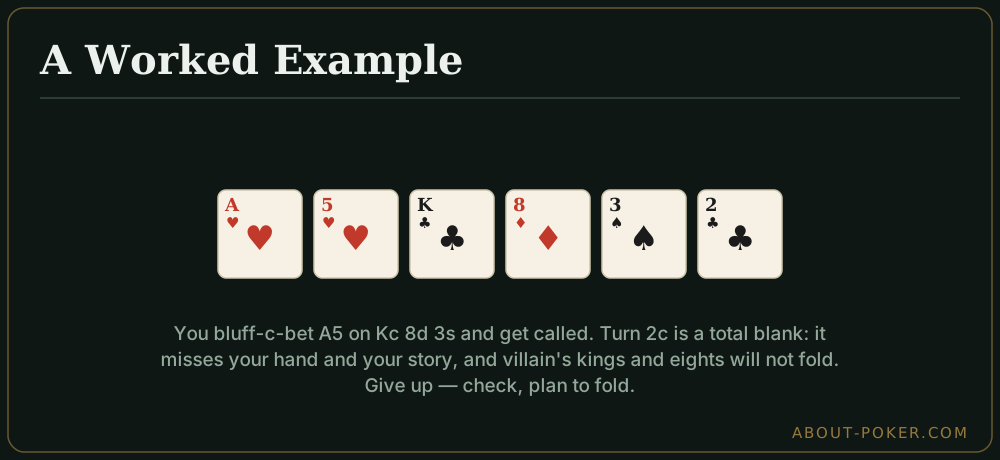
You raise with Ah-5h, the big blind calls, and the flop comes Kc-8d-3s. You c-bet as a bluff with your ace-high and backdoor draws; the big blind calls. The turn is the 2c — a total blank. It does not improve your hand, it does not add credible scare cards to your story, and the big blind’s flop-calling range is full of kings and eights that are not folding to a second barrel.
This is a textbook give-up. Firing again bets into a range that beats you and will not fold; you would be throwing more chips at a bluff that has already failed. So you check. If the big blind bets, you fold your ace-high and move on, having lost only the one flop bet instead of two or three. The give-up is not weakness — it is the correct, money-saving play.
The Cost of Not Giving Up
The failure to give up is one of the most expensive leaks in poker. Players who feel committed keep barreling into hands that never fold, turning a small one-street loss into a stacked-off disaster. Every chip of a bluff that cannot succeed is gone for nothing. Learning to let go — to accept the small loss and preserve your stack for a better spot — is where a lot of a winning player’s edge quietly comes from.
Common Mistakes
- Feeling committed after one bet. Sunk chips are gone; judge each street fresh.
- Barreling calling stations. No fold equity means no reason to keep bluffing.
- Ignoring blank cards. If the card changes nothing, the story stalls — give up.
- Never giving up. Refusing to abandon dead bluffs is a huge, steady leak.
Quick Checklist
Before firing the next barrel, ask: can this bet still make a better hand fold? If the card missed your story, the opponent’s range stayed strong, or they simply will not fold, check and give up. Take the small loss now to protect the stack you will need for the spots where your aggression actually works.
Frequently asked
What does give up mean in poker?
To give up means to stop betting and abandon a hand you were trying to win with aggression. Instead of firing another bluff, you check and plan to fold, conceding the pot rather than investing more chips in a spot that has stopped being profitable.
When should you give up on a bluff?
Give up when the turn or river card does not improve your hand or your story, when your opponent's range has stayed strong, or when they have shown they will not fold. Continuing to barrel into a hand that cannot fold just burns chips.
Is giving up the same as folding?
Not quite. Giving up usually means checking a hand you were betting, with the intention of folding if you face a bet. Folding is the specific action of surrendering to a bet. A give-up often ends in a fold, but the give-up is the decision to stop applying pressure.
Why do good players give up more than beginners?
Good players recognize when a bluff has no fold equity or the board has turned against them, and they stop wasting chips. Beginners often feel committed after betting once and keep firing, throwing good money after bad into hands that will never fold.