What Is Give Up Line in Poker?
A give up line is a preplanned sequence where you stop betting a hand — checking or folding — instead of firing again. Learn when it saves you the most money.
On this page · 6 sections
A give up line is one of the most underrated tools in a winning player’s kit. It describes a planned sequence of actions where you stop putting money in a hand — most often by checking when you were the last aggressor, and folding if you face a bet. Instead of firing another barrel to try to win the pot, you accept that the hand is no longer worth investing in and you “give up” the initiative. Understanding when to take this line separates disciplined players from the ones who spew chips firing bets that can no longer work.
What a give up line actually means
The phrase points to the whole line, not a single action. A give up is the moment you abandon aggression; the give up line is the road you travel after that decision. In practice it usually looks like this: you raise preflop, make a continuation bet on the flop, then check the turn with no intention of bluffing again, and fold if your opponent bets the river. Every one of those later checks and folds is part of the give up line.
The key word is planned. A good player does not fire a flop bet and only then wonder what to do. They already know which turn cards let them keep barreling and which cards send the hand into the give up bucket. That foresight is what makes the line profitable rather than a panicked surrender.
Why give up lines save you money
Poker profit comes as much from the pots you do not lose as from the ones you win. Every extra bet you fire into a hand that cannot win is a direct leak. A give up line caps your losses at the money already in the pot instead of compounding a bad situation.
Consider the alternative. Weak players who hate “giving up” tend to double and even triple barrel busted hands because folding feels like admitting defeat. Against a calling station this is disaster: they call your flop c-bet, call the turn, and call the river, and you have handed them three streets of value with air. The give up line stops the bleeding after one bet.
A worked example
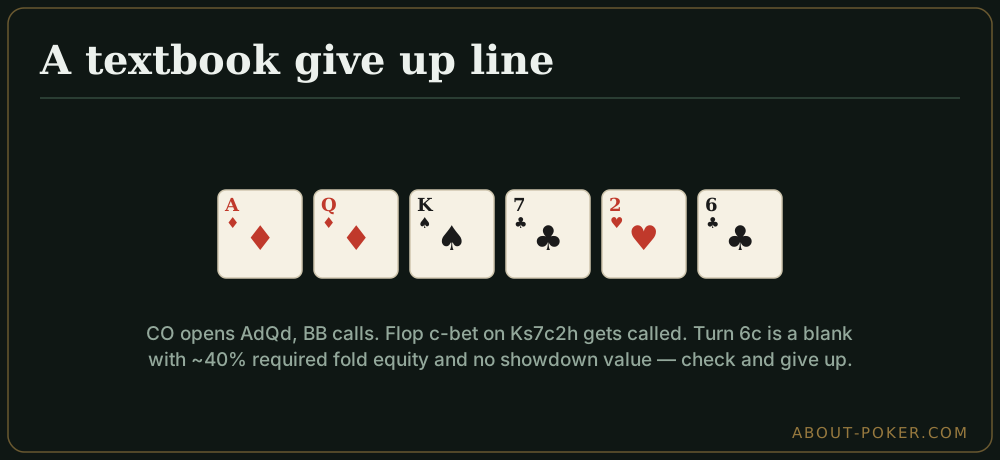
You open A♦Q♦ from the cutoff and the big blind calls. The flop comes K♠7♣2♥ — a dry board that misses your hand entirely. You make a standard 33 percent pot c-bet as a semi-bluff with two overcards and a backdoor flush draw, and the big blind calls.
The turn is the 6♣, a total blank. Now the math is against you. The pot is 6 big blinds. To bluff again you would risk roughly 4 big blinds; your bluff needs to work about 4 ÷ (6 + 4) = 40 percent of the time. Against a player who called the flop on a king-high board, folding a king or better 40 percent of the time is unrealistic — most of their range wants to continue. Your ace-high has essentially no fold equity against the hands beating you and no value against the hands you beat. This is a textbook give up line: you check the turn, and if the river bricks and they bet, you fold. You have surrendered the pot for the price of one flop bet instead of two or three.
How give up lines differ from a delayed c-bet
Do not confuse a give up line with a delayed c-bet. A delayed c-bet is checking one street with the intention of betting later — you are pausing your aggression to pot-control or to let a scare card arrive, then re-firing. A give up line is checking with no plan to bet again. The actions look identical for one street, but the intent and the follow-through are opposite. A delayed c-bet keeps the hand alive as a bet; a give up line retires it.
Hands that belong in the give up bucket
- Busted draws with no showdown value. A missed flush or straight that cannot win at showdown and cannot fold out better hands is a pure give up.
- Weak made hands on boards that hit the caller. Second pair on a coordinated, high board where your opponent’s range is strong.
- Air after a scare card that favors the caller. If the turn or river completes obvious draws in your opponent’s range, further barreling has poor fold equity.
- Overcards against sticky opponents. When you have no equity edge and the villain never folds, betting only builds a pot you cannot win.
Choosing which busted hands give up and which keep barreling is a balance question. If you always give up your air, thinking opponents can exploit you by folding to your bets; you keep a slice of your worst hands barreling to protect your value bets. That balance connects the give up line to broader ideas about bluff-to-value ratios and range construction.
A quick decision checklist
Before you fire another bet, run through these questions. If most answers point away from betting, take the give up line:
- Does my hand have real showdown value if I just check? If yes, checking may beat betting anyway.
- What percent of the time does this opponent need to fold for a bluff to profit, and will they?
- Did the last card help my opponent’s range more than mine?
- Am I betting because it is correct, or because I hate folding?
That last question catches the most leaks. Giving up is not weakness — it is choosing not to light money on fire. The best players give up cleanly, cheaply, and often, and their win rates thank them for it. When you internalize the give up line as a legitimate, planned option rather than a failure, you stop making the expensive mistake of turning one bad bet into three.
Frequently asked
What is a give up line in poker?
A give up line is a planned line of play where you stop investing in a hand you were betting or intended to bet — usually by checking, and folding to further pressure. It is the sequence of actions that ends your aggression on a hand that can no longer profitably bet for value or bluff.
Is a give up line the same as folding?
Not exactly. Folding ends the hand immediately, while a give up line often means checking and keeping some hands live for showdown or a cheap river. You give up your betting lead, but you may still win at showdown or catch a card that lets you bet again.
When should you take a give up line?
Take a give up line when a second or third barrel has poor fold equity and your hand has little value — for example a busted draw with no showdown value against a sticky caller, or a weak made hand on a board that has smashed your opponent's calling range.