What Is Iso-Raise in Poker?
An iso-raise is a raise designed to isolate one weak player, usually a limper, into a heads-up pot. Learn what an iso-raise is, how to size it, and when to use it.
On this page · 6 sections
An iso-raise, short for isolation raise, is a raise made specifically to isolate one weak player into a heads-up pot. It is the standard answer to a limp: when a recreational player calls the big blind instead of raising, you raise over the top to fold out everyone else and play the pot one-on-one against the weakest opponent at the table.
The name says it all. You are not raising just to build a pot; you are raising to isolate. The ideal outcome is a heads-up flop with you holding position and the initiative against a player who is likely to make mistakes.
Why Isolation Is Profitable
Weak players — the classic fish — leak money in predictable ways. They call too often, they play their hands face-up postflop, and they fold to sustained pressure. But those leaks only pay off if you can get them alone. In a crowded multiway pot, the fish is protected by the crowd: someone else may have a real hand, and your bluffs stop working.
An iso-raise strips that protection away. By raising over the limper, you charge the players behind to continue, and most will fold. What is left is a heads-up pot against the exact opponent you wanted to play — the one most likely to hand you chips.
Sizing an Iso-Raise
Iso-raises are bigger than normal opens for two reasons: there is already dead money in the pot from the limp, and you want to discourage the players behind from calling. A reliable rule of thumb:
Your normal open size, plus one big blind for each limper.
So if you usually open to 3 big blinds and one player limps, you iso-raise to about 4 to 5 big blinds. If two players limp, push it toward 6 or 7. The more limpers, the larger you size, both to punish them and to price out the field.
Which Hands to Iso-Raise
Because a limper’s range is weak and capped, you can iso-raise a wider range than you would open unopened. Strong candidates include:
- Broadway hands (ace-king through king-jack, queen-ten) that dominate the limper’s weak aces and kings.
- Suited aces, which flop flushes and have blocker value.
- Medium pairs, which can set-mine and also often start ahead.
Position still governs how wide you go. From the button or cutoff, with few players left to act, iso-raise aggressively. From earlier seats, where several players remain behind, tighten up — the risk of running into a real hand rises.
A Worked Example
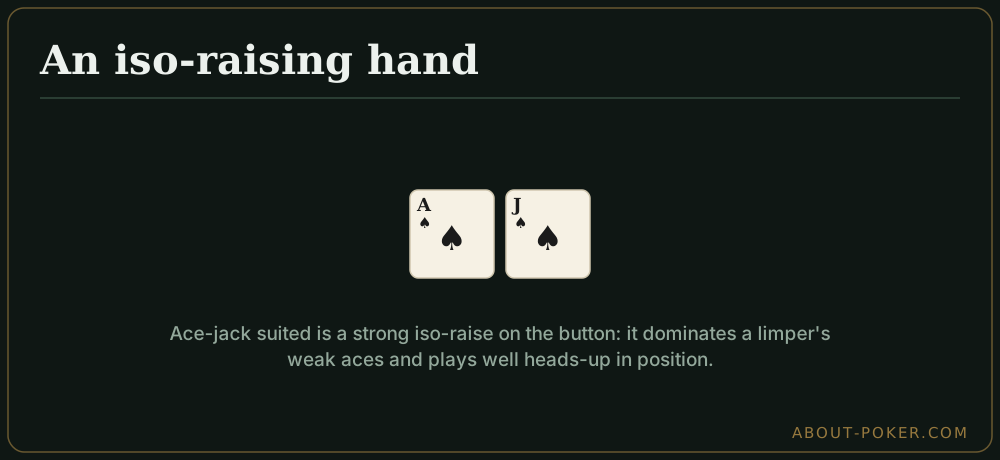
You are on the button with ace-jack suited. A loose recreational player limps from middle position, and everyone else folds to you. You iso-raise to 5 big blinds (your normal 3 plus 2 for the pot and pressure).
Both blinds fold, and the limper calls. Now you are heads-up, in position, with the initiative and a strong hand against the weakest player at the table. On most flops you can continuation-bet and take the pot down, and when you connect you have a hand that dominates the limper’s range. This is the whole point of the iso-raise: you manufactured the ideal spot.
Common Mistakes
The most common error is iso-raising too small. A limp-sized raise to 3 big blinds barely charges anyone and invites the field to call, defeating the entire purpose. Size up so folding is attractive to everyone but the fish.
The second mistake is isolating with hands that play badly heads-up out of position, or isolating a good player. There is no profit in getting heads-up with a strong regular; save the iso-raise for genuinely weak opponents. And if a limper’s response is to re-raise, note that a limp-3-bet usually signals real strength, so proceed carefully.
Quick Checklist
- Iso-raise to isolate one weak limper into a heads-up pot.
- Size at your normal open plus one big blind per limper.
- Widen your range versus a limper’s weak, capped holdings.
- Iso-raise more from late position, less from early seats.
- Target genuine fish, not skilled regulars, and respect a limp-reraise.
Frequently asked
What is an iso-raise in poker?
An iso-raise, short for isolation raise, is a raise made specifically to isolate one weak player into a heads-up pot. It is most often used against a limper, and the goal is to fold out everyone else so you play the pot one-on-one with position and initiative against the weakest opponent.
How big should an iso-raise be?
Iso-raises are larger than standard opens. A common formula is your normal open size plus one big blind for each limper you must get through. Against a single limper, roughly 4 to 5 big blinds is typical, and you size up further if multiple players have limped.
Why raise to isolate a weak player?
Weak players call too much, play face-up postflop, and fold to pressure. Isolating one of them into a heads-up pot lets you use position and aggression to win pots they would otherwise get to see cheaply. Playing against one weak opponent is far more profitable than a crowded multiway pot.
What hands should I iso-raise with?
You can iso-raise a wider range than you would open with, because a limper's range is weak. Good candidates include broadways, suited aces, and medium pairs. Position matters: iso-raise wider in late position and tighter from earlier seats where players remain behind you.