What Is Kicker Trouble in Poker?
Kicker trouble is when you make top pair but your side card is likely outkicked. Learn to spot dominated kickers, avoid them preflop, and play them safely postflop.
On this page · 6 sections
Kicker trouble is the trap of making a pair — usually top pair — with a side card that’s likely to be outranked by an opponent holding the same pair with a bigger kicker. It’s one of the most common ways solid-looking hands quietly leak money: you win small when ahead and lose big when behind.
The definition
When two players hold the same pair, the hand is decided by the highest unpaired side card. Your kicker is that tiebreaker. Kicker trouble is the scenario where your kicker is probably the smaller one.
The classic example is a weak ace. Flop an ace with A♣ 8♦ and you have top pair — but against A-K, A-Q, A-J, or A-10 you’re dominated, sharing the ace and losing on the kicker. You beat the aces with worse kickers (A-7, A-6) and split with another A-8, but the money tends to flow toward the bigger ace.
Why it costs you money
Kicker trouble creates a punishing reverse-implied-odds situation. Think about who keeps betting when the board pairs your top card:
- When you’re ahead (against a smaller kicker or air), opponents fold or bet small — you win a modest pot.
- When you’re behind (against a bigger kicker), opponents bet confidently — you pay off a big pot.
That asymmetry is the whole problem. A hand that’s a coin flip to be ahead can still be a long-term loser because the pots you lose dwarf the pots you win.
Which hands cause kicker trouble
The usual suspects are offsuit hands with one big card and a mediocre partner:
- Weak aces: A-2 through A-9 offsuit
- King-x: K-9, K-10, even K-J against a 3-bettor
- Q-J, Q-10, J-10 when a queen or jack flops against a stronger range
The tighter and more position-advantaged your opponent, the more their range is packed with the exact bigger-kicker hands that dominate you. A weak ace that’s a fine open-raise against loose blinds becomes a liability the moment a disciplined early-position player enters the pot, because their range is almost all bigger aces and pairs.
A useful mental shortcut: rank your side card against the pairs your opponent would raise or call with. If most of those combos beat your kicker, you’re the one in trouble — not the other way around.
A worked hand
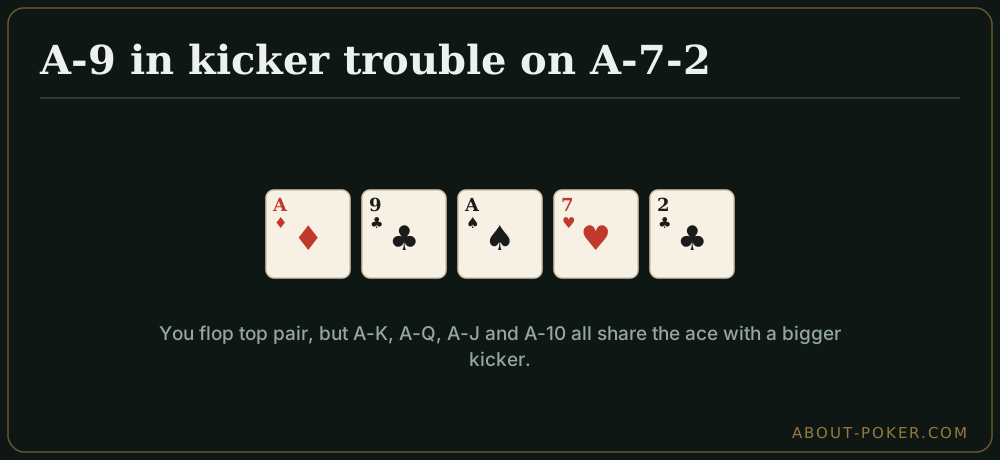
You call an under-the-gun open from the button with A♦ 9♣. The flop is A♠ 7♥ 2♣ — top pair, but a textbook kicker-trouble spot. The early-position raiser bets 5 into 10, and you call.
Turn is the 4♦. They bet again, 14 into 20. This is the warning sign. An under-the-gun raiser who fires two barrels on an ace-high board is heavy with A-K, A-Q, and A-J — all of which have your nine crushed. Your A-9 is now mostly drawing to two running cards to make two pair. Calling here is how you get to the river and lose a big pot with a “good” hand.
The disciplined play is to fold or, at most, call one street and give up. Compare it to holding A-K in the same spot: you’d happily stack off, because your kicker is the one doing the dominating. Same top pair, opposite hand — that’s kicker trouble in one picture.
How to avoid and manage it
- Fold weak kickers preflop, especially from early position and against tight opens. A-8 offsuit under the gun is a fold, not a call.
- Prefer suited and connected hands — they can make flushes and straights that sidestep the kicker entirely.
- Keep pots small when you flop top pair with a marginal kicker; don’t turn it into an overpair-style stack-off.
- Use position. In position you can control the pot and see one more card cheaply; out of position, weak kickers are far more dangerous.
- Note that making two pair or trips solves it. Once the hand isn’t just one pair, the kicker stops mattering.
Quick checklist
- Is my side card likely the smaller kicker against this opponent’s range? Then think pot control or fold.
- Am I facing sustained aggression on a board that pairs my big card? That’s a domination alarm.
- Could a suited or connected version of this hand have avoided the trap? Adjust future preflop selection.
- Have I improved past one pair (two pair, trips, straight)? If so, the kicker is irrelevant — play on.
Recognize kicker trouble before the chips go in, and you’ll dodge the slow, expensive leak that dominated hands create.
Frequently asked
What is kicker trouble in poker?
Kicker trouble is the situation where you make a pair — usually top pair — but your unpaired side card (your kicker) is likely to be beaten by an opponent holding the same pair with a bigger kicker. Hands like A-8 and K-J are classic kicker-trouble hands.
Why are hands like A-9 kicker-trouble hands?
When an ace flops, A-9 makes top pair, but any better ace — A-K, A-Q, A-J, A-10 — has you outkicked and dominated. You win a small pot when ahead and lose a big one when behind, which is the essence of kicker trouble.
How do you avoid kicker trouble?
Play stronger kickers, especially out of position and against tight players. Fold weak offsuit aces and face cards in early position, and be cautious building big pots when you hold top pair with a mediocre side card.
Does a bigger pair fix kicker trouble?
Yes. Making two pair, trips, or a straight removes the kicker from the equation, because the hand is decided by the stronger combination rather than the side card. Kicker trouble only matters when the final hand comes down to one pair.