What Is Isolation in Poker?
Isolation means raising to play a heads-up pot against one weak opponent. Learn what isolation is in poker, how to isolate limpers, and when it pays.
On this page · 6 sections
Isolation in poker means raising to fold out other players so you can play a heads-up pot against one particular opponent — almost always a weaker one. Instead of letting a bad player see a cheap flop in a crowded pot, you raise to clear the table and get them alone, where your skill and hand advantage matter most.
The most common form is the isolation raise (or iso-raise): a raise made over one or more limpers. When a weak player limps into the pot, they are announcing a wide, passive range. Raising over that limp punishes it — you build a pot while ahead and, crucially, you push everyone else out so the money goes in one-on-one against the fish.
Why Isolation Works
Two edges stack on top of each other when you isolate:
- A hand-value edge. A limper’s range is loaded with weak aces, small pairs, and offsuit broadways. A hand like A♠J♠ dominates most of that range, so you are simply ahead of what they call with.
- A skill edge heads-up. The fewer players in the pot, the more your postflop skill and position matter. Isolating turns a chaotic four-way pot — where anyone can hit — into a controlled heads-up pot against the player you most want to face.
Multiway pots dilute both edges. Every extra opponent is another hand that can outflop you, and weak players are far more dangerous when they can just check-and-hope with the crowd. Isolation strips that away.
How Big to Make the Iso-Raise
A reliable rule of thumb is your standard open size plus one big blind per limper. If your normal raise is 3 big blinds and one player limps, raise to about 4 big blinds; with two limpers, raise to about 5. Add extra size out of position, since you want fewer callers when you cannot see them act.
The goal is a size that folds out the field but still gets called by worse. Too small and everyone comes along, defeating the purpose. Too large and you only get action when you are beaten. For a full breakdown of sizing and hand selection, see our guide to the iso-raise.
A Worked Example
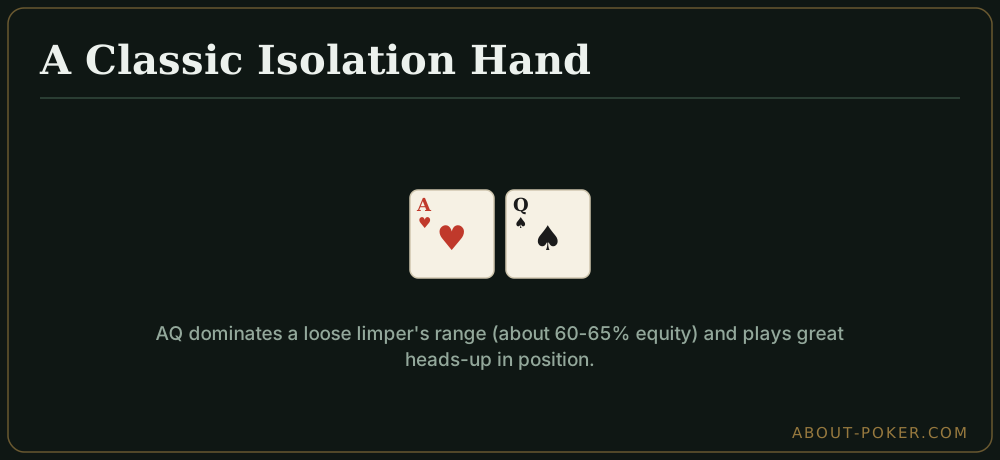
You are on the button in a $1/$2 game with A♥Q♠. A recreational player limps for $2 from middle position — you have seen them limp-call with hands like K7o and J9o all night. The blinds are tight and unlikely to fight back.
You raise to $12 (3 big blinds plus one for the limper). Both blinds fold, and the limper calls, exactly the outcome you wanted. Now you are heads-up, in position, with a hand that crushes their range — AQ has roughly 60–65% equity against a typical loose limping range and dominates their many weaker aces and queens. This is a value situation created entirely by the isolation raise: without it you would be four-way with a hand that plays much worse in a crowd.
Common Mistakes
- Isolating too small. A min-raise over a limper folds nobody and just builds a multiway pot with your cards face-up as “strong.” Size up to actually isolate.
- Isolating with weak hands. Q8o and J7o do not dominate a limper’s range and flop weak pairs. Isolate hands that are genuinely ahead and play well heads-up.
- Isolating a strong, tricky player. Limp-reraise traps exist. Reserve wide isolation for genuinely weak, passive limpers, not solid regulars who limp on purpose.
- Ignoring position. Isolating out of position surrenders much of the postflop edge. Iso wide in late position and tighten up when you will be first to act after the flop.
How Position and Opponents Change It
Position multiplies the value of isolation. From the button or cutoff you can isolate a wide range because you will act last on every street, realizing more equity and controlling the pot. From early position you should tighten up, since a heads-up pot out of position is far less comfortable.
The opponent is everything. Against a maniac who three-bets constantly, isolating light backfires — you get raised off your equity. Against a calling-station fish, isolate relentlessly for value: they call with dominated hands and pay off your strong holdings. Read the limper first, then decide how wide to go.
Quick Checklist Before You Isolate
- Is the limper weak and passive? If yes, isolation is a prime spot.
- Does my hand dominate their range and play well heads-up? Iso for value.
- Is my raise big enough to fold out the rest of the field?
- Am I in position to realize my edge after the flop?
Isolation is one of the highest-return habits a winning player builds. Stop letting bad players see cheap multiway flops — raise, clear the table, and take them on one at a time where your edge is largest.
Frequently asked
What is isolation in poker?
Isolation is raising to fold out other players so you play a heads-up pot against one specific opponent, usually a weak one. The most common form is the isolation raise against a limper: you raise over their limp to push everyone else out and get the fish alone. Playing one weak player heads-up maximizes your edge.
How much should an isolation raise be?
A common isolation raise is a normal open size plus one big blind for each limper. For example, if your standard raise is 3 big blinds and one player limps, raise to about 4 big blinds; with two limpers, raise to about 5. You want a size large enough to fold out the field but not so big you only get called when beaten.
What hands should you use to isolate a limper?
Isolate with hands that dominate a weak limper's calling range and play well heads-up, such as strong aces, broadway hands, and decent pocket pairs. You can widen against very loose, passive limpers because they call with far worse. Avoid isolating with weak offsuit hands that a limper's range beats.