What Is Isolation Raise in Poker?
An isolation raise in poker forces out other players so you can play heads-up against one weak opponent. Learn how to size it and when to iso-raise limpers.
On this page · 7 sections
The isolation raise is one of the most reliable ways to turn a loose, passive table into a profit machine. Instead of letting weak players see cheap flops, you charge them and play the pot one-on-one where your skill edge is largest.
The Core Answer
An isolation raise, often shortened to “iso-raise,” is a raise made specifically to get everyone except one target player to fold. The classic setup is a weak opponent who limps into the pot. Rather than limping behind and giving other players a cheap look, you raise large enough to fold out the field and play heads-up against the limper, ideally with position.
The value comes from playing more pots against the player you most want to face. If someone limps too often, calls too much, and plays poorly after the flop, isolating them means you get to exploit those leaks repeatedly without interference from stronger players.
A Worked Example
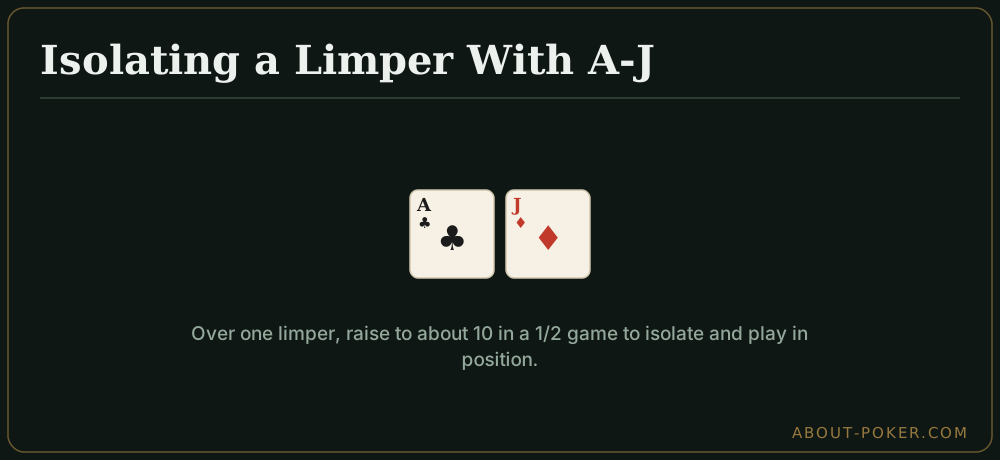
You are on the button in a 1/2 game. A loose recreational player in middle position limps for 2. This is a textbook iso spot. You look down at A-J offsuit — not a hand you love in a multiway pot, but excellent heads-up against a limper’s weak range. You raise to 10. Standard sizing here is your normal open of around 6 plus one extra big blind per limper, so raising to 4 to 5 big blinds is right; over one limper, 10 into a 1/2 game is a clean iso.
The blinds fold, the limper calls, and now you are heads-up in position against exactly the player you targeted. Even when you miss the flop, you can often win with a continuation bet because your opponent has a capped, weak range and folds too much.
Why It Works
Two forces make the iso-raise profitable. First, you collect the dead money — the blinds and the limp — a meaningful share of the time when everyone folds. Second, when you do get called, you play against one weak range instead of several, in position, with the betting lead. That combination of fold equity plus a postflop edge is exactly what you want.
Sizing and Targeting
Sizing scales with the number of limpers. A good rule is to start from your normal open and add one big blind per limper. Over one limper, that is roughly 4 to 5 big blinds; over two limpers, closer to 6 to 7. You raise bigger than usual because you want to deny the field cheap odds to call, and because a limped pot already has extra chips worth taking down.
Targeting matters as much as sizing. The ideal target is a recreational fish who plays too many hands and folds too much postflop. Avoid isolating a tricky, aggressive limper who limp-reraises or floats you relentlessly, because then you lose the very edge you were chasing.
Common Mistakes
The most frequent error is isolating with hands that play badly heads-up but great multiway, or vice versa — small pairs and suited connectors prefer a cheap multiway flop, while high-card hands like A-J or K-Q shine one-on-one. Another mistake is sizing too small, which invites the field to call and defeats the purpose. A third is isolating out of position with a marginal hand, giving up the positional edge that makes the play work.
Playing the Pot After You Isolate
Winning the isolation raise is only half the job; the other half is playing the heads-up pot well. When your target calls, you usually hold the initiative and position, so a continuation bet on most flops is a strong default. Because your opponent limped a capped range, they miss the flop often and fold to that first bet at a high rate. When they do continue, pay attention: passive players who limp-call rarely bluff-raise, so a raise from them usually means real strength and you can fold marginal hands cheaply. Against sticky players who call down light, lean on value betting your good hands thinly rather than bluffing, since they will not fold. The whole point of isolating is to create these exploitable heads-up situations, so make sure your postflop plan actually harvests the edge.
Quick Checklist
Before you iso-raise, confirm three things. Is my target genuinely weak and likely to play the pot poorly? Does my hand play well heads-up rather than multiway? And am I in position, or at least sized large enough to fold out the field? When all three line up, the isolation raise quietly compounds your win rate every time a passive player limps.
Frequently asked
What is an isolation raise in poker?
An isolation raise is a raise designed to push other players out of the pot so you can play heads-up against one target, usually a weak player who limped in. The goal is to isolate that opponent and play the pot in position with an edge.
What size should an isolation raise be?
A common isolation size is your normal open raise plus one extra big blind for each limper in the pot. So over one limper you might raise to about 4 to 5 big blinds, adding more if several players have limped.
When should you isolate a limper?
Isolate when a weak or predictable player limps, you have position or a reasonable hand, and the players behind are unlikely to wake up with a big holding. The aim is to play a heads-up pot against the weakest opponent.