What Is Kill Game in Poker?
A kill game raises the stakes after a big pot or two wins in a row. Learn kill pot rules, the kill button, and how kill blinds double the betting limits.
On this page · 6 sections
A kill game is a cash game that temporarily doubles the stakes after a specific trigger — most often when a pot reaches a set size or when the same player wins two hands in a row. When the game is “killed,” the betting limits double for the next hand and the player who caused the kill must post an extra forced bet, the kill blind. It is a house rule you will see most in limit games, especially Omaha hi-lo and stud, but the concept shows up in no-limit rooms too.
The kill exists to inject bigger action right when the table is running hot. Understanding the triggers and the kill blind keeps you from getting caught off guard when the stakes suddenly jump.
What triggers a kill
There are two standard triggers, and the room posts which one is in effect:
- A pot reaches a set size. For example, in a 10/20 limit game the rule might be “kill on a $300 pot.” Any pot that reaches $300 kills the next hand.
- The same player wins two pots in a row. Win two consecutive qualifying hands and you trigger the kill. In some hi-lo split games it is two consecutive scoop pots (winning both the high and low halves).
Small pots that do not reach the room’s minimum do not count, so a couple of tiny limped pots will not trigger anything. Only real pots qualify.
How the kill blind works
When the trigger is met, the next hand becomes a kill pot. Two things happen:
- The limits double. A 10/20 game becomes 20/40 for the kill hand.
- The player who caused the kill posts the kill blind — usually double the normal big blind — before the cards come out. It is placed in addition to the regular blinds.
Crucially, the kill blind is a live blind, just like a straddle. The killer’s posted chips count toward their wager, and they still get to act in turn preflop. A dedicated kill button is often placed in front of the player to mark who owes the kill blind that hand.
A worked example
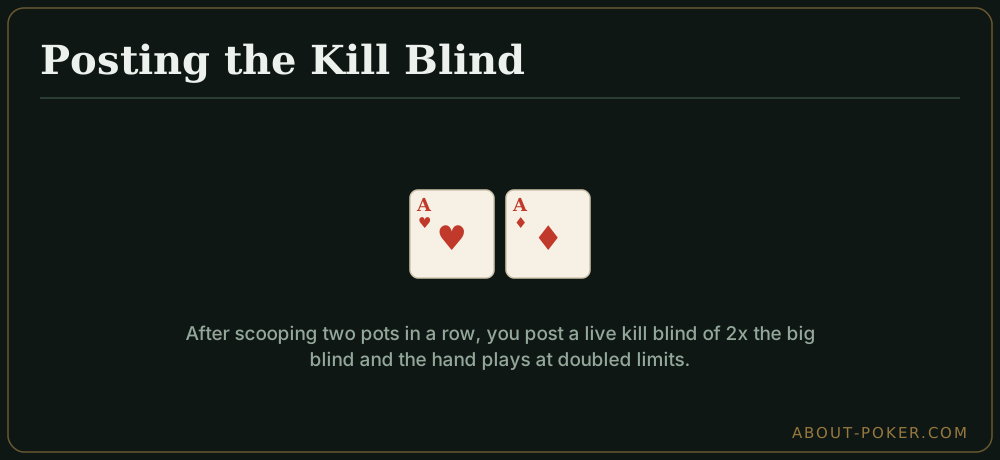
You are in a 10/20 limit Omaha hi-lo game with a “kill on two scoops in a row” rule. Betting is 10 preflop and on the flop, 20 on the turn and river; the small blind is 5 and the big blind is 10.
You win a big pot, scooping both the high and the low. Then you win the very next hand and scoop again. That is two scoops in a row — the kill is on.
For the next hand:
- The limits double to 20/40. Betting is now 20 on the first two rounds and 40 on the last two.
- You post a kill blind of 20 (double the normal 10 big blind), plus you are dealt in normally.
- Because your kill blind is live, if the action limps to you preflop you still get your option to check or raise.
If you win this kill pot as well and it qualifies, the kill continues. If you lose it, the game reverts to 10/20 on the following hand and the kill button is removed.
Kill game vs. half kill
The full kill doubles the stakes. Some rooms use a gentler version called the half kill, which raises the limits by only 50% instead of 100%. In a 10/20 half-kill game, a killed hand plays 15/30 rather than 20/40, and the kill blind is one and a half big blinds instead of double. The trigger rules are the same; only the size of the bump differs. Rooms use the half kill when the full double feels too swingy for the player pool.
Strategy notes
- Tighten up slightly in kill pots. The stakes doubled but your hand did not get better. The effective stakes are higher, so marginal hands that were fine at 10/20 are worse at 20/40, especially out of position.
- Your live kill blind has value. You already have money in and you get to act. If it limps to you with a playable hand, raising your option is often correct — you are last to act preflop.
- Watch your bankroll. A kill game is really two stakes in one. Bankroll for the killed limits, not the base limits, because the game can stay killed for several hands when someone runs hot.
- Mind the rake. Bigger kill pots can hit the rake cap faster; know how your room caps the rake so you understand the real cost of the inflated pots.
Quick checklist
- Read the posted kill rule: pot-size trigger or two-in-a-row?
- Know the killed limits (full kill doubles; half kill adds 50%).
- If you triggered it, post the kill blind — remember it is live, so you keep your action.
- Tighten your ranges for the higher effective stakes.
- Bankroll for the killed limits, not the base game.
Learn the kill and the sudden stakes jump becomes a predictable, manageable part of the game instead of a surprise.
Frequently asked
What is a kill game in poker?
A kill game is a cash game with a rule that temporarily raises the stakes after certain triggers, most often when a pot reaches a set size or when the same player wins two hands in a row. When 'killed,' the betting limits double for the next hand and the winner of the triggering pot must post an extra forced bet called the kill blind.
How does a kill pot work?
When the kill trigger is met, the next hand becomes a kill pot. Limits double for that hand, and the player who caused the kill posts the kill blind — usually double the big blind — before cards are dealt. The kill blind is a live blind, so that player still gets to act preflop. After the kill hand, stakes return to normal unless the kill is triggered again.
What triggers a kill in poker?
The two common triggers are a pot reaching a preset dollar amount, or a single player winning two pots in a row (in some rooms, two scoop pots in hi-lo split games). The exact trigger is set by house rules and posted at the table. Only pots that reach the room's minimum qualify.