What Is Level Thinking in Poker?
Level thinking is the ladder of what each player is reasoning about — my cards, your cards, what you think I have. Learn the levels and how to use them.
On this page · 7 sections
Level thinking describes how many steps of reasoning a player is doing during a hand. At the bottom you only consider your own cards; one level up you consider what your opponent holds; a level above that you consider what your opponent thinks you hold. Every serious decision at the table happens somewhere on this ladder, and the single most useful skill is figuring out which rung your opponent is standing on — then stepping exactly one rung higher.
The Levels, Rung by Rung
The classic framework is numbered from zero:
- Level 0 — “What do I have?” The player looks only at their own two cards. Beginners live here. They bet strong hands, check weak ones, and never think about you at all.
- Level 1 — “What does my opponent have?” Now the player tries to read your hand or range. This is the first real strategic level.
- Level 2 — “What does my opponent think I have?” The player considers the story their own actions tell. This is where bluffing and balancing begin, because you can only bluff someone who is imagining your hand.
- Level 3 — “What does my opponent think I think they have?” Now you are anticipating their read of your read. Fancy plays and re-bluffs live here.
Higher levels exist, but in practice almost all profitable poker is won on Levels 1 and 2.
Why the Ladder Matters
A play is only smart relative to the person you are playing. A triple-barrel bluff is a Level 2 move — it only works if your opponent is imagining your hand and can be convinced to fold. Fire that same bluff at a Level 0 calling station who never thinks past their own cards and it fails completely, because they are not on the ladder at all. They call with a pair because they have a pair, full stop.
This is the whole game: your action has to target the level your opponent is actually thinking on, not the level you wish they were on.
A Worked Example
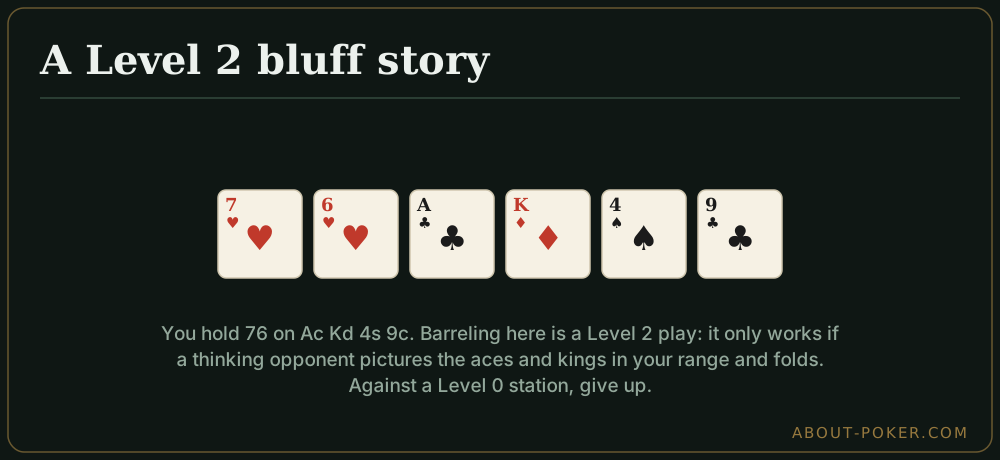
You hold 7h-6h and raise, a tight regular calls, and the flop comes Ac-Kd-4s — a board that hammers your raising range. You bet, they call. The turn is the 9c and you bet again. Now you are on Level 2: you are betting because you know a thinking opponent looks at that board, pictures the aces and kings in your range, and folds their middling hands. Your actual 7-6 does not matter; the story does.
Now run the same hand against a Level 0 player. They flopped a pair of fours and are simply not going to fold a pair to any amount of pressure. Your beautiful Level 2 story lands on someone who never left Level 0. The correct play against them is to give up and save your chips, not to keep telling a story no one is reading.
Leveling Yourself
The most expensive mistake is leveling yourself — reasoning one step too far. You face a weak recreational player who just shoved the river, and you think: “He knows I have a strong range here, so he must be representing the nuts as a bluff.” That is Level 3 logic aimed at a Level 0 opponent. He is not representing anything; he simply has the nuts. When you out-think a player who is not thinking, the only person you fool is yourself. See our guide to exploitative play for how reads should stay grounded in what a player actually does.
How to Win a Leveling War
The rule is deceptively simple: play one level above your opponent, never two. Against a Level 0 player, just value bet relentlessly and never bluff — Level 1 beats them. Against a solid Level 1 regular who reads hands well, start telling credible stories and bluffing the boards that favor you — Level 2 beats them. Against a tough Level 2 thinker, mix in the occasional Level 3 re-bluff, but sparingly.
The GTO baseline is useful here as a fallback: when you genuinely cannot read an opponent’s level, a balanced strategy protects you no matter how deeply they are thinking.
Common Mistakes
- Assuming everyone is on your level. Most low-stakes players never leave Level 0 or 1.
- Bluffing non-thinkers. A story only works on someone reading it.
- Jumping two levels. Level 3 plays against a Level 1 opponent just confuse yourself.
- Never updating. A player’s level can rise across a session as they tilt or focus.
Quick Checklist
Before any big play, ask three things: what level is this opponent on, what is the simplest action that beats that level, and am I about to level myself by going one step further? If the fancy play only makes sense when the opponent is thinking deeply, and they clearly are not, take the simple line instead.
Frequently asked
What is level thinking in poker?
Level thinking describes how deep a player is reasoning about the hand. Level 0 is just your own cards, Level 1 is your opponent's cards, Level 2 is what your opponent thinks you have, and so on. Understanding your opponent's level lets you predict how they will react to your bets.
What are the levels of thinking in poker?
Level 0: what do I have. Level 1: what does my opponent have. Level 2: what does my opponent think I have. Level 3: what does my opponent think I think they have. Each level layers one more step of reasoning on top of the last.
What does leveling yourself mean in poker?
Leveling yourself means outsmarting your own decision by reasoning one step too far. You talk yourself into a fancy play against an opponent who is not thinking that deeply, so the fancy play only fools you and costs you money.
How do you win a leveling war?
You win by playing exactly one level above your opponent, not two or three. Figure out how deeply they are reasoning, then take the simplest action that beats that level rather than out-thinking yourself.