What Is Light Call in Poker?
A light call is calling with a marginal hand you suspect is behind. Learn what calling light means, when it profits, and how it differs from a crying call.
On this page · 6 sections
A light call — or calling light — means calling a bet with a weaker, more marginal hand than the spot would normally justify. “Light” signals that you are not calling with a monster; you are calling thin, betting that the person firing at you is bluffing often enough to make even a mediocre holding profitable.
Calling light is one of the most misunderstood plays in poker. Beginners either never do it — folding every time someone shows aggression — or they do it constantly, paying off value bets with hopeless hands. The skill is knowing when your marginal hand actually beats enough of your opponent’s range to call.
What “Light” Means
In poker slang, “light” attached to any action means “with a weaker hand than usual.” A light 4-bet, a light call, a light stack-off — all mean the same thing: you are doing it with something short of the nuts. A light call specifically means calling down with a hand that is ahead of bluffs but behind value.
The hand you call light with is almost always a bluff catcher: a hand that beats the bluffs in your opponent’s range but loses to their value bets. Calling light is the act of putting that bluff catcher to work.
The Math: When a Light Call Profits
The core question is simple: how often do you need to win, and how often do you actually win? If the pot is $100 and your opponent bets $50, you must call $50 to win $150. Your required equity is 50 ÷ 150, or about 33 percent. If your marginal hand beats their range more than a third of the time, calling is profitable even though you expect to lose the pot more often than not.
This is why light calling depends entirely on the frequency of bluffs. Against an opponent who bets this river as a bluff half the time and for value half the time, your bluff catcher wins the 50 percent of the time they are bluffing — comfortably above the 33 percent you need. Against an opponent who never bluffs, that same call is pure charity.
A Worked Example
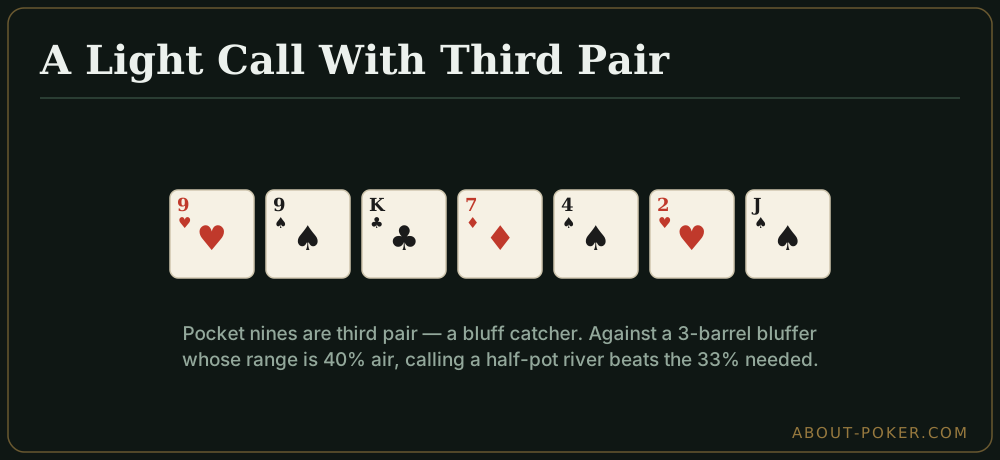
You hold 9h-9s on a board of Kc-7d-4s-2h-Js. Your opponent, an aggressive regular, has barreled all three streets and now bets half pot on the river. You have a pair of nines — third pair, essentially a bluff catcher against most of what makes sense.
You need 33 percent to call. Against a straightforward player you fold, because they rarely fire three streets without a king or better. But this opponent bluffs relentlessly with missed draws and floats. You estimate his range is at least 40 percent air by the river. Your nines beat all of that air, so 40 percent good clears the 33 percent hurdle. You make the light call and often scoop the pot from a busted draw.
Light Call vs. Crying Call vs. Flat Call
These sound alike but describe different moods and math. A light call is a proactive, price-driven call with a marginal hand you think is genuinely ahead of enough bluffs to profit. A crying call is a reluctant call you expect to lose, made only because the pot is laying you a big price. A flat call simply means calling instead of raising, and can be done with any strength of hand, monster included.
The difference between light and crying is optimism versus resignation. Light-calling, you believe you are good often enough. Crying, you believe you are usually beaten but the price forces your hand.
Common Mistakes When Calling Light
The biggest leak is calling light against players who do not bluff. If your opponent only bets when they have it, every light call is a losing call, no matter how good the price looks. Light calling only works against opponents whose betting range contains real air.
The second mistake is picking the wrong bluff catcher. Not all weak hands are equal — a hand that blocks their value combos or unblocks their bluffs makes a better call. And beware calling light out of position on every street; a marginal hand that must call three barrels bleeds chips if the aggression is real. Compare this to the aggressive mirror image, the light 3-bet, which applies pressure instead of absorbing it.
Quick Checklist
- Does this opponent actually bluff in this spot, and how often?
- What equity does the price require, and does my hand clear it against their bluffs?
- Does my exact hand block value or unblock bluffs?
- Am I calling light on a read, or just refusing to fold?
Get those right and the light call becomes one of the most profitable weapons against aggressive players.
Frequently asked
What is a light call in poker?
A light call is calling a bet with a weaker or more marginal hand than the situation normally justifies. You call light when you suspect the bettor is bluffing often enough that even a mediocre hand shows a profit against their range.
When should you call light?
Call light when your opponent bluffs frequently, when the price is good, and when your hand can beat some of their bluffs at showdown. A hand that beats air but loses to value — a bluff catcher — is the classic light-calling candidate.
What is the difference between a light call and a light 3-bet?
A light call means calling with a marginal hand; a light 3-bet means re-raising with a weak or non-premium hand, usually as a bluff or semi-bluff. One is passive and price-driven, the other is aggressive and pressure-driven.