What Is Light Three Bet in Poker?
A light three bet is re-raising with a hand that doesn't want a call — a 3-bet bluff. Learn the fold math, the best hands, and when 3-betting light pays.
On this page · 7 sections
A light three bet is re-raising an opponent’s open with a hand that is not strong enough to want a call — in other words, a 3-bet bluff. Rather than 3-betting for value with a premium, you re-raise to make the opener fold, profiting from fold equity instead of the raw strength of your cards. It is the same idea as a light 3-bet; the spelled-out phrasing just makes the concept easier to search for.
Why 3-Bet Light at All
If you only ever 3-bet with your very best hands, observant opponents will fold everything but their premiums whenever you re-raise, and you will win almost nothing when you have aces. Mixing in light 3-bets solves that: it balances your range so opponents cannot simply fold to your 3-bets, and it lets you attack players who open too wide and fold too often. A well-constructed 3-betting range blends value hands and light 3-bets so both types earn more.
The other reason is that many opening ranges are weak. A player who opens 25% or more of their hands from late position is folding a big chunk of that range to a re-raise. Every fold hands you the pot uncontested, and those pots add up fast.
The Fold Math
A light 3-bet wins in two ways: the opener folds, or the opener calls and you win at showdown or by bluffing later. Focus first on the fold part. If your 3-bet sizing risks roughly the size of the pot to win the pot, you need the opener to fold about half the time for the bluff to break even on its own. Anything above that is profit before you even count the equity your hand retains when called.
Because the light 3-bet keeps some backup equity, the real break-even fold frequency is lower than the pure-bluff number. Suited hands make flushes and straights, so even when called you win a fair share of pots. That is why hand selection matters so much.
A Worked Example
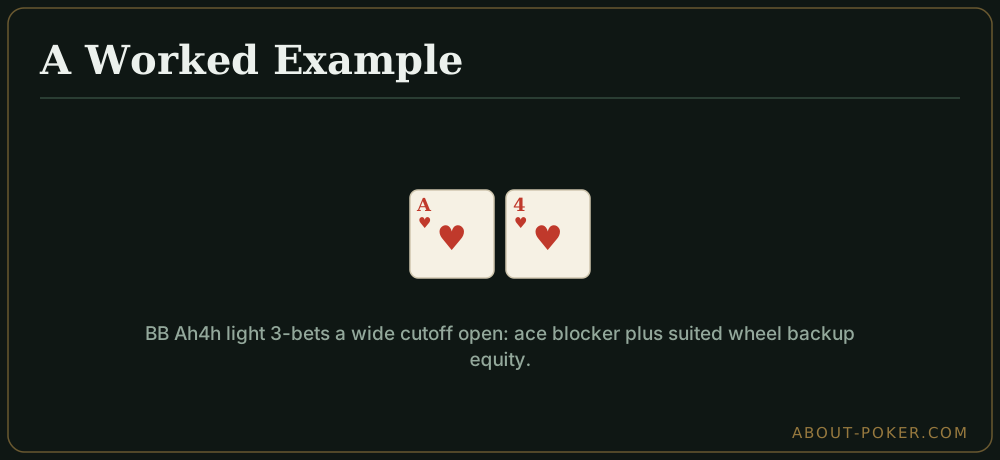
You are in the big blind with Ah 4h. The cutoff, a loose-aggressive regular, opens to 2.5 big blinds — they open a wide range from here. You 3-bet to 10 big blinds.
The math: your re-raise risks about 10 big blinds to win the roughly 4 big blinds already in the pot plus fold out the open. Against a wide, fold-prone opener, this hand folds out a large portion of their range immediately. When they do call, Ah 4h is a strong bluffing hand — the ace blocks AA, AK, and AQ (reducing the strong hands that continue), and the suited wheel ace can flop flush draws and wheel straight draws, plus it can make the nut flush. So the times you get called are far from disasters. Blocker plus playability is exactly the recipe that makes a light 3-bet profitable.
Best Hands to 3-Bet Light
Prioritize hands that share two traits — blockers and post-flop playability:
- Suited aces (A5s through A2s, plus AXs blockers) — nut-flush potential and ace blockers.
- Suited connectors (76s, 87s, 98s) — make straights and flushes, good equity when called.
- Suited broadways (KQs, QJs, KJs) — blockers to top pairs and solid flop equity.
Avoid light 3-betting weak offsuit hands. They have no backup equity and few useful blockers, so they perform poorly both as bluffs that get called and as hands that flop marginal pairs.
Position and Opponent Adjustments
Position magnifies a light 3-bet. In position, you can barrel scary boards and realize your equity more easily, so you can 3-bet a touch wider. Out of position, be more selective and lean on the blocker-heavy hands, because playing a bloated pot without position is harder.
Opponent type matters just as much. Against a player who folds too often to 3-bets, widen your light 3-betting range to punish them. Against a station who calls 3-bets with a wide range, cut the bluffs and 3-bet mostly for value — there is no point bluffing someone who will not fold.
Common Mistakes
The classic errors are 3-betting light against calling stations (no fold equity), using tiny sizes that let opponents call cheaply, and picking bluff hands with no blockers or backup equity. Another is 3-betting light and then giving up on every flop — if you took an aggressive line, you often need to fire a continuation bet to follow through on the story.
Quick Checklist
- Does the opener fold to 3-bets often enough? (Fold equity is the engine.)
- Does your hand have blockers and suited playability? (Best bluff selection.)
- Is your sizing large enough to fold out marginal hands? (Roughly pot-sized 3-bet.)
- Do you have a plan for the flop if called? (Be ready to barrel or give up sensibly.)
Get those right and the light three bet turns wide, fold-prone openers into a steady source of pots.
Frequently asked
What is a light three bet in poker?
A light three bet is re-raising an opponent's open with a hand that is not strong enough to want a call — essentially a 3-bet bluff. You are re-raising to make the opener fold, using fold equity rather than the raw strength of your hand to profit.
What hands should you three bet light with?
The best light 3-bet hands have blockers and good playability: suited aces, suited connectors, and suited broadways like KQs and QJs. Blockers reduce the chance of getting called, and suitedness gives you backup equity when you do see a flop.
How often does a light three bet need to work?
It depends on sizing, but a typical 3-bet risks roughly the size of the pot to win it, so you need the opener to fold around half the time to break even on the bluff alone — before counting the times you get called and still win with your hand's equity.