What Is Paired Board in Poker?
A paired board has two matching ranks among the community cards. What it means for full houses, bluffing, and how to adjust your betting on paired flops.
On this page · 6 sections
A paired board is any set of community cards where two of them share the same rank — a flop like K-K-7, a turn that pairs the board, or a river like 9-9-4-2-J. Because the pair belongs to the board and not to any single player, it reshapes the entire hand: full houses and quads come into play, single-pair hands lose value, and the betting patterns you trust on unpaired boards need adjusting.
What makes a board “paired”
A board is paired the moment two of its cards match in rank. It does not matter whether the pair lands on the flop, turn, or river. A flop of Q-Q-5 is paired immediately. An unpaired flop of A-9-4 becomes paired if the turn brings another 9, giving A-9-9-4. The important thing is that every player at the table shares that pair, so no one can “own” it the way you own the cards in your hand.
This shared pair is why paired boards feel different. On an unpaired board, top pair is often a strong made hand. On a paired board, the same top pair is more fragile because trips and full houses are now realistic.
How hands change on a paired board
The biggest shift is the appearance of full houses and quads. To make a full house you need trips plus a pair, and a paired board hands you the pair for free. Any player holding a card that matches the unpaired rank now has two pair with a full-house redraw, and any player holding a card matching the paired rank makes trips.
Consider a board of 8-8-K. If you hold K-J, you have two pair (kings and eights) — but that is really just a marginal holding, because anyone with an eight has you crushed with trips. Meanwhile a pocket pair like 9-9 that was strong preflop is now just an underpair to the king and beats very little that keeps betting.
Quads and full houses sit at the top of the range, but they are rare. The practical effect for most pots is that the value of one-pair hands drops and the value of aggression rises.
A worked example
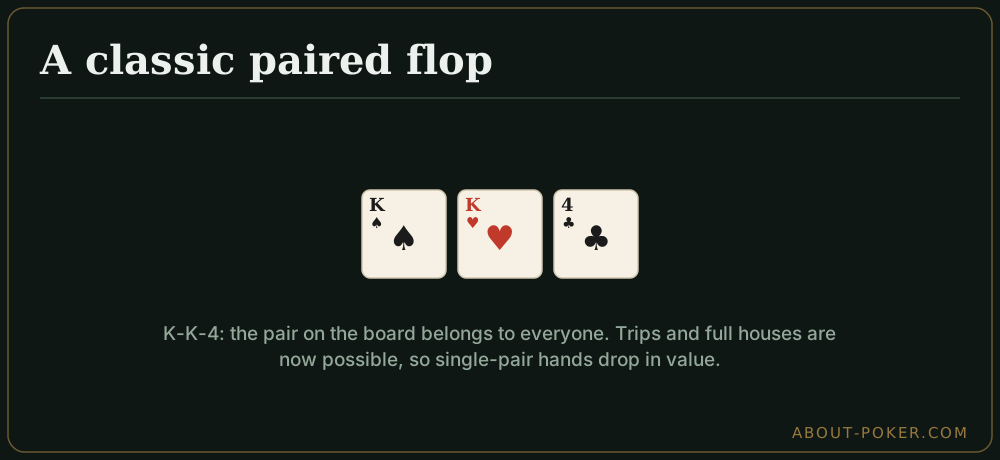
You raise from the button with A-K and the big blind calls. The flop comes K-K-4, giving you trips with the best possible kicker. This is close to the ideal paired-board spot for the preflop raiser.
Your opponent almost never has a king here — most of their kings would have three-bet you preflop or folded to your raise. That means you can bet small and often. A bet of about one-third pot does two jobs: it charges any pair or draw a little, and it lets you fire again cheaply on the turn and river. Because the board is paired, your opponent also finds it hard to have a strong hand, so they will fold a lot. You hold roughly the top of the range while risking very little per street.
Betting and bluffing adjustments
Paired boards reward the aggressor. If you were the preflop raiser, you can credibly represent trips or an overpair, so small continuation bets pick up a high share of pots. Your opponent, having only called preflop, is less likely to hold the paired rank.
Three practical adjustments:
- Bet smaller, bet more often. Because so few hands connect hard with a paired board, a modest bet folds out air and denies equity efficiently.
- Do not overvalue one pair. An overpair on a K-K-4 board is fine, but a middling pair that faces heavy resistance is often beat by trips.
- Pick good bluff cards. A turn that pairs the board a second time (making it double-paired) or brings an overcard gives your story more credibility for a bigger barrel.
Paired versus other board textures
It helps to compare a paired board with other textures. A monotone board is three cards of one suit and threatens flushes; a paired board threatens full houses instead. On a monotone board you worry about the suit; on a paired board you worry about the rank. Both compress the range of “nutted” hands into a narrow set, which is exactly why aggression works — most hands are somewhere in the middle and fold to pressure.
Quick checklist for paired boards
- Two board cards share a rank — full houses and trips are live.
- One-pair hands lose relative value; do not stack off lightly.
- If you were the raiser, bet small and frequently to exploit missed calls.
- Beware players who suddenly show interest — trips and boats hide well.
- A second pairing card on later streets favors the aggressor’s story.
The core idea is simple: the pair on the board belongs to everyone, so the hands that beat one pair become far more common. Recognize that early and you will avoid paying off full houses while collecting a stream of small pots when your opponent has missed.
Frequently asked
What does a paired board mean in poker?
It means two of the community cards share the same rank, such as a flop of K-K-7 or a board of 9-9-4-2. The pair on the board is available to every player, which changes which hands are strong and how you should bet.
Who benefits from a paired board?
Usually the player who bet before the pair appeared. Trips and full houses become possible, but so does an easier bluff because a single trip card or overpair now beats most hands. The preflop raiser can rep those hands credibly.
Can you have a full house on a paired board?
Yes. If the board is paired and you hold a pocket pair or one card matching an unpaired board card, you can make a full house. For example, holding 7-7 on a K-K-7 board gives you sevens full of kings.