What Is Probe in Poker?
A probe bet is a lead into the preflop aggressor on the turn after they check back the flop. Learn what probing means, why it works, and how to size it.
On this page · 7 sections
A probe bet is a lead into the preflop aggressor on the turn, made after they checked back the flop. Their decision not to continuation bet caps their range — it strips out most of their strong hands — so you seize the turn by betting into them. Probing is one of the highest-value adjustments an out-of-position player can add, because it punishes the exact weakness a checked-back flop reveals.
The Core Definition
When you are out of position and the preflop raiser checks back the flop instead of firing a continuation bet, they are usually telling you something. Strong hands and good draws almost always bet the flop to build the pot and protect their equity. So a flop check disproportionately means air, weak pairs, or hands giving up. On the turn, you probe: you bet into that capped, weakened range to take the initiative they surrendered.
The name fits — you are probing to find out where you stand while simultaneously applying pressure to a range that mostly cannot withstand it.
Probe vs Donk Bet
Probing is easy to confuse with a donk bet, but the streets are different:
- A donk bet leads into the aggressor on the flop, before they have had a chance to c-bet.
- A probe bet leads into the aggressor on the turn, after they have already checked the flop back.
That timing difference matters enormously. A donk bet fires into a range that still contains all of the aggressor’s strong hands. A probe bet fires into a range that has already been capped by the flop check, which is why probing is generally the sounder, more profitable of the two.
A Worked Example
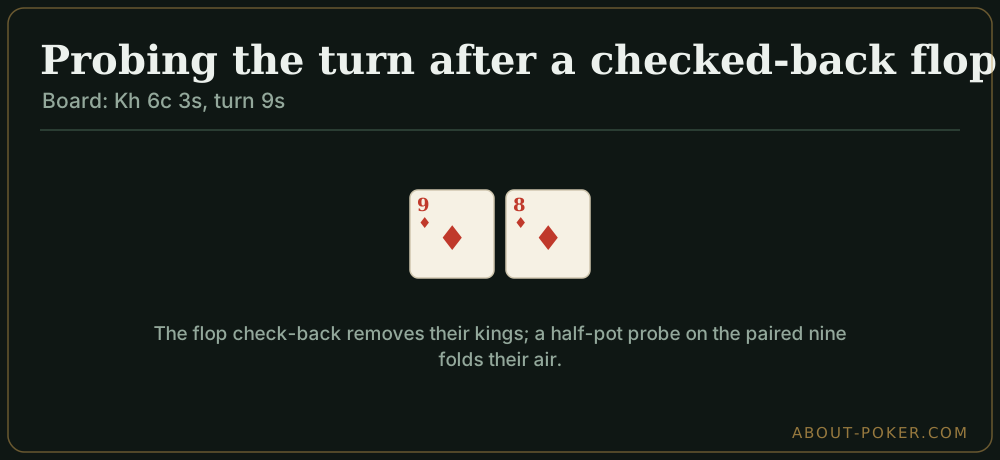
You defend your big blind with 9d 8d against a button raise. The flop comes Kh 6c 3s. You check, and the button — perhaps expecting a c-bet — checks back.
That check-back tells you the button rarely has a king here; with top pair they would almost always bet to charge your draws and build the pot. Their range is now weak: ace-high, small pocket pairs, missed overcards. The turn is the 9s, giving you a pair. You lead out for half the pot — a probe bet. Their capped range folds most of its air, calls with the occasional better pair, and you win a pot you would have lost by checking and giving them a free chance to bluff.
Why the Flop Check Is the Key
The whole play rests on one fact: checking the flop removes the top of the opponent’s range. Because they no longer hold many strong hands, you can bet a wide range of your own — value hands, draws, and pure bluffs — and expect a lot of folds. This is the same logic that powers the stab in position; the probe is simply its out-of-position cousin on the turn.
Sizing and Frequency
Because their range is already capped, you do not need a big bet. A one-third to one-half pot probe is standard. Small sizing lets you probe a wide, balanced mix cheaply: value hands get thin value, bluffs risk little, and the opponent cannot easily punish you.
Frequency matters too. Against players who check back the flop very often — a common leak — you should probe a large share of turns. Against tight, aggressive players who only check back with genuine give-ups, probe more selectively and expect them to have the occasional slow-played monster.
Common Mistakes
Probing into an uncapped range. If the opponent frequently checks back strong hands to trap, their range is not truly capped, and probing runs into more value than you expect. Know your opponent’s flop-check tendencies first.
Over-sizing. A large probe bet wastes the advantage of a capped opponent. Keep it small and probe wide.
Ignoring the turn card. Probe the turn cards that favor your range or that the opponent is unlikely to have improved on. A blank or a card that helps your defending range is ideal; a card that pairs the flop’s top card is worse.
Quick Checklist
- Did the preflop aggressor check back the flop, capping their range?
- Am I out of position on the turn?
- Does this turn card favor my range?
- Is my sizing small — around a third to half pot?
- Does this opponent check back flops often enough to make probing routine?
Answer yes across the board and the probe becomes a reliable way to reclaim initiative and win pots the aggressor handed you the moment they checked the flop.
Frequently asked
What is a probe bet in poker?
A probe bet is a bet made out of position into the preflop aggressor on the turn after they declined to continuation bet the flop. Their flop check caps their range, so you lead the turn to attack the weakness they just showed.
How is a probe bet different from a donk bet?
A donk bet leads into the aggressor on the flop, before they have acted. A probe bet leads on the turn after they checked the flop back. The flop check is exactly what makes probing profitable — it removes their strongest hands from consideration.
How big should a probe bet be?
A common probe size is one-third to half the pot. Because the opponent's range is already capped by checking the flop, you do not need a large bet to apply pressure. Smaller sizes let you probe with a wide, balanced range at low cost.