What Is Satellite Bubble in Poker?
The satellite bubble is the point where surviving one more elimination wins a tournament seat. Here's why every seat is worth the same and how to play it.
On this page · 6 sections
The satellite bubble is the single most extreme pressure point in tournament poker: the elimination that stands between the remaining players and a set of identical seats. A satellite doesn’t pay cash in a normal pyramid — it awards a fixed number of seats to a bigger tournament, and every seat is worth exactly the same. So when the field shrinks to one player more than there are seats, the next person to bust goes home empty-handed while everyone else wins. That flat payout structure changes the game so dramatically that hands you’d never fold anywhere else become easy folds here.
Why the satellite bubble is unique
In a standard tournament, the money keeps climbing after the bubble bursts — first place dwarfs the min-cash, so accumulating chips always has value. A satellite is different. If a satellite awards ten $1,000 seats, then finishing 1st and finishing 10th win the identical $1,000 seat. There is no reward for having more chips once you’ve locked a seat.
That means the entire tournament collapses into one question: will you survive to be one of the last N players when N is the number of seats? Chips matter only insofar as they help you survive. The moment your seat is secure, every extra chip is worthless.
The math: ICM at its most extreme
The satellite bubble is the purest, harshest expression of ICM — the idea that chips convert to prize value differently depending on the situation. In a satellite, that conversion becomes a cliff: below the seat line you have nothing, and above it you have a full seat. There’s no smooth curve, just a wall.
This is why the famous advice exists that you should sometimes fold pocket aces on a satellite bubble. If you’re a big stack who is virtually guaranteed a seat, calling an all-in with aces risks that guaranteed seat for a prize (extra chips) that’s worth nothing to you. Losing the flip busts you off the seat line; winning it gains you chips you can’t use. The correct play is to fold and let a short stack bust instead.
A worked example
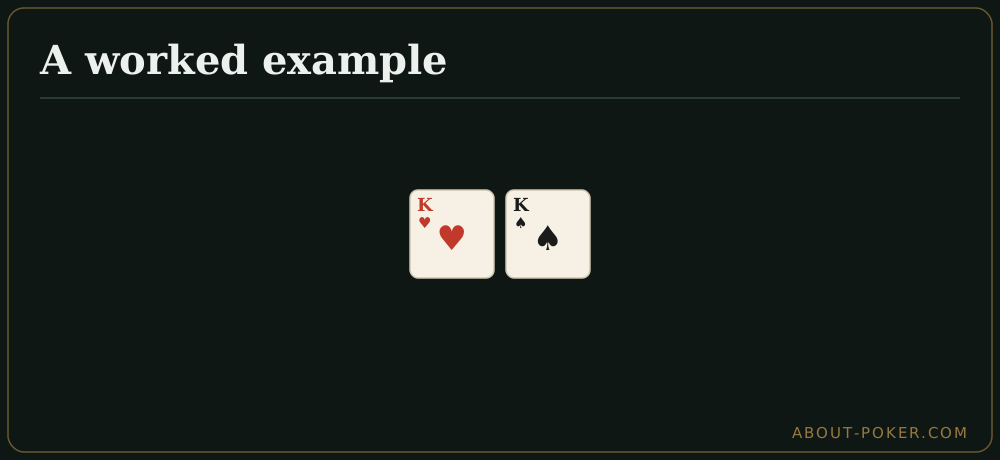
A satellite awards 5 seats. Six players remain. You have 40 big blinds — a mountain. Two other players are sitting on 3 and 5 big blinds and will be all-in within an orbit or two. You’re dealt K-K under the gun.
Anywhere else, you’d jam or raise for value instantly. On this bubble, the right play is often to just fold. Why? A seat is nearly locked for you already. If you open and a short stack shoves, calling risks your seat to win chips that do nothing. Fold, let the 3-big-blind stack get blinded out or bust, and the moment the field drops to 5 you’ve won your seat — with pocket kings mucked and no regret. This is laddering taken to its logical extreme: the only rung that matters is the seat line.
How to play it from each stack size
Your strategy on a satellite bubble depends entirely on your stack:
- Big stack: Fold almost everything. Your job is to survive, not to win pots. Don’t tangle with anyone who could bust you. Let the short stacks eliminate each other or blind out.
- Medium stack: Stay patient but stay alert. You’re probably safe if you fold, but keep an eye on the shortest stacks — you want them to bust before you’re ever forced into a coin flip.
- Short stack: You can’t fold your way in — the blinds will kill you. You must find a spot to shove and get lucky before another short stack survives past you. Aggression, not patience, is your only path.
Common mistakes on the seat bubble
- Big stacks playing pots they don’t need. Every hand you enter is a chance to lose your seat for nothing. Sit on your hands.
- Short stacks folding too long. Waiting for aces when you have 2 big blinds just guarantees a slow death. Take the first reasonable shove spot.
- Confusing it with a cash bubble. In a cash tournament, chips retain value past the bubble. In a satellite they don’t. Treating the two the same is the classic leak.
Quick checklist
- A satellite bubble is the bust that decides who wins an identical seat and who leaves with nothing.
- Every seat is worth the same, so chips beyond survival have zero value.
- Big stacks fold relentlessly — even aces can be a fold when a seat is already locked.
- Short stacks must gamble early; folding to the blinds is a guaranteed loss.
- It’s the most extreme ICM spot in poker — survival, not chip accumulation, wins.
The satellite bubble flips normal poker instincts upside down. Once you internalize that a locked seat makes extra chips worthless, the folds that felt crazy become obvious — and you’ll punch your ticket to the big event while others make hero calls that cost them everything.
Frequently asked
What is a satellite bubble in poker?
A satellite bubble is the elimination just before the seats are awarded in a satellite tournament. A satellite pays identical prizes — usually entry seats to a bigger event — so when the field is one player away from the number of seats, that next bust decides who gets in and who leaves with nothing.
Why is the satellite bubble different from a normal bubble?
In a regular tournament, prizes keep growing after the bubble, so chips still matter. In a satellite every prize is the same seat, so once you've locked a seat, extra chips are worthless. That flat payout makes survival everything and turns the bubble into an extreme fold-fest.
How should you play a satellite bubble?
If you have a comfortable stack, fold almost everything and let short stacks bust — even folding aces is sometimes correct when a seat is already effectively yours. If you're the short stack, you must find spots to gamble before the blinds eat you, since only survival, not chip count, wins the seat.
Do extra chips matter in a satellite?
No. Once you've secured a seat, additional chips have zero value because every qualifier wins the same prize. This is the most extreme example of ICM, where chip EV and real prize EV diverge almost completely.