What Is Thin Call in Poker?
A thin call means calling with a hand that only beats a small slice of your opponent's range. Learn what a thin call is, when it's right, and its costly traps.
On this page · 8 sections
A thin call is a call made with a marginal hand that beats only a small slice of the hands your opponent is betting. You are not flipping over a monster and you are not sure you are ahead. You are making a mathematically defensible call because the price is good and your opponent’s range contains just enough worse hands and bluffs to make the call profitable. Thin calls are where solid, thoughtful players separate themselves from those who either fold too much or call everything.
The core idea
Every bet you face lays you a price. If the pot is 100 and your opponent bets 50, you must call 50 to win 150, which is 3-to-1. That means you only need to be good about 25 percent of the time to break even. A thin call is any call where your hand clears that bar by a slim margin, not a comfortable one.
The skill lies in reading your opponent’s range and asking, “How often does this specific hand beat the hands they would bet this way?” If the answer is even a little above the odds require, the call is correct, however uncomfortable it feels.
A worked example
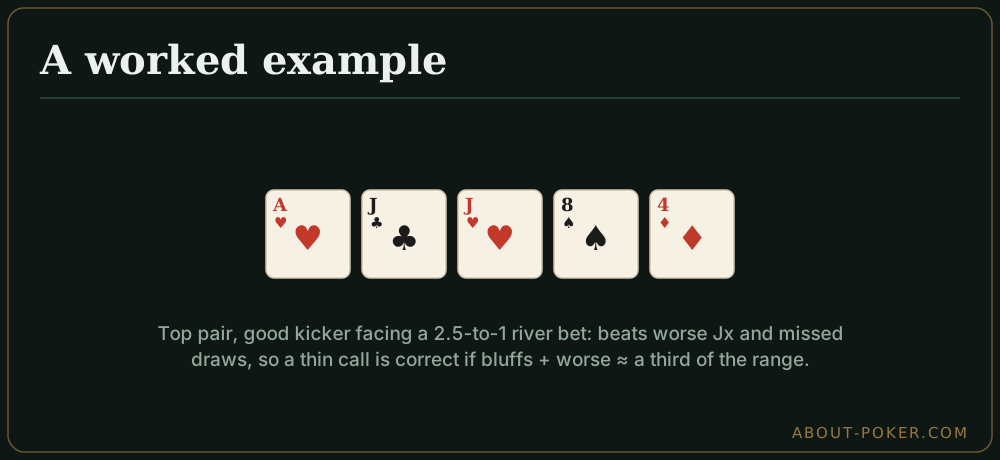
You hold Ah Jc on a final board of Jh 8s 4d 6c 2h. The pot is 60 and your opponent bets 40 on the river, laying you 2.5-to-1. You need to win about 29 percent of the time.
Your opponent is a reasonable regular who bets this river with strong pairs and better, plus some busted straight draws like T9 and 75 that missed. You hold top pair with a good kicker. You lose to two pair, sets, and better Jx, but you beat weaker Jx, all the missed draws, and pocket pairs below jacks that decided to bluff. Count it up: if worse hands and bluffs make up roughly a third of their betting range, you clear the 29 percent threshold and the thin call is correct. It will lose more often than it wins, but it makes money over time.
Thin call versus bluff catcher
A thin call often functions as a bluff catcher: a hand that beats bluffs but loses to value. The difference is subtle. A pure bluff catcher only wins when your opponent is bluffing. A thin call can also be ahead of some of their thinner value bets, not just their bluffs. Top pair with a weak kicker calling a river bet is a thin call, because it beats worse pairs as well as bluffs.
Thin call versus crying call
People confuse a thin call with a crying call. A crying call is emotional and pessimistic; you call expecting to lose but cannot let go. A thin call is analytical; you have decided the math works, even if only barely. The result may look the same at the table, but the reasoning is completely different, and only one of them is repeatable.
When thin calls are right
Thin calls shine against opponents who bluff enough or value bet too thinly themselves. If a player fires the river with a wide range of missed draws, calling with second pair or a weak top pair becomes profitable. Position helps too, because you get more information before deciding. Good bet sizing awareness matters as well: small bets often invite thin calls because they lay you a generous price.
When to fold instead
Thin calls turn into money-losers against tight, honest opponents who almost never bluff. If a nit fires a big river bet, the small slice of their range you beat shrinks toward zero, and even a good price is not enough. The same is true on boards where your opponent’s value hands dominate and there are few natural bluffs available. When bluffs are scarce and value is heavy, let the marginal hand go.
Common mistakes
The most common error is making thin calls out of habit rather than analysis, calling every river “just to see.” That bleeds chips against opponents who do not bluff. The opposite mistake is folding every close spot to avoid feeling foolish, which lets aggressive players run you over. Discipline means calling the thin spots the math supports and folding the ones it does not, regardless of how the last hand turned out.
Quick checklist
- What price am I being laid, and what win rate does it require?
- What fraction of my opponent’s betting range do I actually beat?
- Is this opponent capable of bluffing here, or is their range mostly value?
- Am I calling because the math works, or just because I hate folding?
Frequently asked
What does a thin call mean in poker?
A thin call is a call made with a hand that only beats a narrow portion of the hands your opponent could be betting. You are not confident you are ahead, but the pot odds and their range make calling slightly profitable over the long run.
Is a thin call the same as a crying call?
They overlap but are not identical. A thin call is a reasoned call for value against a betting range, while a crying call is usually a reluctant call made mostly out of curiosity or pot commitment, often expecting to lose.
How thin can a call be and still be correct?
A call only needs to be right slightly more often than the pot odds require. If a bet lays you 3-to-1, you only need to win about 25 percent of the time, so even a hand that is behind most of the range can be a correct thin call.