What Is Triple Range in Poker?
A triple range in poker splits your betting range across three sizes — check, small, and large — to protect every hand. Learn how and when solvers use it.
On this page · 6 sections
A triple range in poker means splitting the hands you might play on a given street into three separate groupings, each attached to a different action or bet size. Instead of choosing one bet size for your whole betting range, you use three lines — most commonly a check, a small bet, and a large bet or overbet. Each grouping is built so that its hands take their single most profitable action while the three sizes together stay balanced. It is an advanced, solver-driven concept, not something most players need at the table.
The Core Idea Behind Three Sizes
Not every hand wants the same bet size. A hand that is either the nuts or pure air does best with a big bet — it maximizes value when ahead and maximizes fold equity when bluffing. A hand with clear but thin value, like second pair, does best with a small bet that gets called by worse and keeps the pot manageable. And a hand that is too weak to bet for value but too strong to turn into a bluff simply wants to check. When a solver has all three of these needs on one board, it answers by using three ranges at once.
How the Three Groups Break Down
A clean way to picture it is by strength and blockers:
- Large bet / overbet range: the top of your value (sets, strong two pair) plus your best bluffs — hands with good blockers and backdoor equity that can barrel.
- Small bet range: thinner value that wants calls from worse (top pair weak kicker, strong middle pair) plus low-equity bluffs that just want a cheap fold.
- Check range: marginal made hands with showdown value, plus give-up hands that have no equity and poor blockers.
Each hand lands in the group where it earns the most, and because strong hands and bluffs appear in both betting sizes, an observant opponent cannot simply attack one size.
A Worked Example
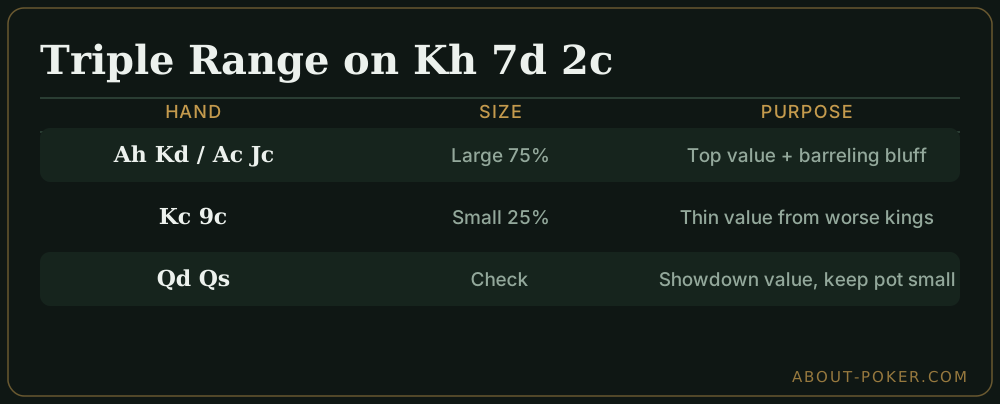
You raise the button and the big blind calls. The flop comes Kh 7d 2c — a dry, static board that favors your range. On a board like this a solver often uses a triple range:
- With Ah Kd (top pair top kicker) and Ac Jc as a bluff, you fire a large 75% bet — top value plus a hand that can keep barreling.
- With Kc 9c (top pair weaker kicker), you use a small 25% bet to get thin value from worse kings, pocket pairs, and sevens.
- With Qd Qs (an underpair to the king), you check — it has showdown value but does not want to build a big pot against a range that has you beat when it continues hard.
Three hand types, three different lines, all from the same starting range. That is a triple range in action.
When It Actually Matters
Triple ranges show up most on dry, static boards where equities do not shift much on later streets and where you have a clear range advantage. On those textures the small size can safely peel value while the big size threatens the pot. On dynamic, wet boards — lots of draws, connected cards — solvers usually collapse back toward one or two sizes because protection and denying equity take priority over fine-grained value extraction. So the more static the board, the more likely a third size earns its keep.
Common Mistakes
The biggest error is using three sizes without balancing them. If your big bet is all value and your small bet is all bluffs, a decent opponent folds to the big size and raises the small one, and you lose more than a single size would ever cost you. A triple range only works if each size contains both value and bluffs in roughly the correct ratio.
The second mistake is overcomplicating easy spots. Against a calling-station opponent you do not need three sizes — you just bet big with value and check your air. Multiple sizings are a tool for balancing against strong, attentive players, and they leak expected value against weak ones who are not paying attention to your sizing at all. Study the concept, but deploy it sparingly. For most players, mastering a solid two-size polarized approach captures nearly all the available edge.
Quick Checklist Before Using a Triple Range
- Is the board dry and static? If not, prefer one or two sizes.
- Do you clearly have the range and nut advantage?
- Can each of your three sizes contain both value and bluffs?
- Is your opponent good enough to punish an unbalanced single size?
- Would an overbet size do the same job more simply?
If you answer no to most of these, drop back to a simpler plan. The triple range is a scalpel, not a hammer — powerful in the right hands, but easy to cut yourself with.
Frequently asked
What does triple range mean in poker?
A triple range is when you divide the hands you might bet into three separate groups, each tied to a different action or bet size — typically a check, a small bet, and a large bet or overbet. Solvers use it to squeeze more value and put opponents in tougher spots than a single size would.
Why would you use three bet sizes instead of one?
Different hands want different sizes. Nutted and pure-air hands prefer big bets, medium value prefers a small bet, and marginal hands prefer checking. Splitting into three ranges lets each group take its most profitable line while staying balanced across all sizes.
Is a triple range worth it in practice?
For most live and low-stakes players, no. The extra expected value over a single well-chosen size is tiny and easy to misapply. Triple ranges matter most in high-level online play and solver study, where small edges add up.
How is triple range different from polarization?
Polarization is a two-way split — strong hands and bluffs bet, everything else checks. A triple range adds a third, usually a small or medium size that carries thinner value and blockers, giving you three distinct groupings instead of two.