What Is Two-Tone Board in Poker?
A two-tone board has two cards of the same suit, creating a flush draw. Here's what the term means, an example, and how it should change your betting.
On this page · 6 sections
A two-tone board is a flop that shows exactly two cards of the same suit — for example K♥ 9♥ 4♣. Those two matching hearts create a live flush draw, which makes the board wetter and more dynamic than a flop with three different suits. Two-tone flops are the most common texture in Hold’em, and knowing how the flush draw affects the hand is fundamental to sizing your bets correctly.
The exact definition
Board texture is often described by how many suits appear. A two-tone board has two cards of one suit and a third card of a different suit. That single detail — two matching suits — means a flush draw is possible: any player holding two cards of the matching suit is one card away from a flush, and any player holding one matching card has a backdoor chance.
This puts two-tone squarely in the middle of the wet-dry spectrum. It’s wetter than a rainbow board, which has three different suits and no flush draw at all. But it’s drier than a monotone board, where all three flop cards share a suit and a flush can already be complete. The live but unmade flush draw is what gives two-tone boards their character.
A worked example
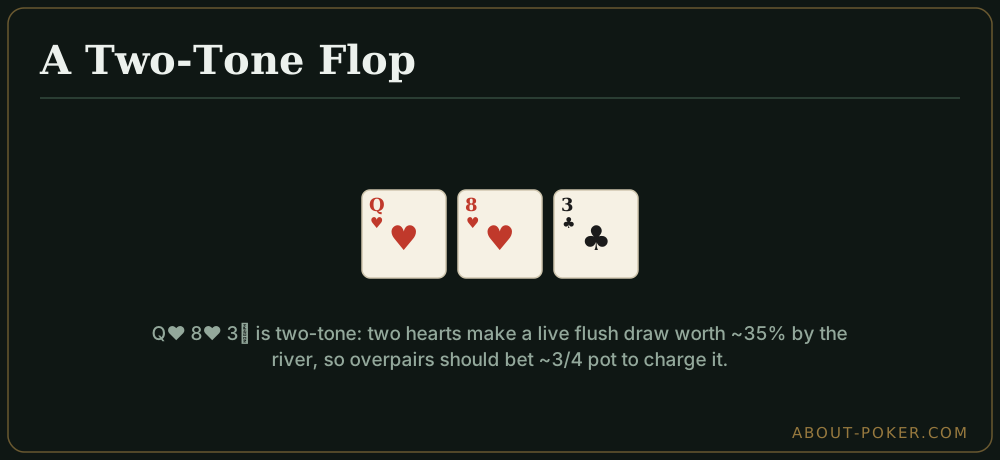
You raise before the flop with A♠ A♣ and get one caller. The flop comes Q♥ 8♥ 3♣ — a two-tone board with two hearts.
Your aces are still the best hand, but the texture matters. Your opponent could hold two hearts for a flush draw, giving them roughly nine outs to make a flush by the river. A flush draw that sees both the turn and river has about 35% equity against your pair. If you check or bet too small, you let that draw see cheap cards and realize its equity.
So you bet larger — say three-quarters of the pot. This charges the flush draw a steep price to continue and protects your strong but vulnerable hand. If the opponent calls and a third heart arrives, you slow down and reassess, because the board just went monotone and the flush may be complete. If the turn bricks with a low offsuit card, the draw missed and you can keep betting for value. The two-tone texture dictated all of this: your sizing, your caution on a heart, and your aggression on a brick.
How a two-tone board changes your betting
The presence of a flush draw drives several adjustments:
- Bet bigger with strong made hands. Overpairs, sets, and top pairs want to deny the flush draw a good price. Larger continuation bets charge draws and build the pot while you’re ahead.
- Value your own draws. If you hold two of the matching suit, you have a flush draw with real equity and a hand you can bet or semi-bluff aggressively, since you can improve to the near-nuts.
- Watch the turn suit. A third matching card completes flushes and is one of the most important cards in the deck on these boards. A brick of a different suit keeps you comfortable; the flush card demands reassessment.
Two-tone versus rainbow versus monotone
The three flop textures form a clear ladder of danger from the flush angle:
- Rainbow (three suits): no flush draw, the driest texture, made hands are safest.
- Two-tone (two suits): one flush draw live, moderate wetness, sizing matters to charge the draw.
- Monotone (one suit): a flush may already exist, the wettest texture, extreme caution required.
Most flops you see will be two-tone simply because of how the math of dealing three cards works out. That makes mastering two-tone play one of the highest-frequency skills in the game.
Common mistakes
- Betting too small into a flush draw. A tiny bet gives the draw a cheap look and fails to protect your hand. Size up when a live flush draw is present.
- Panicking on the wrong card. Only a third card of the matching suit completes the flush. An offsuit card, even a high one, is often a brick — don’t slow down for a card that missed the draw.
- Forgetting you can have the draw too. Two-tone boards let you semi-bluff. If you hold the flush draw, you have equity to bet aggressively even without a made hand.
A quick checklist
- Two matching suits = a live flush draw. The board is moderately wet.
- Size up with strong hands to charge the draw and protect your equity.
- The turn suit is the story. A third matching card is a major event; an offsuit brick is a relief.
Two-tone boards are the everyday texture of Hold’em — get comfortable reading them and your turn and river decisions get much easier. For more board-texture terms, browse the full poker glossary.
Frequently asked
What does two-tone board mean in poker?
A two-tone board is a flop that contains exactly two cards of the same suit, such as K♥ 9♥ 4♣. Two matching suits create a flush draw, so the board is wetter than a rainbow flop and more likely to change on later streets.
Is a two-tone board wet or dry?
A two-tone board is moderately wet. It's wetter than a rainbow board because a flush draw is present, but drier than a monotone (three-suited) board where a flush can already be made. The presence of the flush draw is what raises the action.
How should you bet on a two-tone board?
Because a flush draw exists, you often bet larger with strong hands to charge the draw and protect your equity, and you bet a mix of your range as the aggressor. Draws want to see cheap cards, so denying them the right price is a key part of your sizing.
What happens when a two-tone board becomes monotone?
If a third card of the same suit arrives on the turn or river, the board becomes monotone and a flush is now possible. That card is a major event — it can complete flushes and dramatically shift who is ahead, so it demands careful reassessment.