What Is Three Bet Pot in Poker?
A three bet pot forms when a raise is re-raised before the flop. Learn what a 3-bet pot is, how the SPR shrinks, and how to play these bigger pots.
On this page · 6 sections
A three bet pot, usually written 3-bet pot, is any pot where the preflop action went raise, re-raise, then call. The name comes from bet counting: in a hold’em hand the big blind is the first bet, the opening raise is the second, and the re-raise is the third, hence the “3-bet.” These pots are bigger, tighter, and played with less room to manoeuvre than ordinary raised pots, so they demand their own approach.
How a 3-bet pot forms
The sequence is simple. One player opens with a raise. A second player re-raises, which is the 3-bet. If the original raiser calls, you have a 3-bet pot heading to the flop. If they fold, the hand ends preflop; if they re-raise again, you now have a 4-bet pot. So the 3-bet pot specifically is the raise, re-raise, call outcome.
The most important consequence is that far more money is already in the pot before the flop. That changes the stack-to-pot ratio, or SPR, which is your remaining stack divided by the pot. In a 3-bet pot the SPR is much lower than in a single raised pot, and a low SPR changes everything about how you should play.
Why the low SPR matters
SPR tells you how easily you can get all-in relative to the pot. In a single raised pot at 100 big blinds deep, the SPR after the flop is often around 10 or more, giving lots of room to bet three streets and still have chips behind. In a 3-bet pot the SPR frequently sits around 3 to 5.
A low SPR means commitment decisions come fast. With an SPR of 4, a single pot-sized bet and a raise can already put your whole stack at risk. That rewards hands that flop strong and want to get all the money in, and it punishes speculative hands that need to hit big and stack an opponent. Overpairs and top pairs gain value, while small suited connectors and small pairs lose some of their appeal because the implied odds shrink.
Ranges in a 3-bet pot
Both players’ ranges are tighter and stronger than in a single raised pot. The 3-bettor usually holds a condensed, strong range: big pairs, strong broadways, and a balancing selection of light 3-bets as bluffs. The caller holds a range that continued against a re-raise, which is strong but somewhat capped, since the very best hands often 4-bet instead.
This range dynamic gives the 3-bettor a range advantage on most boards, especially high, dry boards like A-K-4 or K-Q-7 where their big pairs and broadways connect well. That advantage lets the 3-bettor c-bet aggressively, often with a smaller sizing because the pot is already large and the SPR is low.
A worked example
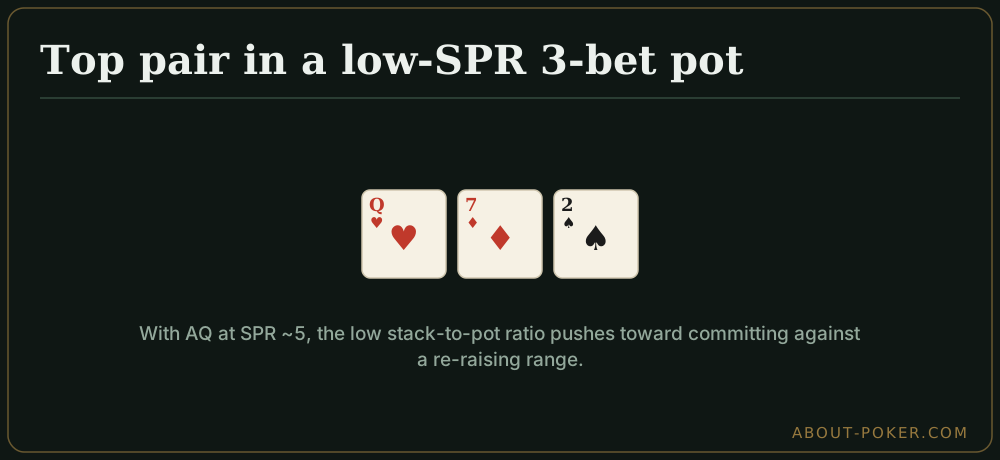
You open A-Q offsuit from the cutoff at 100 big blinds. The button 3-bets to 9 big blinds and you call. The pot is now roughly 19 big blinds and you each have about 91 behind, an SPR of about 5.
The flop comes Qh 7d 2s. You have top pair, top kicker. In a single raised pot you might play three careful streets, but here the low SPR pushes toward commitment. If your opponent c-bets and you raise, you are effectively committing, and A-Q top pair is happy to do so at this SPR against a re-raising range full of worse queens and unpaired big cards. Recognising that the 3-bet pot has shrunk the SPR is what tells you to play faster and more committed than instinct might suggest.
Common mistakes
- Overplaying speculative hands. Small pairs and suited connectors need deep stacks and big implied odds; the low SPR of a 3-bet pot removes both.
- Ignoring who 3-bet. If you are the caller, respect the 3-bettor’s condensed range and do not bloat the pot with marginal holdings.
- Forgetting the SPR. Betting as if you have three streets to work with when you are already close to committed leads to awkward, unprofitable spots.
Quick checklist
- What is the SPR? In a 3-bet pot it is low, so plan for commitment.
- Who has the range advantage? Usually the 3-bettor on high, dry boards.
- Does my hand want a low SPR? Big pairs and strong top pairs love it; speculative hands do not.
- Am I sizing for the pot? Smaller c-bets often suffice in the larger 3-bet pot.
Treat 3-bet pots as their own game. Once you internalise the low SPR and the tighter ranges, these bigger pots become predictable rather than intimidating.
Frequently asked
What is a three bet pot in poker?
A three bet pot is a pot where the preflop action went raise, re-raise, and call. The 3-bet is the third bet in the sequence (blinds count as the first). These pots are larger and played with lower stack-to-pot ratios.
How does a 3-bet pot differ from a single raised pot?
A 3-bet pot is bigger and has a lower stack-to-pot ratio because more chips went in preflop. Ranges are tighter and stronger on average, and commitment decisions arrive faster than in a single raised pot.
Who has the range advantage in a 3-bet pot?
Usually the 3-bettor, because re-raising preflop represents a strong, condensed range. The original raiser who calls holds a wider, more capped range, which shapes how both players should c-bet and defend.